
AllRounder.ai

Enrol to start learning

Reading is open to everyone. Enrolling is free, and it is what unlocks the audio lessons, practice tests and progress tracking.
Enrol free
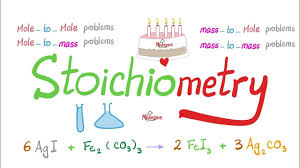
Stoichiometry

Stoichiometry

Learn about Stoichiometry and discover its key concepts through interactive lessons and practical exercises.

Sections

The Mole Concept

The Mole Concept is a foundational principle in chemistry that quantifies substances based on a set number of particles, aiding in understanding chemical reactions.

1 Section Overview

Start current section content and materials

1.1 Molar Mass

The section on molar mass introduces the concept of molar mass as the mass of one mole of a substance, essential for stoichiometric calculations.

1.2 Mole to Mole Relationships

Mole to mole relationships describe how to convert the amount of one substance to another in chemical reactions using balanced equations.

Balancing Chemical Equations

This section covers the process and significance of balancing chemical equations in stoichiometry, following the law of conservation of mass.

2 Section Overview

Start current section content and materials

2.1 Steps to Balance Chemical Equations

This section details the steps involved in balancing chemical equations to adhere to the conservation of mass in chemical reactions.

2.2 Example
Stoichiometric Calculations

Stoichiometric calculations are essential for determining the quantities of reactants and products in chemical reactions.

3 Section Overview

Start current section content and materials

3.1 Example
Limiting Reactants

Limiting reactants are crucial in chemical reactions as they determine the maximum amount of product that can be formed.

4 Section Overview

Start current section content and materials

4.1 Steps to Identify the Limiting Reactant

This section focuses on identifying the limiting reactant in chemical reactions and its importance in determining the amount of product formed.

Theoretical Yield and Percent Yield

This section introduces theoretical yield and percent yield, key concepts in stoichiometry that help measure the efficiency of chemical reactions.

5 Section Overview

Start current section content and materials

5.1 Theoretical Yield

Theoretical yield refers to the maximum amount of product expected from a chemical reaction based on stoichiometric calculations.

5.2 Percent Yield

This section discusses the concept of percent yield in chemistry, comparing actual and theoretical yields from chemical reactions.

5.3 Example
Applications of Stoichiometry

Stoichiometry has significant applications across various fields, enabling precise calculations for reactants and products in chemical reactions.

6 Section Overview

Start current section content and materials

6.1 Pharmaceutical Industry

The pharmaceutical industry utilizes stoichiometry to accurately measure reactants and products in drug manufacturing.

6.2 Environmental Science

This section introduces stoichiometry, emphasizing its significance in understanding chemical reactions and its applications in environmental science.

6.3 Food Industry

Stoichiometry is vital in the food industry for producing products with consistent quality by ensuring accurate proportions of ingredients.

6.4 Chemical Engineering

This section covers the principles of stoichiometry, essential for understanding quantitative relationships in chemical reactions.

Learning Objectives

  • Master the fundamentals of Stoichiometry

  • Apply learned concepts in practical scenarios

  • Successfully complete all chapter exercises

Practice Exercises

Total Questions

5

Estimated Time

10 min

Passing Score

70%

Instructions

  • Read each question carefully
  • You can use hints if you need help
  • Complete all questions before submitting