
AllRounder.ai

Enrol to start learning

Reading is open to everyone. Enrolling is free, and it is what unlocks the audio lessons, practice tests and progress tracking.
Enrol free
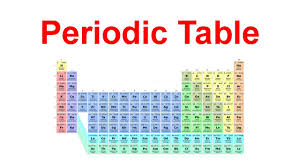
The Periodic Table

The Periodic Table

Learn about The Periodic Table and discover its key concepts through interactive lessons and practical exercises.

Sections

History of the Periodic Table

The periodic table's history is marked by the pivotal contributions of Dmitri Mendeleev and Henry Moseley, which shaped the modern understanding of atomic organization based on atomic number rather than atomic mass.

1 Section Overview

Start current section content and materials

1.1 Dmitri Mendeleev

Dmitri Mendeleev played a crucial role in the organization of the periodic table by arranging elements by atomic mass and predicting the properties of undiscovered elements.

1.2 Henry Moseley

Henry Moseley established the concept of atomic number as the key property for element organization in the periodic table.

The Structure of the Periodic Table

The periodic table organizes elements into periods and groups, providing insights into their properties and trends.

2 Section Overview

Start current section content and materials

2.1 Periods

Periods in the periodic table are horizontal rows that represent the filling of new electron shells and exhibit trends in elemental properties.

2.2 Groups/Families

This section describes the structure and characteristics of groups (or families) in the periodic table, emphasizing elements with similar chemical properties due to their valence electrons.

2.3 Blocks in the Periodic Table

The periodic table is divided into blocks based on electron configurations, including the s-block, p-block, d-block, and f-block, which help to categorize elements based on their chemical properties.

Trends in the Periodic Table

This section outlines the key trends within the periodic table, including atomic radius, ionization energy, electronegativity, and metallic character.

3 Section Overview

Start current section content and materials

3.1 Atomic Radius

The atomic radius is the distance from the nucleus of an atom to the outermost electron shell, and it changes across periods and groups in the periodic table.

3.2 Ionization Energy

Ionization energy is defined as the energy required to remove an electron from an atom, and it varies across periods and groups in the periodic table.

3.3 Electronegativity

This section discusses electronegativity, its trends across periods and down groups in the periodic table, and its significance in chemical bonding.

3.4 Metallic and Nonmetallic Character

This section discusses the trends in metallic and nonmetallic character across periods and down groups in the periodic table.

Categories of Elements

Elements are categorized into metals, nonmetals, and metalloids based on their properties and locations in the periodic table.

4 Section Overview

Start current section content and materials

4.1 Metals

This section discusses metals, which are found primarily on the left side of the periodic table, and highlights their key properties and behaviors in chemical reactions.

4.2 Nonmetals

Nonmetals are elements primarily found on the right side of the periodic table, characterized by poor conductivity and a tendency to gain electrons during chemical reactions.

4.3 Metalloids

Metalloids are elements with properties intermediate between metals and nonmetals, often utilized in electronics due to their semi-conductive qualities.

The Transition Elements and Inner Transition Metals

This section explores transition elements and inner transition metals, focusing on their properties, uses, and locations in the periodic table.

5 Section Overview

Start current section content and materials

5.1 Transition Elements

Transition elements are metals found in the d-block of the periodic table, known for their varied oxidation states and applications in catalysis.

5.2 Inner Transition Metals

Inner transition metals, located in the f-block of the periodic table, are divided into lanthanides and actinides, known for their unique properties and uses.

The Importance of the Periodic Table in Chemistry

The periodic table is essential for predicting element properties and understanding chemical interactions.

6 Section Overview

Start current section content and materials

Learning Objectives

  • Master the fundamentals of The Periodic Table

  • Apply learned concepts in practical scenarios

  • Successfully complete all chapter exercises

Practice Exercises

Total Questions

2

Estimated Time

4 min

Passing Score

70%

Instructions

  • Read each question carefully
  • You can use hints if you need help
  • Complete all questions before submitting