
AllRounder.ai

Enrol to start learning

Reading is open to everyone. Enrolling is free, and it is what unlocks the audio lessons, practice tests and progress tracking.
Enrol free
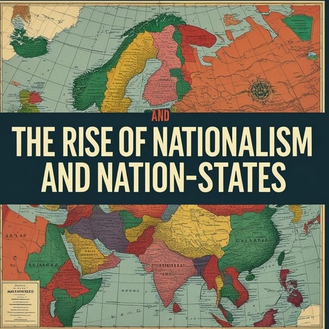
Chapter: The Rise of Nationalism and Nation-States

Chapter: The Rise of Nationalism and Nation-States

Learn about Chapter: The Rise of Nationalism and Nation-States and discover its key concepts through interactive lessons and practical exercises.

Sections

Understanding Nationalism

This section introduces nationalism as a powerful force in the 19th century, emphasizing its definition and historical roots.

1 Section Overview

Start current section content and materials

1.1 Definition and Core Ideas

Nationalism is the belief that people with shared cultural and historical identities should form independent states, emerging as a significant force in the 19th century.

1.2 Roots of Nationalism

The roots of nationalism trace back to the impacts of the French Revolution and the Napoleonic Wars, which spurred the desire for self-determination among various peoples in Europe.

The Age of Revolutions and Nationalist Movements

The 19th century marked a pivotal era with the rise of nationalism, shaping the political landscape through revolutions and the unification of nation-states.

2 Section Overview

Start current section content and materials

2.1 1830 and 1848 Revolutions

The 1830 and 1848 revolutions were pivotal events in Europe driven by liberal and nationalist movements, setting the stage for future nation-states.

2.2 Role of the Middle Class

The middle class played a crucial role in supporting liberal nationalism, advocating for constitutional governance and civil liberties during the rise of nation-states.

The Unification of Italy

The section outlines the key figures, events, and processes that led to the unification of Italy during the 19th century.

3 Section Overview

Start current section content and materials

3.1 Background

The background of nationalism in the 19th century explores the movement toward nation-states based on shared cultural identities.

3.2 Key Figures

This section discusses influential figures in the unification of Italy, focusing on Giuseppe Mazzini, Count Camillo di Cavour, and Giuseppe Garibaldi.

3.3 The Process of Unification

The unification of Italy involved strategic alliances and military campaigns that ultimately culminated in the establishment of a united Italian state under King Victor Emmanuel II.

The Unification of Germany

The unification of Germany played a critical role in shaping modern Europe, driven by the determination of key leaders and influential wars.

4 Section Overview

Start current section content and materials

4.1 Background

This section explores the emergence of nationalism in the 19th century, highlighting its key concepts, historical roots, and implications for European politics.

4.2 Key Figure: Otto von Bismarck

Otto von Bismarck was a pivotal figure in the unification of Germany, advocating for pragmatic approaches to politics and emphasizing the use of war as a tool for unification.

4.3 Wars of Unification

This section outlines the key wars that facilitated the unification of Germany, detailing the political strategies and military conflicts involved.

4.4 Formation of the German Empire

The German Empire was formally established in 1871 following the unification of various German states under Prussian leadership.

Decline of Multi-National Empires

The decline of multi-national empires in the 19th century was significantly influenced by rising nationalist movements across Europe.

5 Section Overview

Start current section content and materials

5.1 Austro-Hungarian Empire

The Austro-Hungarian Empire struggled with internal nationalist demands and unrest among various ethnic groups, resulting in the establishment of a dual monarchy in 1867 that ultimately failed to resolve these nationalist aspirations.

5.2 Ottoman Empire

The Ottoman Empire, referred to as the 'Sick Man of Europe', faced severe nationalist revolts and external pressures during the 19th century, contributing to its decline.

5.3 Russian Empire

The Russian Empire faced strong nationalist movements that challenged its governance through Russification and repression of diverse ethnic groups.

Nationalism and Imperialism

The section examines how nationalism influenced anti-colonial movements and contributed to tensions leading up to World War I.

6 Section Overview

Start current section content and materials

6.1 Export of Nationalism

This section discusses how European nationalism influenced anti-colonial movements globally, shaping national identity in colonized regions.

6.2 Tensions and Conflicts

This section discusses how rising nationalist sentiments contributed to militarism and conflicts leading to World War I.

National Symbols and Cultural Nationalism

This section discusses the role of national symbols and cultural elements in shaping national identity during the rise of nationalism in the 19th century.

7 Section Overview

Start current section content and materials

7.1 Language, Folklore, and Heritage

National identity is largely shaped through language, folklore, and shared history.

7.2 National Flags, Anthems, and Heroes

This section explores how national symbols like flags, anthems, and heroes contributed to creating national unity and identity.

Learning Objectives

  • Master the fundamentals of Chapter: The Rise of Nationalism and Nation-States

  • Apply learned concepts in practical scenarios

  • Successfully complete all chapter exercises

Practice Exercises

Total Questions

3

Estimated Time

6 min

Passing Score

70%

Instructions

  • Read each question carefully
  • You can use hints if you need help
  • Complete all questions before submitting