
AllRounder.ai

Enrol to start learning

Reading is open to everyone. Enrolling is free, and it is what unlocks the audio lessons, practice tests and progress tracking.
Enrol free
16. Cubic Functions

16. Cubic Functions

Learn about 16. Cubic Functions and discover its key concepts through interactive lessons and practical exercises.

Sections

Definition of a Cubic Function

Cubic functions are polynomial functions of degree 3, which play a crucial role in algebra and real-world problem-solving.

1 Section Overview

Start current section content and materials

Key Features of Cubic Functions

This section outlines the key features of cubic functions, including their degree, graph shape, end behavior, forms, and transformations.

2 Section Overview

Start current section content and materials

2.1 Degree

Cubic functions are polynomial functions of degree 3, essential in algebra for modeling and solving real-world problems.

2.2 Shape of the Graph

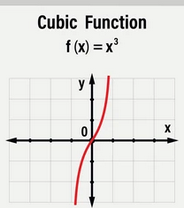
Cubic functions have distinct S-shaped graphs that can have different characteristics based on their coefficients.

2.3 End Behavior

End behavior describes the trends of a cubic function as the input value approaches infinity or negative infinity, depending on the leading coefficient.

Standard, Factored, and Vertex Forms

This section introduces the standard, factored, and vertex forms of cubic functions, highlighting their structure, usage, and relevance in finding roots and graphing.

3 Section Overview

Start current section content and materials

3.1 Standard Form

Cubic functions are defined as polynomial functions of degree 3, crucial for modeling and problem-solving in algebraic contexts.

3.2 Factored Form

The factored form of a cubic function provides a convenient way to identify its roots and enables easier graphing.

Finding Roots of Cubic Equations

This section covers methods for finding roots of cubic equations, including the Rational Root Theorem and synthetic division.

4 Section Overview

Start current section content and materials

4.1 Rational Root Theorem

The Rational Root Theorem provides a method to identify possible rational roots of a polynomial, especially useful for cubic functions.

4.2 Synthetic Division / Long Division

Synthetic and long division are methods used to divide polynomials, particularly cubic functions, to find their roots and simplify expressions.

4.3 Solving the Quadratic

This section covers the methods of solving quadratic equations, including factoring, using the quadratic formula, and completing the square.

Graphing a Cubic Function

This section covers the key steps for graphing cubic functions, including analyzing their end behavior, calculating intercepts, and determining turning points.

5 Section Overview

Start current section content and materials

Transformations of Cubic Functions

This section covers transformations applied to cubic functions, including vertical and horizontal shifts, and stretches or compressions.

6 Section Overview

Start current section content and materials

Applications of Cubic Functions

Cubic functions model various real-world situations, providing insight into complex problem-solving.

7 Section Overview

Start current section content and materials

Solving Word Problems

This section focuses on the steps and methods for translating and solving real-world problems using cubic functions.

8 Section Overview

Start current section content and materials

Practice Exercises

This section provides practice exercises for students to reinforce their understanding of cubic functions.

9 Section Overview

Start current section content and materials

Summary

This section summarizes the key aspects of cubic functions, including their definition, properties, graphing techniques, and real-world applications.

10 Section Overview

Start current section content and materials

Learning Objectives

  • Master the fundamentals of 16. Cubic Functions

  • Apply learned concepts in practical scenarios

  • Successfully complete all chapter exercises

Practice Exercises

Total Questions

4

Estimated Time

8 min

Passing Score

70%

Instructions

  • Read each question carefully
  • You can use hints if you need help
  • Complete all questions before submitting