
Enrol to start learning
Reading is open to everyone. Enrolling is free, and it is what unlocks the audio lessons, practice tests and progress tracking.
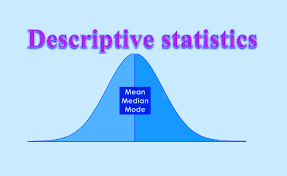
1. Descriptive Statistics
Learn about 1. Descriptive Statistics and discover its key concepts through interactive lessons and practical exercises.
Sections
This section explains the two main types of data in statistics: qualitative and quantitative.
Data representation involves summarizing data using frequency tables and graphical displays.
This section introduces measures of central tendency, including the mean, median, and mode, to summarize data sets effectively.
Measures of dispersion quantify the spread of data points in a dataset, helping us understand variability.
This section explains cumulative frequency and percentiles, focusing on their definitions and significance in interpreting data.
Box plots visually summarize the distribution and characteristics of a data set using five key data points.They are especially useful for identifying outliers and understanding the spread of data.
This section discusses the practical applications of descriptive statistics in various fields and emphasizes the importance of context when interpreting statistical data.
Master the fundamentals of 1. Descriptive Statistics
Apply learned concepts in practical scenarios
Successfully complete all chapter exercises
Practice Exercises
Total Questions
4
Estimated Time
8 min
Passing Score
70%
Instructions
- Read each question carefully
- You can use hints if you need help
- Complete all questions before submitting