
Enrol to start learning
Reading is open to everyone. Enrolling is free, and it is what unlocks the audio lessons, practice tests and progress tracking.
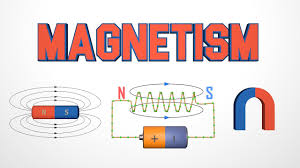
Magnetism
Learn about Magnetism and discover its key concepts through interactive lessons and practical exercises.
Sections
Magnetism is a force that affects specific materials through magnetic fields, involving attraction or repulsion between magnet poles.
This section introduces the concept of magnetic fields, their properties, and their interactions with magnetic materials and moving charges.
Magnetic field lines illustrate the behavior of magnetic fields generated by magnets and electric currents.
This section explores the fundamental concepts of magnetic force, magnetic fields, and how these forces interact with different materials.
Magnets have two poles, and like poles repel each other while opposite poles attract, which defines magnetic interactions.
Earth's magnetic field is akin to a giant magnet, influencing various natural phenomena and technologies.
This section explores the nature of magnetism, the classification of magnetic materials, and their interactions with magnetic fields.
Ferromagnetic materials like iron, cobalt, and nickel are characterized by their strong magnetic attraction and ability to retain magnetization.
Paramagnetic materials exhibit a weak attraction to magnetic fields and do not retain magnetism when the external magnetic field is removed.
Diamagnetic materials are substances that are weakly repelled by magnetic fields and do not retain magnetism.
This section discusses the processes of magnetization and demagnetization, explaining how magnetic domains align to create a magnet and how factors such as heat or alternating current can disrupt this alignment.
Magnetization involves aligning material's magnetic domains to create magnetism.
Demagnetization describes the process where a previously magnetized material loses its magnetism, often due to heat, impact, or alternating current.
This section introduces the relationship between magnetic force and moving electric charges, discussing how moving charges create magnetic fields and the resulting interactions.
The Right-Hand Rule is a method used to determine the direction of the magnetic field generated by a current-carrying conductor.
This section discusses the magnetic force experienced by a current-carrying wire placed in a magnetic field, outlining the factors that influence this force.
Electromagnetic induction refers to the process by which a changing magnetic field induces an electric current in a conductor, forming the basis for many electrical devices.
Magnetism plays a crucial role in various technologies and applications in our daily lives.
Electric motors convert electrical energy into mechanical energy using the principles of magnetism.
This section explores the principles of magnetism, particularly focusing on the mechanisms and applications of generators.
Magnetic levitation utilizes magnetic fields to lift and propel objects, offering significant advantages in reducing friction and enabling various technological applications.
MRI utilizes magnetic fields and radio waves to create detailed images of the body's internal structures.
The compass is a device that utilizes Earth's magnetic field to indicate direction.
Magnetism is a fundamental force that explains the interactions between magnetic fields and materials, with essential applications in technology and nature.
Master the fundamentals of Magnetism
Apply learned concepts in practical scenarios
Successfully complete all chapter exercises
Practice Exercises
Total Questions
3
Estimated Time
6 min
Passing Score
70%
Instructions
- Read each question carefully
- You can use hints if you need help
- Complete all questions before submitting