
AllRounder.ai

Enrol to start learning

Reading is open to everyone. Enrolling is free, and it is what unlocks the audio lessons, practice tests and progress tracking.
Enrol free
2. Physical and Chemical Changes

2. Physical and Chemical Changes

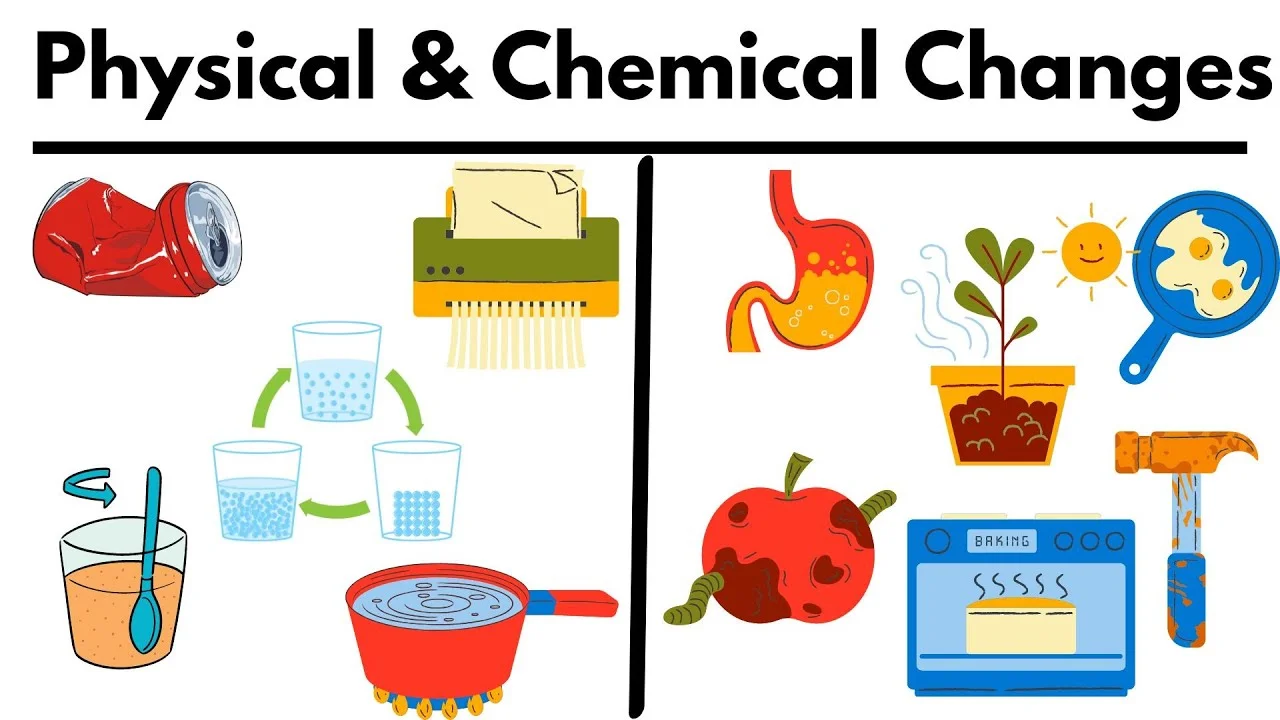
Learn about 2. Physical and Chemical Changes and discover its key concepts through interactive lessons and practical exercises.

Sections

Physical Changes

Physical changes are alterations that do not create new substances and are typically reversible.

1 Section Overview

Start current section content and materials

1.1 Definition

This section defines physical and chemical changes, highlighting their characteristics and differences.

1.2 Key Features of Physical Changes

Physical changes involve alterations in physical properties without forming new substances and are often reversible.

1.3 Examples of Physical Changes

This section provides an overview of physical changes, highlighting their characteristics and offering examples from everyday life.

1.4 Activity: Melting of Ice

The melting of ice exemplifies a physical change where no new substance is formed, and the process is reversible.

1.5 Conclusion

This section summarizes the essential points regarding physical and chemical changes, highlighting their differences and significance in understanding material behavior.

Chemical Changes

Chemical changes involve the formation of new substances with properties different from the original materials, often irreversible.

2 Section Overview

Start current section content and materials

2.1 Definition

This section defines physical and chemical changes, highlighting the key characteristics and examples of each.

2.2 Key Features of Chemical Changes

Chemical changes involve the formation of new substances with different properties and are typically irreversible.

2.3 Examples of Chemical Changes

This section discusses various examples of chemical changes, highlighting the characteristics of chemical transformations and their significance in everyday life.

2.4 Signs of a Chemical Change

This section describes the signs indicating a chemical change, including changes in color, gas evolution, temperature changes, precipitate formation, and the production of sound or light.

2.5 Activity: Rusting of Iron

This section explores the rusting of iron as a chemical change, defining its process and implications.

2.6 Conclusion

This section summarizes the distinctions between physical and chemical changes, emphasizing the importance of understanding these concepts in chemistry and daily life.

Differences between Physical and Chemical Changes

This section explores the distinctions between physical and chemical changes, including definitions, key features, and examples.

3 Section Overview

Start current section content and materials

Common Chemical Changes in Daily Life

Chemical changes such as rusting, crystallization, and combustion are common in daily life and involve the formation of new substances.

4 Section Overview

Start current section content and materials

4.1 Rusting of Iron

Rusting of iron is a chemical change that occurs when iron reacts with water and oxygen, producing iron oxide.

4.2 Prevention of Rusting

The section discusses methods to prevent rusting of iron, emphasizing the importance of protective measures against moisture and air.

4.3 Crystallization

Crystallization is a key physical process used for purifying solid substances, which may involve chemical changes if a reaction is present before crystallization.

4.4 Burning of Substances (Combustion)

The section on combustion explains the process of burning substances, highlighting it as a chemical change where new products like carbon dioxide are formed while heat and light are released.

Additional Activities

The section presents activities that demonstrate both physical and chemical changes, emphasizing the importance of understanding these changes.

5 Section Overview

Start current section content and materials

5.1 Activity: Burning of a Candle

This section explores the burning of a candle, highlighting both physical and chemical changes.

5.2 Activity: Mixing Vinegar and Baking Soda

This section discusses the chemical reaction when vinegar is mixed with baking soda, resulting in the formation of carbon dioxide gas.

Summary

This section summarizes physical and chemical changes, highlighting their definitions, examples, key features, and differences.

6 Section Overview

Start current section content and materials

Learning Objectives

  • Master the fundamentals of 2. Physical and Chemical Changes

  • Apply learned concepts in practical scenarios

  • Successfully complete all chapter exercises

Practice Exercises

Total Questions

4

Estimated Time

8 min

Passing Score

70%

Instructions

  • Read each question carefully
  • You can use hints if you need help
  • Complete all questions before submitting