
Enrol to start learning
Reading is open to everyone. Enrolling is free, and it is what unlocks the audio lessons, practice tests and progress tracking.
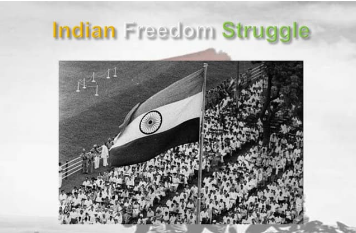
8. India’s Struggle for Freedom
Learn about 8. India’s Struggle for Freedom and discover its key concepts through interactive lessons and practical exercises.
Sections
The First War of Independence in 1857 marked a significant revolt against British rule in India, driven by various political, economic, social, and military grievances.
The rise of nationalism in India was driven by various factors including education, economic exploitation, and the influence of social reform movements.
The Indian National Congress (INC) was established in 1885 to promote national unity and petition the British government for reforms.
The Extremist Phase (1905–1919) in India’s freedom struggle was marked by discontent with moderate methods, the rise of nationalist feelings, and prominent leaders advocating for direct action against British rule.
The Revolutionary Activities section discusses the emergence of young nationalists in India who adopted violent methods to resist British colonial rule, highlighting key figures and their methods.
Mahatma Gandhi played a pivotal role in India's freedom struggle through his approach of non-violence and civil disobedience.
This section highlights the significant contributions of key national leaders like Subhas Chandra Bose, Jawaharlal Nehru, and Sardar Vallabhbhai Patel in India's freedom struggle.
Women played a pivotal role in India's freedom struggle, engaging in various activities and movements.
The section outlines the significant factors leading to India’s independence in 1947.
Master the fundamentals of 8. India’s Struggle for Freedom
Apply learned concepts in practical scenarios
Successfully complete all chapter exercises
Practice Exercises
Total Questions
2
Estimated Time
4 min
Passing Score
70%
Instructions
- Read each question carefully
- You can use hints if you need help
- Complete all questions before submitting