
Enrol to start learning
Reading is open to everyone. Enrolling is free, and it is what unlocks the audio lessons, practice tests and progress tracking.
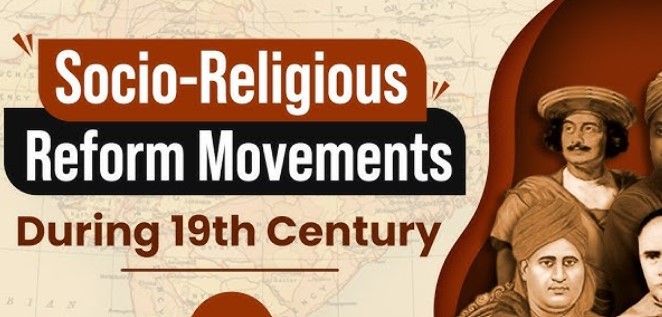
7. Socio-Religious Reforms
Learn about 7. Socio-Religious Reforms and discover its key concepts through interactive lessons and practical exercises.
Sections
The 19th-century socio-religious reform movements in India, influenced by Western education and social issues, aimed to modernize society by abolishing harmful practices.
The 19th century reform movements in India aimed to challenge social evils and promote modern education influenced by Western ideas.
The printing press played a crucial role in spreading socio-religious reform ideas in 19th-century India.
The 19th century socio-religious reforms in India aimed to address social evils and modernize society with the help of influential reformers.
Christian missionary activities in 19th-century India prompted reflection and reform among Indians regarding their social customs and religious practices.
Social evils in 19th-century Indian society prompted widespread socio-religious reform aimed at promoting education and abolishing harmful practices.
Raja Ram Mohan Roy, founder of the Brahmo Samaj in 1828, led significant socio-religious reforms in India, promoting monotheism and opposing outdated customs such as sati and child marriage.
Swami Dayanand Saraswati founded the Arya Samaj in 1875, promoting Vedic values and advocating for social reforms in India.
Ishwar Chandra Vidyasagar was a key reformer who played a significant role in promoting widow remarriage and women's education in 19th-century India.
Swami Vivekananda, a disciple of Ramakrishna Paramhansa, founded the Ramakrishna Mission in 1897 focusing on spiritual development and service to humanity.
The section discusses Syed Ahmad Khan and the Aligarh Movement's focus on education and social reform for Muslims in India during the 19th century.
The Theosophical Society, led by figures like Annie Besant and Madame Blavatsky, aimed to revive ancient Indian culture and promote spiritual values.
This section discusses the efforts and impact of socio-religious reformers in 19th-century India to abolish the practice of sati and promote widow remarriage.
The promotion of women's education and social rights was a key goal of the socio-religious reform movements in 19th-century India.
This section discusses the condemnation of caste discrimination and untouchability as part of the socio-religious reform movements in 19th-century India.
The section discusses the significance of promoting scientific and rational thinking through the socio-religious reform movements in India during the 19th century.
The socio-religious reform movements of the 19th century played a significant role in strengthening Indian identity and nationalism.
Master the fundamentals of 7. Socio-Religious Reforms
Apply learned concepts in practical scenarios
Successfully complete all chapter exercises
Practice Exercises
Total Questions
2
Estimated Time
4 min
Passing Score
70%
Instructions
- Read each question carefully
- You can use hints if you need help
- Complete all questions before submitting