
AllRounder.ai

Enrol to start learning

Reading is open to everyone. Enrolling is free, and it is what unlocks the audio lessons, practice tests and progress tracking.
Enrol free
1. Types of Government

1. Types of Government

Learn about 1. Types of Government and discover its key concepts through interactive lessons and practical exercises.

Sections

Meaning of Government

Government is the organized system through which authority is exercised within a political unit or state.

1 Section Overview

Start current section content and materials

Classification of Government

This section outlines the classification of governments based on various criteria including the number of rulers, distribution of power, and the relationship between the legislative and executive branches.

2 Section Overview

Start current section content and materials

2.1 On the Basis of Number of Rulers

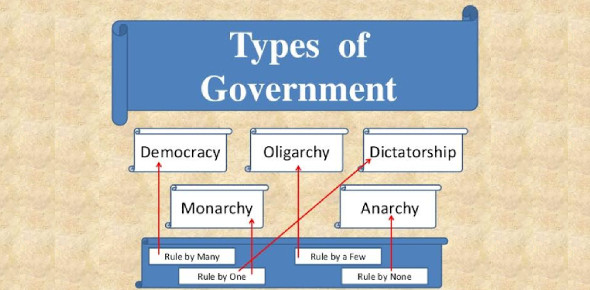
This section discusses different forms of government categorized by the number of rulers, including monarchy, aristocracy, and democracy.

2.1.1 Monarchy

Monarchy is a form of governance where power is held by a king or queen, often hereditary, and comes in absolute or constitutional forms.

2.1.2 Aristocracy

Aristocracy refers to a form of government where power is held by a small, privileged class based on nobility or wealth.

2.1.3 Democracy

Democracy is a form of government where power is vested in the people, either directly or through elected representatives.

2.2 On the Basis of Distribution of Power

This section discusses the classification of governments based on the distribution of power, particularly focusing on unitary and federal systems.

2.2.1 Unitary Government

Unitary government is a centralized political system where power is held by the central government, with local units deriving authority from it.

2.2.2 Federal Government

A federal government divides power between a central authority and various state or provincial governments, allowing regional representation.

2.3 On the Basis of Relationship Between Legislature and Executive

This section discusses the relationship between the legislature and executive in various forms of government, specifically highlighting parliamentary and presidential systems.

2.3.1 Parliamentary Government

Parliamentary government is a system where the executive is part of the legislature, led by a Prime Minister, promoting accountability.

2.3.2 Presidential Government

Presidential government features a clear separation of powers with an independent executive led by a president.

2.4 Other Forms of Government

This section explores various forms of government, including dictatorship, theocracy, and military rule, discussing their characteristics, advantages, and drawbacks.

2.4.1 Dictatorship

This section explores dictatorship as a form of government characterized by rule by a single individual or a small group with absolute power.

2.4.2 Theocracy

Theocracy is a form of government where religious leaders hold authority and governance is based on religious principles.

2.4.3 Military Rule

Military rule occurs when armed forces take control of the government, often following a coup.

Comparison of Major Forms of Government

This section examines the key characteristics and differences among various forms of government.

3 Section Overview

Start current section content and materials

Summary

This section summarizes the key types of government, their characteristics, and implications for political systems.

4 Section Overview

Start current section content and materials

Learning Objectives

  • Master the fundamentals of 1. Types of Government

  • Apply learned concepts in practical scenarios

  • Successfully complete all chapter exercises

Practice Exercises

Total Questions

2

Estimated Time

4 min

Passing Score

70%

Instructions

  • Read each question carefully
  • You can use hints if you need help
  • Complete all questions before submitting