7 Effective Revision Techniques That Actually Work
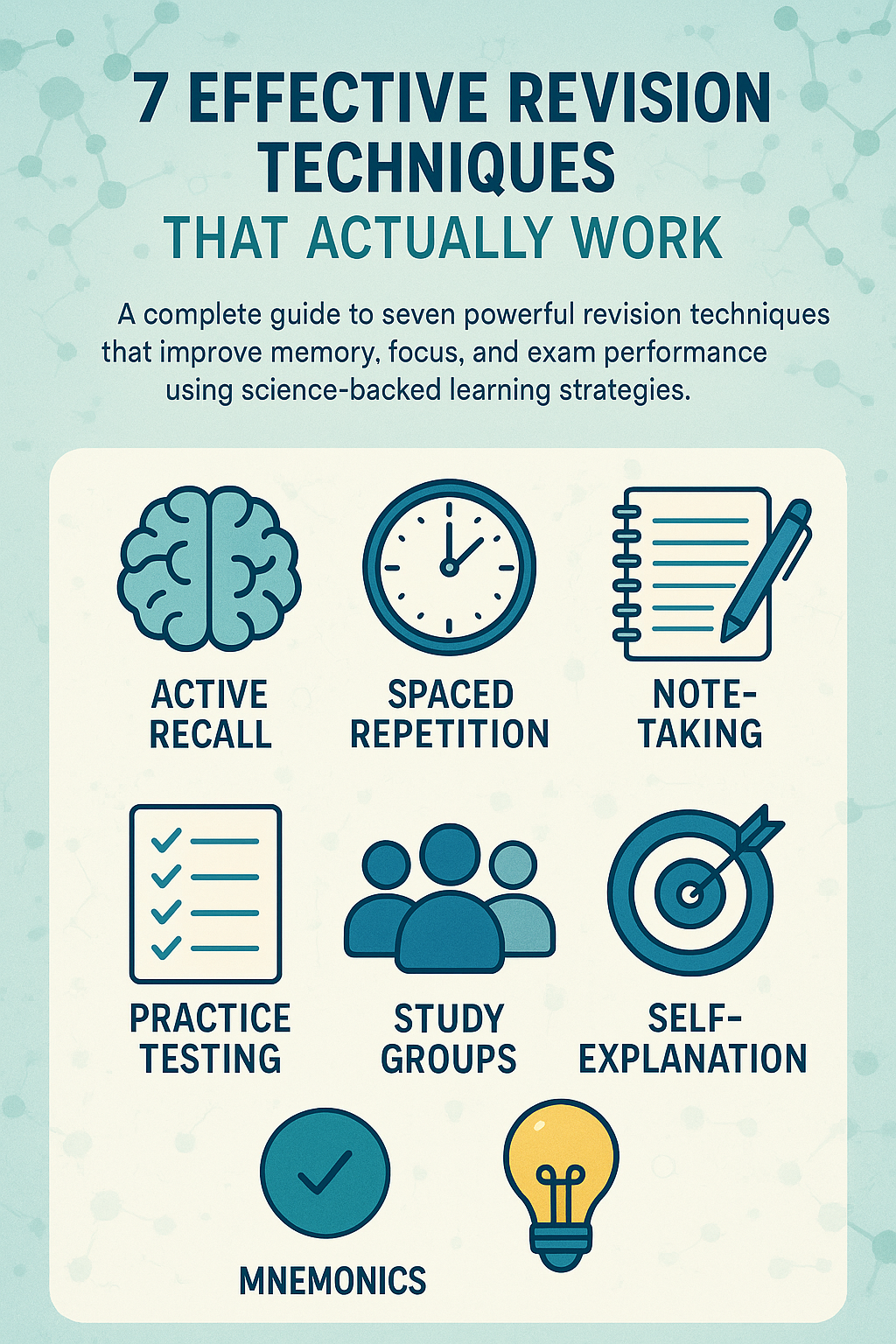
Revision is one of the most important parts of learning. Students often believe they must study longer to remember more, but effective revision is about strategy rather than hours. When students revise using proven techniques, they retain concepts better, stay motivated and approach exams with confidence. Revision also strengthens understanding, clarifies doubts and transforms scattered learning into organised knowledge.
However, many students revise by rereading notes repeatedly or highlighting pages without structure. This creates an illusion of learning but leaves gaps in memory. A systematic approach works far better. Students who follow structured methods, similar to those explained in the science of learning and memory retention, understand that active learning techniques strengthen recall significantly.
This guide explores seven practical, research-backed revision techniques that help students learn smarter and perform better in school and board exams.
1. Active Recall: Testing Yourself Instead of Rereading
Active recall is the most effective revision method because it forces the brain to retrieve information instead of passively reviewing it. Retrieval strengthens memory pathways and improves long-term retention. Students can practise active recall by covering their notes and trying to answer questions out loud or in writing.
Flashcards, self-questions and quizzes are simple tools for active recall. Students can use board-aligned digital tools across CBSE courses, ICSE programs and IB pathways to practise structured questions. They also benefit from interactive quizzes, which mirror exam-style thinking.
Active recall also builds confidence. When students frequently test themselves, they recognise strengths and understand which topics need more attention. This creates clarity and reduces last-minute stress.
2. Spaced Repetition: Revising Concepts Over Intervals
Spaced repetition involves revising topics at increasing intervals. For example, students may revise a chapter after one day, then after three days, then a week later. This method prevents forgetting and ensures the brain engages with information repeatedly.
This approach works because of the spacing effect, which strengthens memory through timed revisits. Students can apply spaced repetition using planners, notebooks or digital tools. A structured routine such as building the perfect study schedule makes it easier to maintain a revision calendar.
Spaced revision helps students prepare for exams without feeling overwhelmed. Instead of cramming near exam dates, students spread revision throughout the term, which improves retention naturally.
3. Mind Mapping: Visual Connections Improve Memory
Mind maps are powerful tools for students who understand concepts better through visual structure. A mind map uses diagrams, colours and branches to organise ideas. This creates a clear picture of how topics are connected, which supports deeper learning.
Mind mapping works well for subjects with many subtopics, such as Biology, History or Geography. Students begin with a central concept and expand into smaller branches. This helps them memorise facts, understand relationships and revise large chapters quickly.
Visual learners, in particular, benefit from this technique. Students who explore methods from mindfulness and focus techniques also find mind mapping helpful because it encourages calm, organised learning.
Digital resources available across Grade 8, Grade 9 and Grade 10 levels offer visual aids to make mind mapping even easier.
4. Practice Testing: Learning by Doing, Not Observing
Students often underestimate the importance of practice tests. Practice testing exposes weak areas, strengthens application skills and familiarises students with exam patterns. It also teaches time management, which is crucial during board exams.
Practice tests provide immediate feedback. When students complete tests available on practice test platforms, they see which chapters require improvement. They also get used to solving case-based questions, diagrams, long answers and data-based tasks.
Practice testing becomes more effective when paired with active revision routines. Students can revise a chapter, take a test and then revisit errors using spaced repetition. This cycle strengthens both accuracy and confidence.
5. Interleaving: Mixing Subjects and Chapters for Better Learning
Interleaving is a technique that involves studying different subjects or topics in the same session instead of focusing on a single chapter for long periods. This method keeps the brain alert and improves problem-solving ability.
For example, a student might revise Math for thirty minutes, switch to Science for the next thirty and then practise English comprehension. This rotation prevents mental fatigue and enhances critical thinking. Students become more adaptable because their brain learns to transition between different types of information.
Interleaving works well when paired with productivity habits from how to beat procrastination. Changing subjects keeps study sessions dynamic, which reduces boredom and increases motivation.
Students who follow structured board-specific paths such as CBSE, ICSE or IB programs can interleave chapters based on subject demands.
6. Teaching the Concept: Learning by Explaining
One of the most effective ways to revise is to teach the concept to someone else. When students explain ideas aloud, they understand concepts more deeply and identify areas of confusion. Teaching reinforces comprehension because the brain organises information clearly to express it.
Students may explain concepts to parents, siblings or friends. Even speaking to an empty room or recording themselves works well. This technique helps students check accuracy, structure answers and improve communication.
Teaching is helpful for students who struggle with motivation. Explaining concepts builds confidence, which links strongly with strategies from how to stay motivated when studying feels hard. When students feel capable, they are more willing to revise consistently.
This technique is especially useful before exams because it highlights gaps quickly.
7. Creating Summary Notes: Condensing Information for Quick Revision
Summary notes help students condense large chapters into simpler points. These notes include key definitions, formulas, diagrams, timelines and concepts. Summary notes support quick revision, especially during exam preparation.
Students can create summaries using notebooks or digital tools. When combined with spaced repetition, summaries help students revise efficiently every week. Students in higher classes such as Grade 11 and Grade 12 study programs benefit greatly from concise summaries because their syllabus is more detailed.
Summaries also reduce stress. Students who explore strategies from how stress affects student performance learn that organised learning reduces anxiety. Having notes ready makes revision easier and faster.
Why Effective Revision Requires a Routine
Revision becomes more efficient when anchored in a routine. Consistency helps the brain store information in long-term memory. Without a schedule, students may skip revision or rely on last-minute studying, which leads to unnecessary stress.
A revision routine helps students distribute learning throughout the week. This prevents burnout and supports deeper understanding. Families can learn more about building structured routines from study schedules that actually work.
Routine builds discipline and supports healthier study habits. Students become more organised, productive and confident when revision occurs regularly.
How to Structure a Weekly Revision Plan
A weekly plan helps students cover all subjects without overloading themselves. A simple structure may include daily revision sessions for short periods and longer weekend revision slots.
Parents and students can begin by listing all subjects, identifying difficult chapters and assigning specific time blocks. Difficult subjects should appear earlier in the week, when energy is higher. Easier topics can be revised later. Mixing subjects supports interleaving, which improves retention.
Students can boost weekly revision using digital board-based paths such as CBSE courses, ICSE programs and IB study tracks. These organised lessons guide students through important chapters methodically.
A weekly revision plan encourages consistency and balanced learning.
Using Mindfulness to Support Revision Quality
Revision is most effective when the mind is clear and focused. Mindfulness helps students reduce distractions and improve concentration. It calms anxiety and helps the brain stay present during the learning process.
Simple techniques such as deep breathing, short pauses and intentional focus improve revision sessions. Students can explore research-backed guidance from mindfulness and focus techniques to strengthen mental clarity.
Mindfulness also helps students revisit difficult concepts without frustration. When learning feels balanced, revision becomes more enjoyable and productive.
Balancing Revision with Breaks
Students often believe that studying for long hours without breaks shows dedication. In reality, taking regular breaks improves productivity and retention. Breaks help the brain reset and prepare for new information.
Short breaks prevent mental fatigue. Students can follow cycles such as twenty-five minutes of study followed by a five-minute break. During the break, they can stretch, walk or hydrate. Breaks also reduce stress, which supports emotional balance.
Techniques like these align with guidance from how to stay focused at home. Balanced revision improves both academic performance and mental well-being.
Why Revision Must Include Self-Assessment
Self-assessment is essential for effective revision. When students evaluate their own progress, they gain control over their learning. They learn which topics require extra attention and which ones they have mastered.
Self-assessment can be done through:
- Practice tests
- Timed quizzes
- Retelling lessons aloud
- Checking summary notes
Students who use platforms offering structured practice tests track their improvement more accurately. These assessments strengthen strategic learning and exam readiness.
Self-assessment encourages independence, discipline and confidence.
How Stress and Emotions Affect Revision Quality
Stress affects concentration, retention and motivation. Students who revise under pressure often forget information easily and feel overwhelmed. Managing stress is a vital part of effective revision.
Students can explore techniques from how stress affects student performance to recognise emotional triggers. Calm study environments, healthy routines and supportive communication help reduce academic pressure.
Parents also play a role by encouraging children, avoiding comparisons and helping them build confidence. A calm emotional environment strengthens revision and improves performance.
Using Digital Tools to Enhance Revision
Digital tools make revision interactive, engaging and structured. Students can use platforms such as AllRounder.ai for:
- Visual explanations
- Stepwise lessons
- Interactive quizzes
- Board-aligned content
- Revision-friendly videos
These tools help identify weak areas and strengthen understanding. Students across Grade 8, Grade 9 and Grade 10 paths benefit from concise revision modules. Higher-class students rely on conceptual clarity through Grade 11 and Grade 12 programs.
Digital learning supports effective revision through organised, accessible tools.
Building Discipline Through Consistent Revision Habits
Discipline grows when revision becomes a daily habit. Students who revise consistently learn to manage time better, remain focused for longer periods and approach exams calmly.
Parents who follow guidance from building academic discipline help students adopt healthy study habits without pressure or fear. Discipline improves with routine, not force.
Consistent revision builds a strong academic foundation and prepares students for long-term success.
Conclusion: Effective Revision Transforms Learning
Revision is a powerful tool that strengthens memory, improves clarity and boosts exam performance. When students use structured techniques such as active recall, spaced repetition, mind mapping, practice testing, interleaving, teaching concepts and creating summaries, they learn more efficiently and confidently.
With support from digital tools such as AllRounder.ai, balanced routines and mindful strategies, students can transform the way they revise. Effective revision builds knowledge, discipline and resilience, helping children become strong and independent learners.