How Attention Spans Affect Learning Outcomes
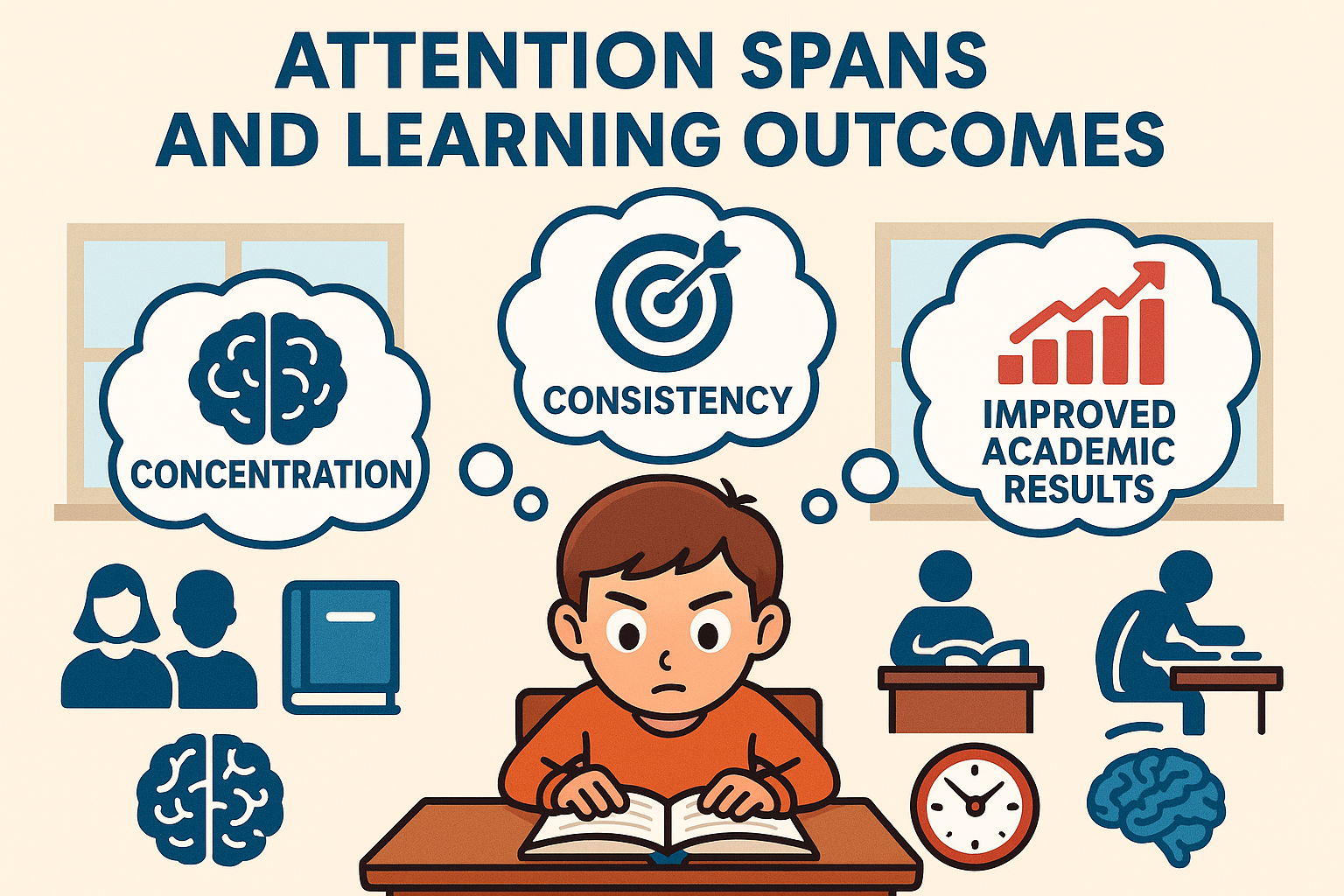
Learning does not fail because students lack intelligence or effort. More often, it fails because attention fades before understanding has time to form. In today’s academic environment, many students sit down to study with good intentions, only to find their minds wandering within minutes. This struggle with attention spans has a direct impact on learning outcomes, confidence, and long-term academic growth.
Attention span determines how deeply a student engages with a concept. When attention is strong, learning feels smoother and more rewarding. When it is weak or inconsistent, even simple topics feel difficult. This challenge affects students across boards such as CBSE, ICSE and IB, regardless of ability level. Understanding how attention works and why it matters is essential for improving learning outcomes in a sustainable way.
What Attention Span Really Means in Learning
Attention span is not about how long a student can sit at a desk. It is about how long the mind stays engaged with a task meaningfully. A student may sit for two hours but truly focus for only twenty minutes. Learning happens only during those focused moments.
When attention is present, the brain processes information, makes connections, and stores memory. When attention drifts, learning becomes passive. Pages are read, but ideas are not absorbed. Over time, this gap between effort and outcome leads to frustration.
Strong learning outcomes depend on quality of attention, not duration of study.
Why Short Attention Spans Reduce Understanding
Understanding requires sustained engagement. Concepts need time to be processed, questioned, and connected to prior knowledge. When attention breaks too often, this process is interrupted.
Students with shorter attention spans often rush through studies. They skim instead of reading, memorise instead of understanding, and move on before clarity develops. This behaviour is closely linked to struggles explained in how to help children avoid rushing through studies.
Rushing creates gaps that later appear as poor performance or confusion.
How Attention Shapes Memory and Retention
Memory formation depends on attention. When students are focused, information moves from short-term awareness into long-term memory. Without attention, memory remains fragile and easily forgotten.
This is why students sometimes study a topic repeatedly yet forget it during exams. The issue is not repetition, but distracted repetition. Focused attention during the first exposure to a concept reduces the need for repeated revision.
Retention improves when attention is steady and intentional.
Why Children Resist Studying When Attention Is Low
Many parents interpret resistance to studying as laziness. In reality, resistance often comes from cognitive fatigue and poor attention regulation. When focus feels hard, studying feels uncomfortable.
This dynamic is explored in why children resist studying and what parents can do about it. Resistance is often a signal that the learning environment or method is not aligned with the child’s attention capacity.
Addressing attention challenges reduces resistance naturally.
Digital Distractions and Fragmented Attention
Digital environments train the brain to switch rapidly between stimuli. Notifications, short videos, and constant updates fragment attention. This makes sustained focus on academic tasks feel unnatural.
Students often believe they can multitask, but learning suffers when attention is split. Strategies discussed in how students can stay away from digital distractions without quitting screens help balance technology use without extreme restrictions.
Attention improves when digital habits are intentional.
Why Learning Outcomes Drop Even When Study Time Increases
Many students respond to poor performance by increasing study hours. Without improving attention, this leads to diminishing returns. More time spent studying with low focus does not improve outcomes.
Students feel exhausted yet underprepared. Confidence drops, and anxiety rises. Improving attention quality often produces better results than increasing hours.
Effective learning is driven by focused minutes, not tired hours.
The Role of Energy Levels in Attention
Attention is closely tied to physical and mental energy. On low-energy days, focus naturally drops. Students often blame themselves for this instead of adjusting expectations.
Practical approaches from how students can stay consistent on low-energy days show how students can adapt study intensity without giving up entirely.
Consistency matters more than perfection.
Why Study Timing Affects Attention and Outcomes
Not all hours of the day support equal attention. Some students focus better in the morning, while others perform better at night. Forcing study during low-focus periods weakens learning.
Insights from why early morning and late night study patterns work differently help students choose timing that aligns with their attention rhythms.
Studying at the right time improves outcomes without extra effort.
How Bad Study Habits Drain Attention
Certain habits reduce attention without students realising it. These include studying without breaks, switching subjects too frequently, or studying without clear goals.
Breaking these patterns improves focus. Guidance from how students can break bad study habits and build better ones highlights how small changes restore attention capacity.
Healthy habits protect mental energy.
The Impact of Micromanagement on Attention
Constant supervision often backfires. When students feel watched or corrected continuously, their attention shifts from learning to avoiding mistakes.
Balanced guidance is discussed in guiding children without micromanaging studies. Trust encourages intrinsic focus, while micromanagement increases anxiety and distraction.
Attention improves when students feel ownership.
Transitions Between Online and Offline Learning
Switching between learning modes can disrupt attention. Online learning often requires more self-regulation, while offline learning depends on classroom structure.
Students benefit from support during these shifts, as discussed in how to help children transition smoothly between online and offline learning.
Stable routines help attention adapt to change.
Why Attention Influences Academic Confidence
Attention and confidence are closely linked. When students focus well, they understand better. Understanding builds confidence. Confidence then improves future attention.
When attention is poor, confusion grows. Confusion lowers confidence, making it even harder to focus. Breaking this cycle requires improving attention first.
Confidence grows from clarity.
How Attention Affects Learning Across Grades
Attention challenges evolve with age. Younger students struggle with sustained focus due to development. Older students struggle due to overload and pressure.
Students in Grade 8 and Grade 9 benefit from shorter, structured study sessions. By Grade 10, exam stress often affects attention.
In Grade 11 and Grade 12, attention is challenged by syllabus volume and future concerns.
Support must evolve with academic stage.
Why Mistakes Are Linked to Attention, Not Ability
Many mistakes happen not because students do not know the answer, but because attention lapses during reading or calculation. Skipping words, misreading questions, or careless errors often reflect focus issues.
Understanding this connection is explored in why mistakes are an important part of the learning process. Reviewing mistakes helps students recognise attention gaps.
Awareness improves accuracy.
Using Practice to Strengthen Attention
Practice trains attention when used thoughtfully. Short, focused practice sessions build endurance gradually.
Using practice tests helps students simulate exam conditions and identify focus lapses. Reviewing not just answers but moments of distraction improves self-regulation.
Attention is a skill that improves with use.
How Gamified Learning Supports Attention
Engagement supports attention. When learning feels interactive, the brain stays involved longer.
Interactive learning games reinforce concepts while maintaining interest. Gamified learning helps students practise without mental fatigue.
Engagement supports sustained focus.
Digital Platforms Can Improve Focus When Structured
Not all screen use weakens attention. Structured platforms reduce randomness and guide focus.
Platforms like AllRounder.ai offer organised lessons and clear objectives, helping students stay engaged. Learners across CBSE, ICSE and IB benefit from predictable learning paths.
Structure supports attention.
Helping Students Build Attention Gradually
Attention improves when expectations are realistic. Forcing long sessions too early leads to frustration.
Students benefit from gradually increasing focus duration, celebrating small wins, and maintaining consistency.
Progress builds attention naturally.
Conclusion: Attention Is the Gateway to Learning Outcomes
Attention span directly shapes learning outcomes. It affects understanding, memory, confidence, and performance. When attention is weak, learning feels hard. When attention is strong, learning becomes efficient and rewarding.
Improving attention does not require extreme discipline or removal of all distractions. It requires understanding how focus works, building supportive habits, and creating calm learning environments.
When students learn to manage attention, learning outcomes improve not just in exams, but across their entire academic journey.