How Emotional Wellbeing Affects Academic Performance
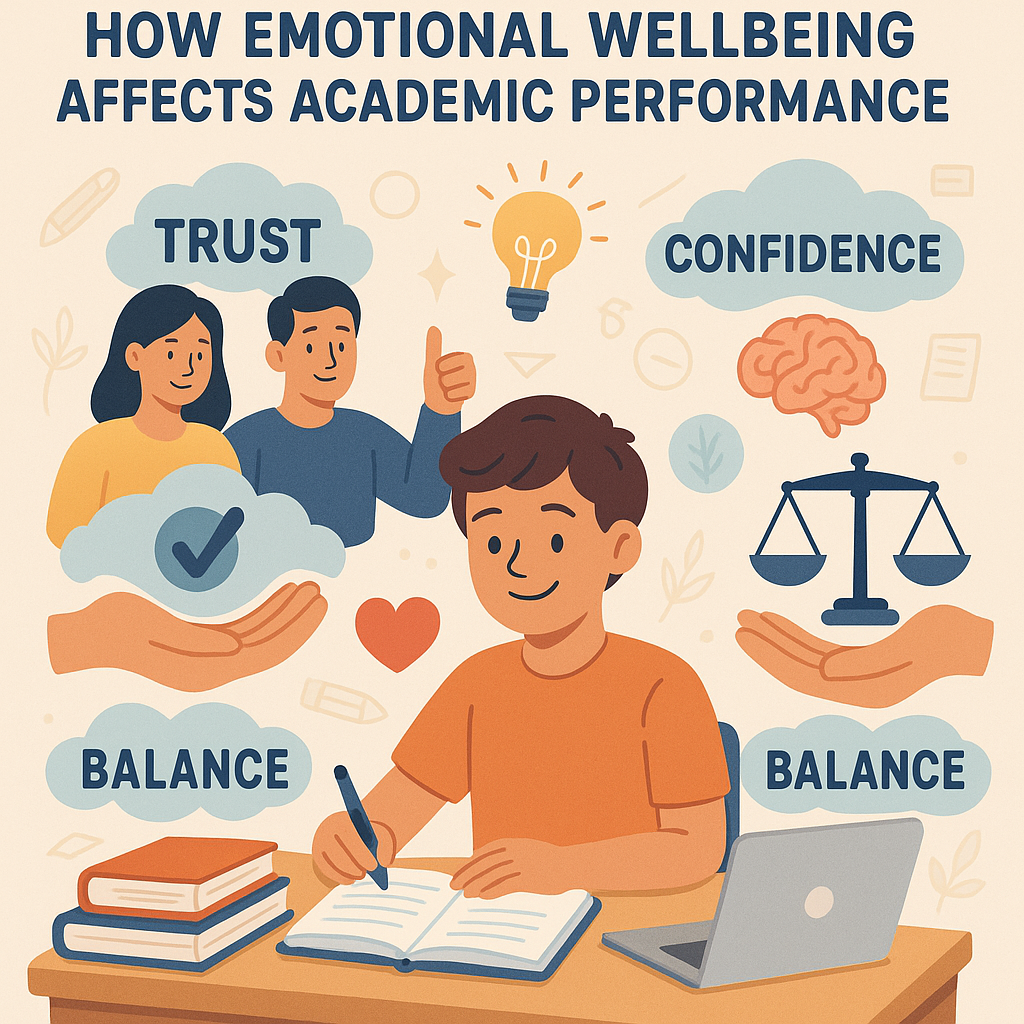
Academic performance is often measured through grades, test scores and rankings, but learning does not happen in isolation from emotions. A child’s emotional wellbeing influences how they concentrate, retain information and respond to challenges. Students who feel secure, supported and confident engage more deeply with learning, while those under stress often struggle despite effort.
Parents sometimes focus only on study routines and academic output, overlooking emotional factors that shape learning. Fear, pressure and self doubt quietly affect performance. When emotional wellbeing is prioritised alongside academics, children show stronger motivation, clearer thinking and steady progress across subjects and grades.
What Emotional Wellbeing Means in a Learning Context
Emotional wellbeing refers to how children understand and manage feelings such as stress, confidence, fear and motivation. In learning, it shapes how students approach tasks and respond to setbacks.
Children with healthy emotional balance feel safe to ask questions, make mistakes and try again. They approach schoolwork with curiosity rather than fear. This emotional safety allows the brain to process information more effectively.
When wellbeing is neglected, learning feels heavy. Anxiety and pressure consume mental energy that should support understanding and recall.
Why Emotions Influence How Students Learn
The brain processes emotions and learning together. Stress affects memory, attention and decision making. When children feel overwhelmed, comprehension drops even if they study longer.
Research and insights from how students actually learn best show that learning improves when students feel calm and supported. Emotional comfort allows the brain to focus on patterns and meaning.
Positive emotions improve engagement. Students feel motivated to explore concepts instead of rushing through tasks.
The Link Between Emotional Safety and Academic Confidence
Confidence grows when children feel emotionally safe. Supportive environments encourage children to participate without fear of judgment.
Parents who build trust help children share doubts early. This prevents confusion from piling up. Guidance on building trust so children share struggles highlights how openness improves learning outcomes.
Confident students attempt challenging problems, respond well to feedback and stay engaged even when work becomes demanding.
How Fear and Pressure Reduce Performance
Fear often comes from high expectations without emotional support. Children worry about disappointing parents or being compared to peers.
This fear leads to avoidance. Some children rush through work, while others delay studying altogether. Insights from why children resist studying explain how emotional pressure disrupts effort.
Reducing fear restores focus. When pressure lowers, learning efficiency improves.
Why Mistakes Matter for Emotional Growth
Mistakes play a key role in emotional wellbeing. They teach resilience and problem solving. When mistakes are treated as failure, children internalise fear.
Understanding why mistakes are an important part of learning helps parents shift reactions. Calm responses encourage reflection instead of shame.
Children who learn from mistakes develop stronger coping skills and academic confidence.
The Role of Belief and Self Talk in Academic Success
Children develop internal dialogue based on adult feedback. Supportive language builds belief, while constant criticism weakens self trust.
Insights from how belief and self talk affect performance show that positive self perception improves persistence and focus.
When children believe they can improve, they approach learning with determination instead of doubt.
Supporting Emotional Wellbeing Through Communication
Communication shapes emotional safety. Children respond better when parents listen before advising.
Parents who practise better communication with school-going children reduce misunderstandings and conflict.
Calm conversations help children feel heard. This emotional support improves cooperation during study time.
Helping Children Overcome Fear of Difficult Subjects
Some subjects trigger anxiety due to past struggles. Fear blocks understanding and reduces motivation.
Parents can help by breaking topics into smaller parts and offering reassurance. Guidance on overcoming fear of difficult subjects helps reduce emotional resistance.
As fear fades, children regain confidence and curiosity.
Simplifying Learning to Reduce Emotional Overload
Overcomplicated routines increase stress. Simplifying tasks helps children focus.
Parents who learn how to simplify learning at home reduce overwhelm and emotional fatigue.
Clear expectations and shorter tasks protect emotional balance and improve consistency.
How Emotional Wellbeing Supports Consistent Study Habits
Emotionally secure children study more regularly. They do not associate learning with fear or pressure.
Consistency grows when learning feels manageable. Emotional wellbeing supports discipline without forcing it.
Children who feel supported return to study even after setbacks.
The Impact of Emotional Health Across Academic Boards
Emotional wellbeing matters across curricula. Students in CBSE, ICSE and IB benefit from balanced emotional support.
Each board demands focus and understanding. Emotional stability helps students adapt to expectations and workload.
Supportive environments allow students to perform consistently regardless of syllabus structure.
Supporting Emotional Balance Across Age Groups
Emotional needs change with age. Younger children need reassurance and routine. Older students need autonomy and trust.
Parents can guide learners in Grade 8, Grade 9 and Grade 10 with closer involvement, then shift to independence for Grade 11 and Grade 12.
Adapting support protects emotional health and academic growth.
Using Academic Tools Without Emotional Pressure
Learning tools support performance when introduced with trust. Forced use creates resistance.
Platforms like AllRounder.ai provide structured learning that supports clarity and confidence. When tools feel helpful, students engage willingly.
Tools such as practice tests help students prepare without fear when used as feedback rather than judgment.
How Interactive Learning Supports Emotional Wellbeing
Interactive learning reduces monotony and stress. Children enjoy learning when it feels engaging.
Activities such as educational games provide mental breaks while reinforcing concepts. This balance supports emotional refreshment.
Enjoyable learning experiences improve motivation and retention.
Recognising Signs of Emotional Strain
Parents should watch for changes in mood, sleep, focus or motivation. These signs indicate emotional overload.
Responding early prevents academic decline. Reducing pressure and offering reassurance restores balance.
Children recover faster when parents respond with empathy.
Balancing Expectations With Emotional Support
High expectations without emotional backing increase anxiety. Balanced expectations build resilience.
Parents can express belief in effort while remaining flexible. This balance improves motivation and confidence.
Children perform best when they feel supported regardless of outcomes.
Conclusion: Emotional Wellbeing as the Foundation of Learning
Emotional wellbeing shapes how children learn, persist and grow. Without emotional balance, academic strategies lose effectiveness.
Parents who prioritise emotional safety alongside academics help children thrive. With calm guidance, trust and supportive tools like AllRounder.ai, learning becomes sustainable and meaningful.
Strong emotional wellbeing does not replace academic effort. It makes academic success possible.