How Environment Shapes Student Attention
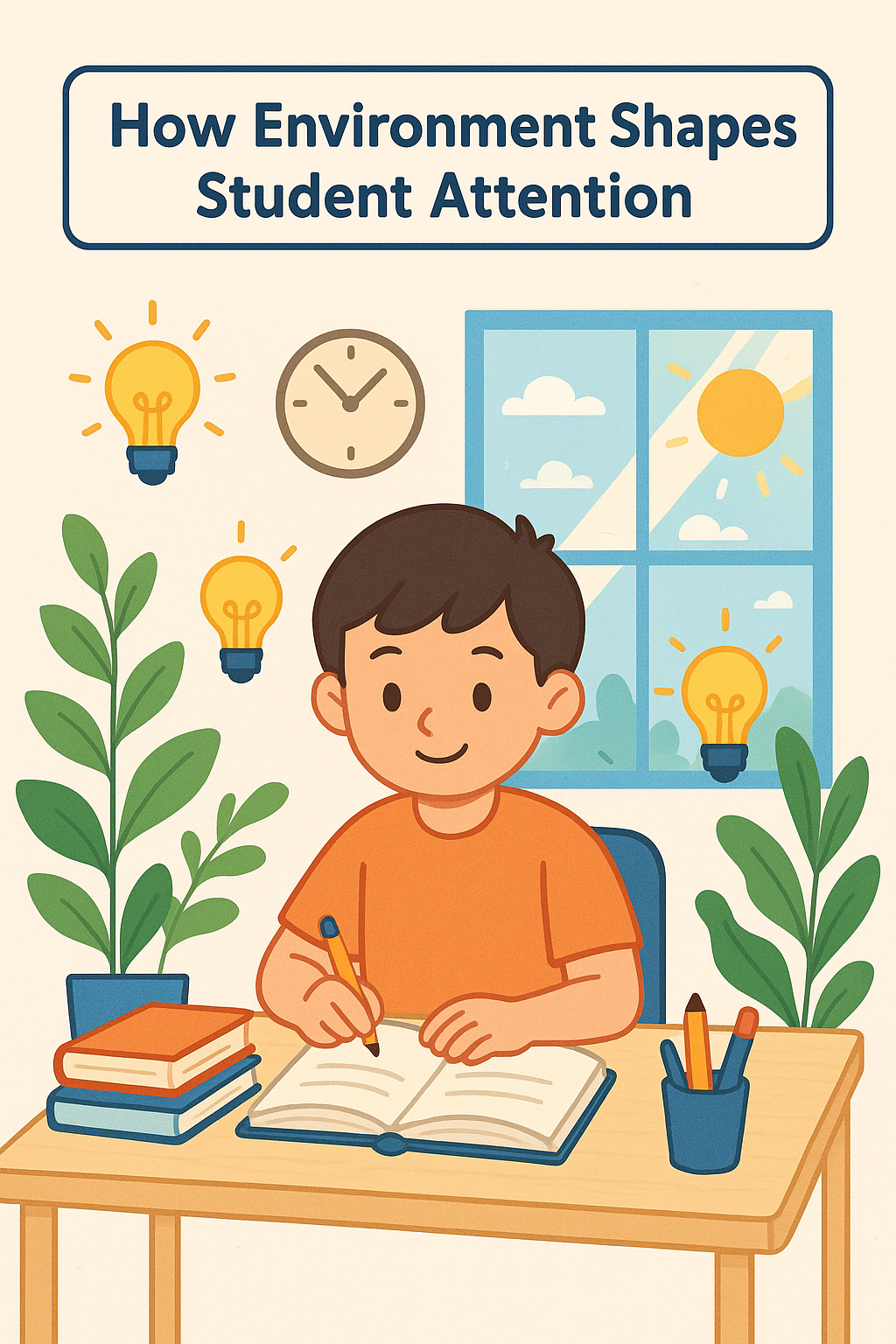
Student attention does not depend only on willpower or motivation. It is deeply influenced by the environment in which learning takes place. Noise levels, lighting, routines, digital exposure and emotional atmosphere all shape how well a student can focus. Even highly motivated learners struggle when their surroundings constantly pull their attention away.
As learning environments expand beyond classrooms into homes and digital spaces, understanding this influence becomes essential. Students across boards such as CBSE, ICSE and IB experience attention challenges when environments are cluttered or unpredictable. When the environment supports focus, attention improves with far less effort.
Why Attention Depends on Surroundings More Than Effort
Attention is a limited mental resource. When students sit in noisy, visually busy or emotionally tense environments, their brains spend energy filtering distractions. This leaves less capacity for learning.
Many students try harder without changing their surroundings. This often leads to fatigue rather than improvement. Attention improves when the environment reduces mental load instead of adding to it.
Supportive environments allow students to focus naturally, without constant self-control.
The Role of Physical Space in Student Focus
Physical space has a direct impact on attention. Poor lighting, uncomfortable seating or cluttered desks compete with learning tasks. Students find it harder to stay engaged when their senses feel overloaded.
A clean, predictable study space helps the brain associate that area with focus. Over time, simply sitting there prepares the mind for learning. This concept is explained in creating a productive study environment at home, where small adjustments bring noticeable changes.
Even simple improvements can reduce distractions and support sustained attention.
Noise and Its Effect on Learning
Noise is one of the strongest attention disruptors. Sudden sounds, conversations or background media interrupt concentration. Younger students are especially sensitive to unpredictable noise.
Some learners manage steady background sounds better than silence. What matters is consistency. Environments with frequent changes in sound make it difficult to maintain focus.
Understanding a child’s response to sound helps parents create supportive study settings.
How Digital Environments Shape Attention
Screens are now part of daily learning. Online classes, assignments and research require digital access. Problems arise when digital environments mix learning and entertainment without boundaries.
Notifications, messages and quick content changes fragment attention. Students shift focus repeatedly without realising it. Learning quality drops even if screen time stays high.
Strategies shared in how students can stay away from digital distractions without quitting screens show how students can use devices with intention rather than impulse.
Balancing Online and Offline Learning Spaces
Students move between online and offline environments throughout the day. Sudden transitions strain attention if routines are unclear. Mental adjustment takes time.
Smooth transitions help students shift focus without stress. Structured routines and clear expectations reduce confusion. Parents can support this through practices explained in how to help children transition smoothly between online and offline learning.
Balanced environments support sustained attention across learning formats.
Why Movement and Physical Activity Improve Attention
Attention improves when the body moves regularly. Physical activity increases blood flow to the brain and reduces restlessness. Students who sit for long periods often struggle to focus.
Short activity breaks refresh attention and reduce fatigue. This link between movement and learning is explained in why physical activity helps children perform better academically.
Healthy movement patterns support focus far better than forcing stillness.
Emotional Environment and Student Attention
Emotional safety shapes attention more than most people realise. Students who feel anxious, judged or rushed struggle to concentrate. Emotional tension occupies mental space meant for learning.
Calm, supportive environments allow attention to settle. Encouragement helps students stay engaged even with difficult topics. Parents can support this through approaches shared in how to help children build confidence in their studies.
Emotional comfort supports cognitive focus.
The Impact of Parental Involvement on Attention
Parental involvement influences attention when balanced well. Too much monitoring creates pressure, while too little guidance creates confusion. Both affect focus negatively.
Supportive guidance allows students to take responsibility without fear. Guiding children without micromanaging studies explains how trust improves attention and independence.
When children feel trusted, they focus better.
How Routine Shapes Attention Habits
Predictable routines reduce mental effort. When students know when and where they study, their brains prepare automatically. Decision-making fatigue reduces, and attention strengthens.
Consistent routines turn focus into habit rather than struggle. How to turn study time into a positive daily habit shows how structure supports attention.
Routines protect attention during busy days.
Learning Style and Environmental Fit
Not all students focus the same way. Some learn better with stories, visuals or real-life examples. Others prefer quiet reading or problem-solving.
Matching environment to learning style improves attention naturally. This idea is explored in why some children learn better with stories and real-life examples.
Understanding learning preferences reduces frustration and improves engagement.
How Environment Affects Attention Across Grades
Attention needs change as students grow. Younger learners need movement, visual cues and shorter focus periods. Older students manage longer sessions but face heavier content.
Students in Grade 8, Grade 9 and Grade 10 benefit from structured environments early. These habits prepare them for senior years.
In Grade 11 and Grade 12, attention becomes critical for managing complexity and exam pressure.
The Role of Learning Tools in Supporting Focus
Well-designed learning tools support attention by reducing clutter and confusion. Clear lessons, guided practice and structured revision prevent overload.
Platforms like AllRounder.ai offer organised learning experiences across CBSE, ICSE and IB. Clear structure allows students to focus on learning rather than searching.
Good tools shape better learning environments.
Using Games to Improve Attention
Games improve attention when used thoughtfully. Educational games replace passive distraction with active engagement.
Platforms offering learning games help students focus through challenge and curiosity. The key lies in boundaries that prevent games from becoming distractions.
Purposeful play supports attention and memory.
Assessment Environments and Attention
Tests and exams demand high attention. Stressful environments reduce performance even when preparation is strong.
Practice under calm conditions improves exam focus. Using practice tests helps students adapt to assessment environments and manage attention under pressure.
Familiarity reduces anxiety and supports focus.
Creating Attention-Friendly Environments at Home
Attention-friendly homes balance structure and flexibility. Clear study spaces, predictable routines and emotional support create ideal conditions for focus.
Parents play a key role by shaping calm environments rather than controlling outcomes. Small changes often bring large improvements.
Attention grows best where students feel supported and understood.
Long-Term Impact of Supportive Learning Environments
Students who grow up in attention-supportive environments develop strong self-regulation skills. They manage distractions, focus deeply and learn efficiently.
These skills extend beyond academics into daily life. Focus becomes a strength rather than a struggle.
Environment shapes attention, and attention shapes success.