How Parents Can Identify and Nurture Their Child’s Unique Learning Style
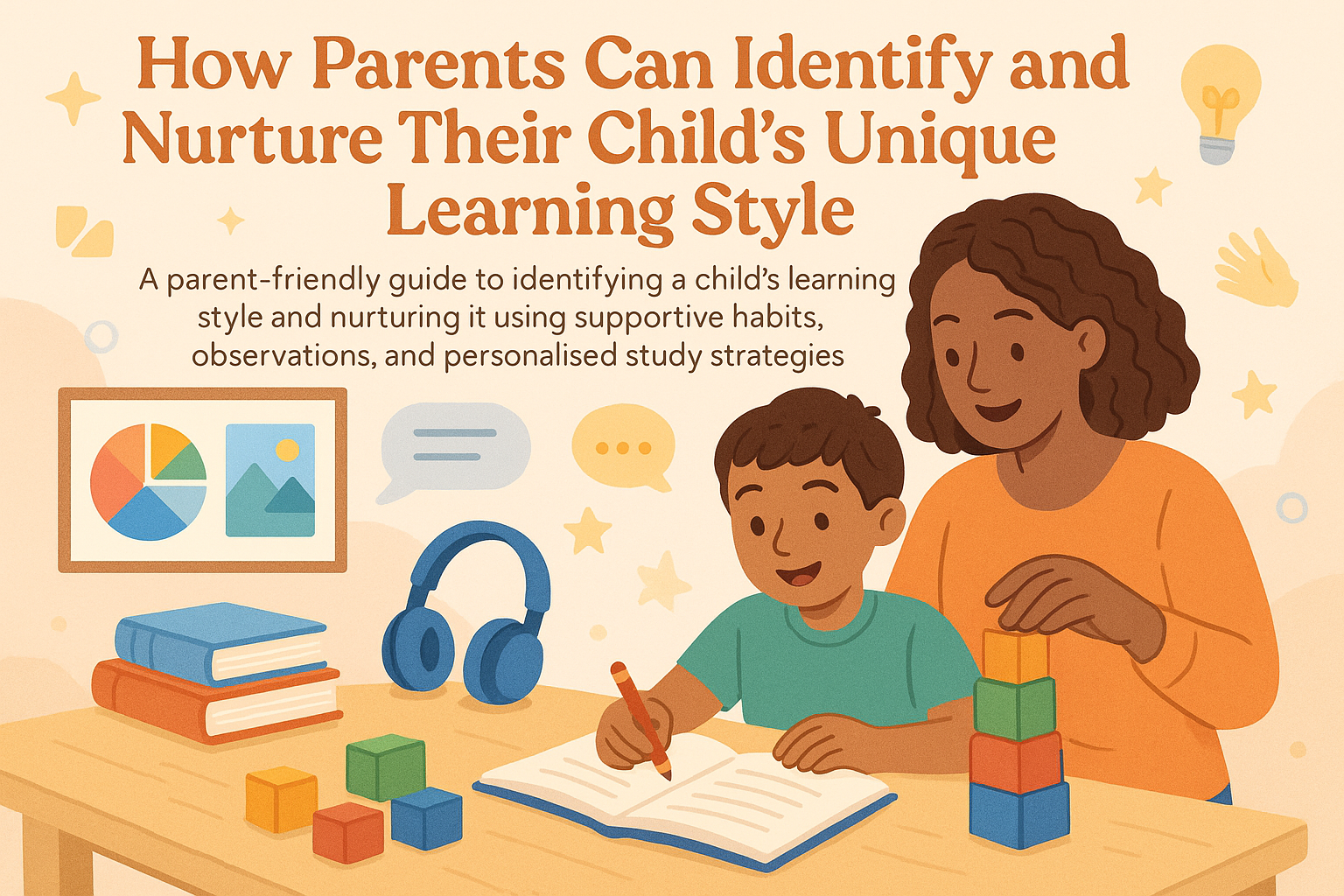
Every child learns differently. Some understand best through visuals, others through hands-on activities and some through listening and reflection. Recognising and nurturing a child’s unique learning style can transform their academic experience. It helps parents support their child’s strengths, reduce frustration and build confidence. When children learn in ways that match how their brain naturally processes information, they feel more motivated, engaged and capable.
Parents often focus on marks, assignments and performance without considering how their child learns. However, learning styles influence everything from attention span to retention and enthusiasm. Families who explore how family support impacts academic success understand that emotional support and personalised learning experiences go hand in hand. Identifying learning styles helps parents create strong home environments where learning feels natural rather than forced.
This guide explains how parents can recognise learning styles, nurture them and use modern educational tools to help children grow with confidence.
Why Learning Styles Matter for Childhood Development
Learning styles influence how children absorb information, respond to challenges and express understanding. A child who learns visually may struggle when lessons depend only on verbal explanation. A hands-on learner may find it difficult to sit still during long theoretical lectures. When learning style mismatches occur, children may feel bored, frustrated or convinced that they are “bad at studies,” when the real issue is the teaching approach.
Parents who understand their child’s learning style can support learning in ways that feel natural. This boosts confidence, accelerates understanding and reduces stress. When children feel understood and supported at home, they are more likely to enjoy studying and build healthy learning habits. Insights from positive parenting tips that boost academic confidence reinforce that children thrive when parents offer encouragement tailored to their strengths.
Learning styles matter because they shape a child’s relationship with education, self-esteem and academic identity.
Recognising the Different Types of Learning Styles
Although there are many theories, most children fall into one or more of these core learning styles. Understanding these helps parents notice patterns in daily behaviour.
Visual Learners
Visual learners understand through images, diagrams, colours and spatial organisation. They often love drawing, noticing details and organising materials neatly. Visual learners benefit from:
- Charts
- Diagrams
- Colour-coded notes
- Illustrations
- Visual explanations
Auditory Learners
These learners understand best when concepts are explained out loud. They memorise through repetition, discussion and rhythm. Auditory learners respond well to:
- Verbal explanations
- Read-aloud sessions
- Audio lessons
- Group discussions
Kinesthetic Learners
Kinesthetic learners understand through movement and hands-on experience. They love building, touching and experimenting. These learners benefit from:
- Models
- Experiments
- Practical activities
- Movement-based learning
Reading and Writing Learners
Some children absorb information best through text. They enjoy reading, writing summaries and organising thoughts on paper. These learners benefit from:
- Written assignments
- Notebook-based study
- Summaries and revision notes
Parents can observe which style resonates most with their child. Many students use a blend of two or more styles.
Observing Your Child’s Natural Learning Behaviours
The best way to identify learning style is through observation. Parents can pay attention to how their child responds during homework, play and daily conversation.
Visual learners may gravitate toward picture books, drawing or organising objects neatly. Auditory learners may enjoy conversation, storytelling or repeating information out loud. Kinesthetic learners may find it difficult to sit still for long periods and prefer hands-on tasks. Children who enjoy reading and writing may carry notebooks or enjoy written assignments more than others.
Daily behaviours reveal powerful clues. Parents who explore signs your child needs study help can also recognise when mismatched teaching styles cause frustration instead of lack of capability. Observing behaviour without judgment helps parents identify what their child needs most.
Using Questions to Understand How Your Child Learns
Parents can gently ask children questions that reveal learning preferences. For example:
- “Do you want me to explain this with a picture or with words?”
- “Do you want to try solving this with a hands-on example?”
- “Should we read this chapter together or listen to an audio version?”
- “Do you learn faster when you write things down yourself?”
Children often know instinctively what works best for them. Their answers provide valuable direction for creating a personalised study strategy.
Conversations like these also strengthen parent-child communication and help children feel supported in their academic challenges.
How Learning Styles Influence Motivation and Confidence
When children learn in ways that match their learning style, studying feels easier. They complete tasks faster and retain information longer. This success builds confidence and sparks motivation. On the other hand, repeated struggles in mismatched environments lower confidence and reduce interest in schoolwork.
Parents who explore why encouragement matters more than perfection recognise that confidence grows from feeling capable, not from external pressure. Learning styles help children feel capable naturally.
When parents support learning styles intentionally, children experience fewer academic conflicts and grow into motivated, independent learners.
Nurturing Visual Learners at Home
Visual learners benefit from structured spaces, colour-based organisation and diagrams. Parents can support them through:
- Visual charts
- Mind maps
- Illustrated notes
- Graphs and labelled diagrams
- Colour-coded flashcards
Visual learning aligns well with modern education tools. Platforms such as AllRounder.ai include videos, animations and diagrams that bring concepts alive.
Visual learners also benefit from grade-specific visual lessons in Grade 8, Grade 9 and Grade 10 programs. Visual explanations reinforce understanding and reduce confusion.
Supporting Auditory Learners Through Sound-Based Learning
Auditory learners respond strongly to verbal explanations, discussions and voice-based resources. Parents can nurture these learners by:
- Reading chapters aloud
- Encouraging discussions about school topics
- Using audio-based lessons
- Allowing children to explain concepts verbally
- Incorporating rhythmic techniques for memorisation
Digital tools that offer audio lessons across CBSE, ICSE and IB programs help reinforce concepts in formats auditory learners enjoy.
Auditory learners gain confidence when they are allowed to “talk through” their learning process.
Helping Kinesthetic Learners Through Movement and Hands-On Activities
Kinesthetic learners benefit from physical interaction with concepts. They often understand deeply when allowed to touch, move or build. Parents can support these learners through:
- Simple science experiments
- Models and manipulatives
- Movement breaks between study sessions
- Writing on boards or large sheets
- Real-life applications of academic topics
Kinesthetic learners thrive when learning feels active. Educational tools such as AllRounder.ai games allow these learners to practise concepts interactively.
They often learn best through real-world tasks, such as measuring objects, observing natural phenomena or participating in household activities.
Supporting Reading and Writing Learners
These children learn best through text. They love reading instructions, writing notes and summarising content. Parents can nurture them through:
- Allowing independent reading
- Encouraging summary writing
- Providing well-organised notebooks
- Using structured revision sheets
- Helping them create personalised notes
Writing-based learners often thrive when using digital notes, practice sheets and exercises. They can practise structured writing through targeted programs across Grade 11 and Grade 12 coursework.
Supporting their love for reading also boosts comprehension across subjects.
The Role of Curiosity in Strengthening Learning Styles
Curiosity enhances a child’s natural learning style. A curious child absorbs information faster, asks deeper questions and explores willingly. Parents who explore the role of curiosity in a child’s learning journey know that curiosity makes learning enjoyable and reduces academic pressure.
Different learning styles shape how curiosity expresses itself. Visual learners may explore through observation. Auditory learners may ask more questions. Kinesthetic learners may test ideas physically. Reading and writing learners may seek deeper information in books.
Encouraging curiosity transforms learning from routine to discovery.
Using Reading Habits to Strengthen Learning Abilities
Reading improves vocabulary, comprehension, memory and focus. It also strengthens every learning style in unique ways. Visual learners benefit from illustrations, while reading and writing learners gain depth through text-heavy content.
Parents can support reading habits through ideas from how to encourage reading habits in students. Creating reading routines, visiting libraries and providing age-appropriate books helps children grow academically.
Reading also enhances creativity, language development and empathy, which enrich overall learning abilities.
How Learning Styles Influence Social and Peer Interactions
Learning does not happen alone. Peer interactions influence motivation, confidence and emotional balance. Children who understand their learning style navigate group activities more effectively.
Insights from how peer influence shapes student motivation show that supportive peer groups strengthen learning habits. A visual learner might collaborate with friends who enjoy drawing charts. An auditory learner might enjoy group discussions. A kinesthetic learner may prefer hands-on teamwork.
Understanding learning styles also reduces unnecessary comparison. Children begin to see their own strengths instead of measuring themselves against others.
Using Digital Learning Tools Based on Learning Styles
Digital tools allow personalised and flexible learning. Children can choose how and when they learn based on their learning style. Platforms like AllRounder.ai offer videos, quizzes, diagrams, notes and interactive tools that suit every style.
Visual learners enjoy animated lessons. Auditory learners appreciate clear explanations. Kinesthetic learners engage with interactive games. Reading and writing learners benefit from structured notes and practice sheets.
Students can follow board-specific paths such as CBSE, ICSE and IB learning paths to stay aligned with their school curriculum.
Using Practice Tests to Understand Your Child’s Strengths
Practice tests help parents observe learning patterns. They show how children handle instructions, diagrams, long-answer questions and application-based tasks.
Tools such as practice tests help students refine problem-solving skills based on their learning style. Visual learners may excel in diagrams but need support in long-answer questions. Auditory learners may perform better when they revise verbally before tests.
Practice tests help parents adjust strategies for stronger performance.
Combining Encouragement With Learning Style Support
Learning styles do not limit children. They enhance strengths while guiding support in weaker areas. Encouragement plays an essential role. Parents who explore why encouragement matters more than perfection recognise that children flourish when they feel understood, valued and supported.
A child’s learning style becomes a roadmap for personalised support. When parents combine this with empathy and encouragement, children become confident, independent learners who trust their abilities.
Building a Growth Mindset Through Learning Style Awareness
Understanding learning styles helps children adopt a growth mindset. They learn that they are not “bad at studies,” but simply need methods that match their strengths. Parents who use insights from building a growth mindset in children help children see learning as a flexible, evolving process.
A growth mindset encourages children to experiment, try new methods and learn at their own pace. It aligns perfectly with learning style-based support.
Conclusion: Every Child Learns Differently and Every Style Deserves Support
Every child has a unique learning style shaped by their interests, strengths and natural ways of processing information. When parents recognise these styles and nurture them with thoughtful strategies, children develop confidence, emotional stability and lifelong enthusiasm for learning.
With structured support, flexible tools such as AllRounder.ai and consistent encouragement, children can explore their full potential. By embracing individuality instead of forcing one method for all, parents create stronger learners and happier students.