Why Calm Guidance Works Better Than Constant Correction
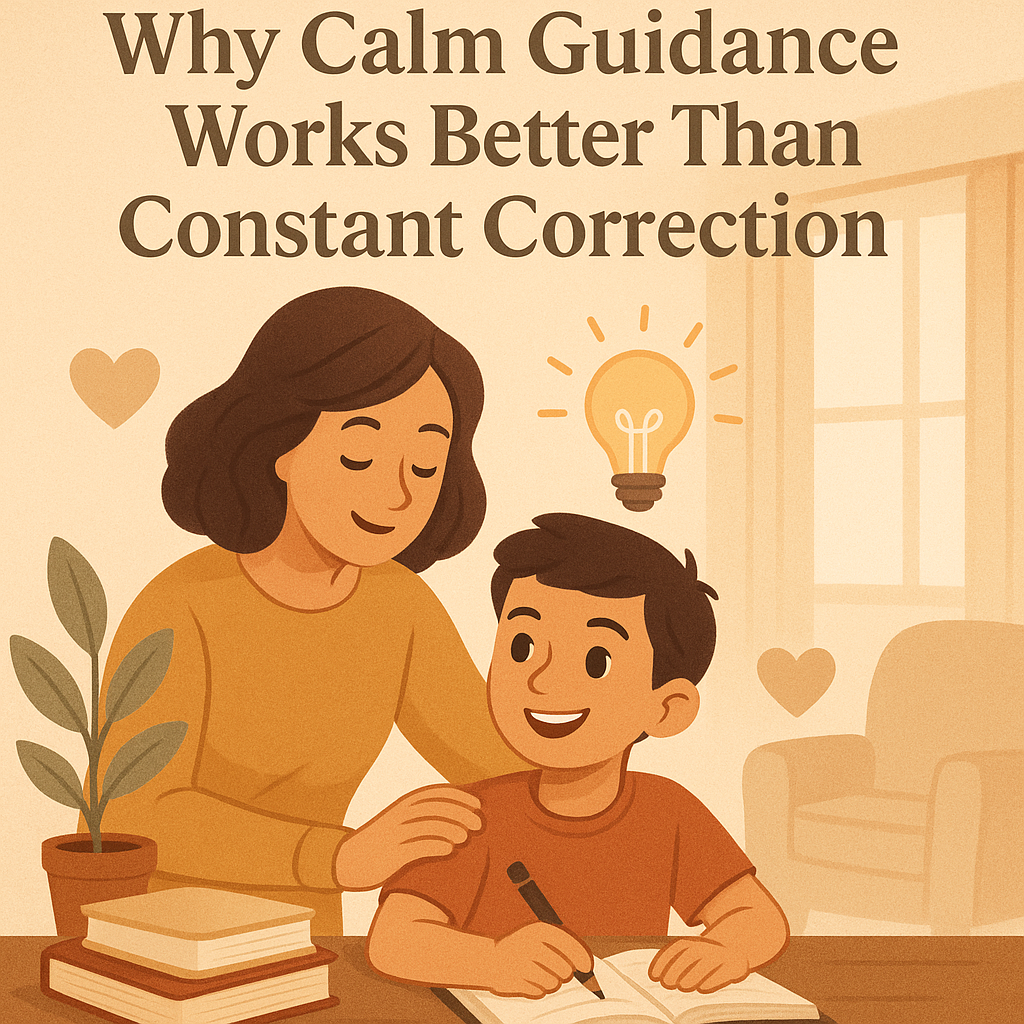
Many parents believe frequent correction helps children learn faster. While guidance matters, constant correction often creates tension, fear and resistance. Children who feel watched or judged begin to associate learning with pressure instead of curiosity. Over time, this affects confidence and motivation.
Calm guidance offers a different path. When parents support learning with patience and understanding, children feel safe to explore ideas and make mistakes. This emotional safety improves focus, effort and long-term understanding. Calm guidance does not mean a lack of standards. It means helping children learn without fear.
How Constant Correction Affects a Child’s Learning Mindset
Constant correction keeps children alert for mistakes rather than understanding. When every error is pointed out, children focus on avoiding failure instead of learning concepts.
This environment creates anxiety. Children hesitate before answering questions and second-guess their thinking. Learning slows because mental energy shifts from curiosity to self-protection.
Understanding why children resist studying helps parents recognise how pressure triggers avoidance rather than effort.
Why Calm Guidance Encourages Deeper Learning
Calm guidance allows children to process information at their own pace. When parents guide instead of interrupting, children remain engaged with the task.
This approach builds confidence. Children feel trusted to try, reflect and adjust. Mistakes become learning moments instead of setbacks.
Research-based insights from how students actually learn best show that understanding grows when learners feel safe to think without interruption.
Mistakes Are Essential to Learning
Mistakes reveal how children think. They highlight gaps that guide improvement. When parents correct every mistake immediately, they remove the chance for reflection.
Children learn more when allowed to recognise and correct errors themselves. This builds problem-solving skills and independence.
Understanding why mistakes are an important part of learning helps parents view errors as valuable feedback rather than failure.
The Role of Emotional Safety in Learning
Children learn best when they feel emotionally secure. Calm guidance creates an environment where children feel respected and supported.
When emotional safety exists, children ask questions and admit confusion. This openness leads to clearer understanding and faster improvement.
Parents who focus on building trust so children share struggles reduce fear and strengthen cooperation during study time.
How Calm Communication Improves Understanding
Tone matters as much as words. Calm communication keeps children receptive. Raised voices or repeated corrections often shut down listening.
Parents who practise better communication with school-going children build stronger learning conversations. Listening before responding helps parents guide rather than control.
When communication feels respectful, children remain engaged and willing to improve.
Belief and Self Talk Shape Performance
Children internalise how adults respond to their efforts. Constant correction sends the message that mistakes define ability.
Calm guidance supports positive belief. Children learn to talk to themselves with encouragement rather than criticism. This improves persistence and confidence.
Insights from how belief and self talk affect performance explain why supportive language strengthens learning outcomes.
Helping Children Face Difficult Subjects Without Fear
Fear increases when children feel corrected at every step. This is common with challenging subjects.
Parents can reduce fear by guiding gently and breaking tasks into manageable steps. Understanding how to overcome fear of difficult subjects helps parents respond with patience.
Calm guidance keeps children engaged with the subject instead of avoiding it.
Simplifying Learning at Home Reduces Pressure
Overcorrection often happens when learning feels complicated. Simplifying instructions and expectations helps children focus.
Parents who learn how to simplify learning at home reduce overload and create clarity.
Simple guidance allows children to complete tasks independently, which builds confidence and motivation.
Calm Guidance Builds Trust and Independence
Children trust parents who guide without controlling. Trust allows parents to step back while children practise independence.
When parents avoid micromanagement, children develop responsibility. Calm reminders replace constant supervision.
This balance strengthens long-term learning habits and emotional connection.
Supporting Learning Across Academic Stages
Younger children need reassurance and gentle redirection. Older students need autonomy and respect.
Parents can support learners in Grade 8, Grade 9 and Grade 10 with structured guidance. For Grade 11 and Grade 12, calm guidance means trust and strategic support.
Adjusting guidance to age prevents conflict and builds maturity.
How Calm Guidance Supports Academic Consistency
Children who feel calm and supported study more consistently. They do not fear correction or disappointment.
Consistency grows when learning feels manageable. Calm guidance helps children return to studies even after setbacks.
Parents who maintain this tone help children develop resilience and steady progress.
Using Learning Tools Without Pressure
Learning tools work best when introduced with trust. Children accept support when it feels helpful rather than forced.
Platforms such as AllRounder.ai offer structured lessons that complement calm guidance. Students across CBSE, ICSE and IB benefit when tools support understanding rather than comparison.
Tools like practice tests reinforce learning when used as feedback rather than judgment.
Encouraging Learning Through Exploration
Exploration fuels motivation. Children learn more when they are curious rather than cautious.
Interactive formats such as educational games support exploration without fear of correction. These activities encourage trial and learning.
When learning feels safe, children experiment and grow.
Replacing Correction With Reflection
Reflection encourages children to think about their process. Asking what worked and what felt difficult builds awareness.
Parents who guide reflection rather than correcting answers build problem-solving skills.
Reflection shifts learning responsibility to the child, which strengthens independence.
Balancing Expectations With Emotional Support
High expectations paired with constant correction increase anxiety. Balanced expectations supported by calm guidance improve outcomes.
Parents can communicate belief in effort while remaining flexible. This reduces fear and builds confidence.
Children perform best when they feel supported rather than evaluated.
Conclusion: Calm Guidance Creates Confident Learners
Calm guidance supports deeper understanding, confidence and motivation. Constant correction may seem helpful, but it often blocks learning through fear and resistance.
Parents who guide with patience, trust and clear communication create a positive learning environment. With supportive tools like AllRounder.ai and a calm approach, children develop independence and resilience.
Learning thrives when guidance feels safe, steady and supportive.