Why Confidence Grows From Effort, Not Results
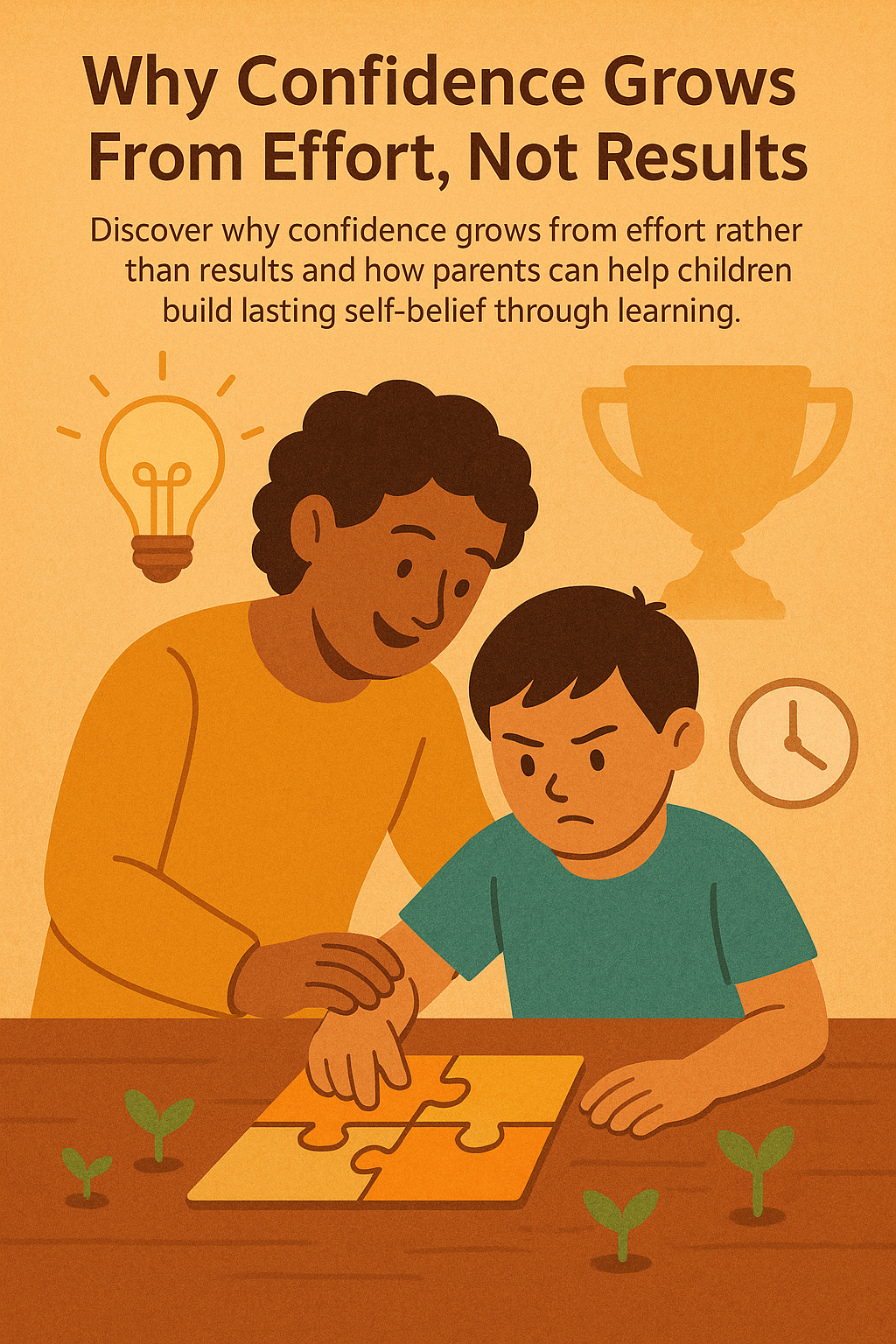
Many parents believe confidence grows when children achieve high grades or win praise. While results can feel encouraging, they often create short-term confidence that depends on outcomes. True confidence develops when children recognise their effort, persistence and ability to improve. This deeper confidence stays steady even during challenges.
Children who learn to value effort approach learning with courage. They try new strategies, accept mistakes and remain engaged even when results take time. Parents play a central role in shaping this mindset. By focusing on effort rather than outcomes, families help children build confidence that supports lifelong learning and emotional strength.
Understanding the Difference Between Results and Effort
Results show what happened at a moment in time. Effort shows what a child controls. When confidence depends only on results, children feel secure only when outcomes meet expectations.
Effort-based confidence grows from recognising preparation, practice and persistence. Children learn that improvement comes from actions they can repeat. This sense of control strengthens motivation.
Understanding how learning confidence shapes performance highlights why effort-focused confidence leads to stronger academic outcomes over time.
Why Result-Based Confidence Is Fragile
Confidence tied to results fades quickly after setbacks. A single low score can shake self-belief and increase fear of failure.
Children who rely on results may avoid challenges to protect confidence. This limits growth and curiosity. Fear replaces exploration.
Parents who shift focus away from outcomes reduce this pressure. When children feel valued for effort, confidence remains stable across ups and downs.
Effort Builds a Growth-Oriented Mindset
Effort teaches children that abilities develop with practice. This belief encourages persistence and adaptability.
Children who see effort as meaningful remain motivated during difficult phases. They understand that struggle signals growth rather than limitation.
Insights from why mistakes matter in learning show how effort and reflection turn errors into progress.
How Effort-Based Confidence Encourages Learning
Children who value effort approach tasks with curiosity. They ask questions, test ideas and refine strategies.
This approach improves understanding and retention. Learning becomes active rather than reactive.
Parents who celebrate effort create a safe environment for exploration. Confidence grows because children trust their ability to learn.
The Harm of Comparison on Confidence
Comparison shifts focus from effort to ranking. Children measure worth against peers rather than personal progress.
This often leads to insecurity or complacency. Confidence becomes unstable because it depends on others’ performance.
Understanding why comparing children hurts progress helps parents protect confidence by focusing on individual growth.
Positive Reinforcement Strengthens Effort-Based Confidence
Positive reinforcement acknowledges persistence and strategy. It tells children that effort matters.
Unlike punishment, reinforcement builds motivation and trust. Children feel encouraged to continue working.
Research-backed insights from why positive reinforcement works better explain how encouragement supports confidence and engagement.
How Communication Shapes Confidence
Language shapes belief. When parents comment only on grades, children link self-worth to results.
Clear and supportive communication highlights effort, strategies and improvement. This builds resilience.
Parents who practise better communication with school-going children help children internalise confidence rooted in effort.
Helping Children Build Confidence in Studies
Confidence grows when children feel capable of improving. Parents can guide reflection after tasks rather than focusing on scores.
Asking what worked and what can change next time builds problem-solving skills. Children learn to evaluate effort.
Practical ideas from how to help children build confidence in their studies support steady self-belief.
Effort Builds Strong Foundations for Lifelong Learning
Effort-focused confidence prepares children for future challenges. It teaches persistence, adaptability and patience.
These skills matter beyond exams. Children become learners who embrace growth across life stages.
Understanding how students build foundations for lifelong learning shows how effort sustains long-term success.
The Role of Parents in Modelling Effort
Children observe how adults respond to challenges. Parents who value effort model resilience.
Sharing personal learning experiences normalises struggle. Children learn that effort matters at every age.
This modelling reinforces confidence built on actions rather than outcomes.
Building a Positive Parent-Learning Relationship
Trust strengthens effort-based confidence. Children feel safe to try when parents support process over results.
A strong relationship encourages openness and persistence. Children share struggles early and seek guidance.
Approaches that build a positive parent-learning relationship support confidence through collaboration.
Using Learning Tools to Support Effort
Learning tools work best when framed as support rather than judgment. Children accept help when it reinforces effort.
Platforms like AllRounder.ai offer structured lessons that reward consistency and practice.
Students across CBSE, ICSE and IB benefit when tools focus on understanding.
Practice as Proof of Effort
Practice reinforces learning and confidence. Each attempt builds familiarity and reduces fear.
Using practice tests as feedback highlights progress rather than scores.
When practice reflects effort, confidence grows with competence.
Interactive Learning Encourages Persistent Effort
Interactive formats reward participation and curiosity. Children engage without fear of failure.
Activities like educational games promote experimentation and sustained effort.
Enjoyable learning reinforces the value of trying again.
Supporting Confidence Across Academic Stages
Confidence needs change with age. Younger students need reassurance, while older students need autonomy.
Parents can support learners in Grade 8, Grade 9 and Grade 10 by recognising effort. For Grade 11 and Grade 12, trust and responsibility strengthen confidence.
Adjusting support sustains effort-based belief.
Balancing Expectations With Encouragement
High expectations paired with effort-focused encouragement motivate growth. Children feel challenged yet supported.
Parents can express belief in effort without tying worth to results. This balance builds resilience.
Children remain motivated because confidence does not depend on perfection.
Conclusion: Confidence That Lasts Comes From Effort
Results may change, but effort remains within a child’s control. Confidence built on effort stays steady through success and setbacks.
Parents who value persistence, reflection and growth help children develop lasting self-belief. With supportive guidance and tools like AllRounder.ai, children learn to trust their ability to improve.
When confidence grows from effort, learning becomes resilient, meaningful and sustainable.