Why Emotional Safety Matters for Learning at Home
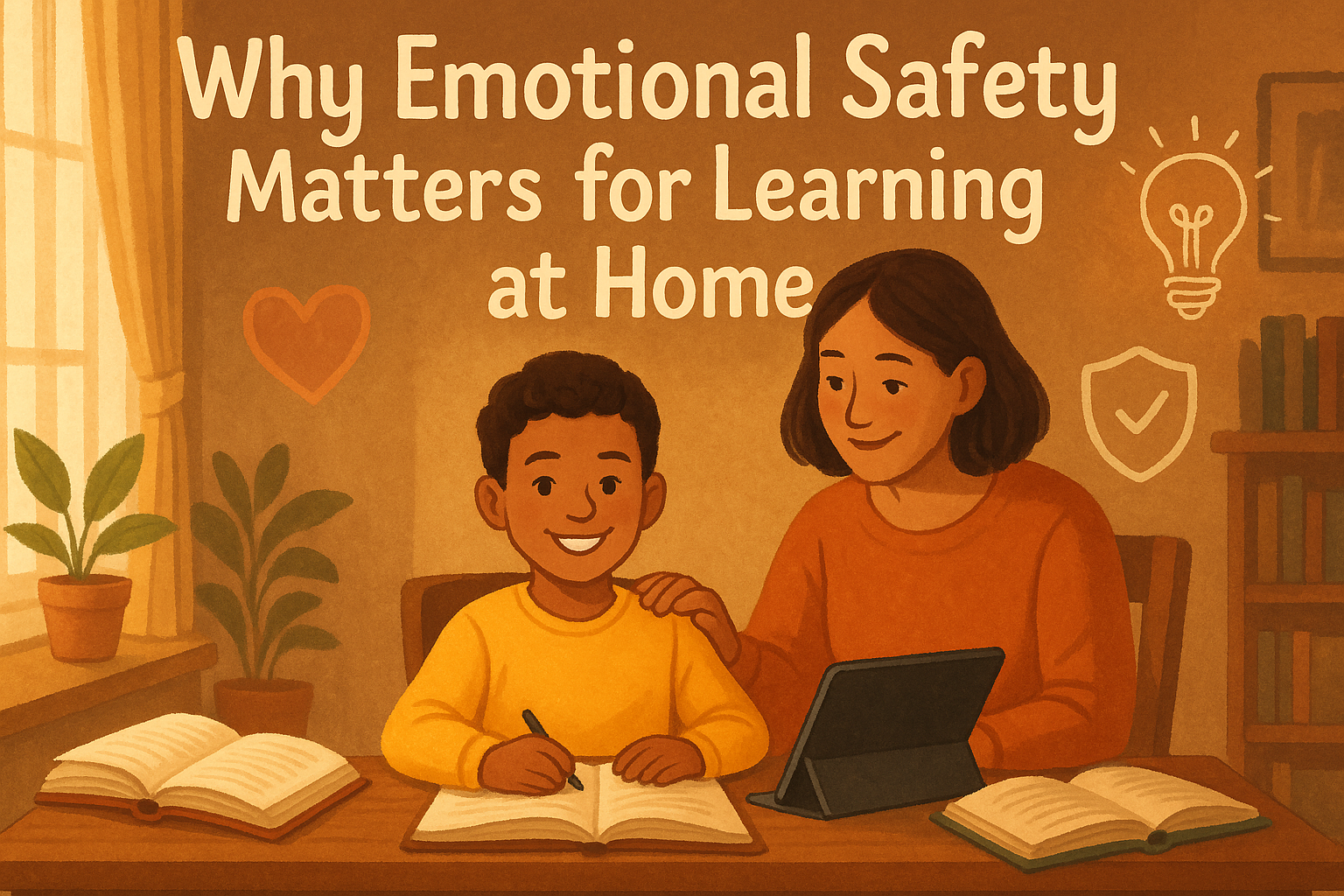
Learning at home is shaped by more than study schedules and textbooks. A child’s emotional state plays a powerful role in how well they understand, remember and apply what they learn. When children feel emotionally safe at home, they approach learning with curiosity and confidence. When they feel judged, rushed or anxious, learning becomes stressful and inconsistent.
Emotional safety creates a foundation where mistakes are allowed, questions feel welcome and effort is valued. This foundation supports academic growth across boards such as CBSE, ICSE and IB. Regardless of syllabus, children learn best when they feel secure enough to try.
What Emotional Safety Really Means at Home
Emotional safety does not mean removing all challenges. It means creating an environment where children feel accepted even when they struggle. At home, this includes how parents respond to mistakes, questions and emotions related to school.
When children feel safe, they share confusion openly and ask for help early. They are not afraid of disappointing adults. This openness prevents small learning gaps from turning into long-term struggles.
A safe emotional climate allows learning to feel like exploration rather than evaluation.
Why Fear Blocks Learning More Than Difficulty
Many children resist studying not because subjects are hard, but because they fear failure. Fear narrows attention and weakens memory. When children worry about reactions at home, their minds stay in a defensive state.
This is why why children resist studying and what parents can do about it highlights emotional factors over academic ones. Removing fear restores motivation.
Learning improves when children feel safe to struggle.
Helping Children Face Difficult Subjects Without Anxiety
Some subjects trigger anxiety due to past failures or pressure. Emotional safety helps children approach these subjects calmly instead of avoiding them.
Parents can support this process by acknowledging fear without judgment. How to help children overcome fear of difficult subjects explains how reassurance and gradual exposure rebuild confidence.
Confidence grows when children feel supported rather than pushed.
The Link Between Emotional Safety and Study Habits
Healthy study habits depend on emotional readiness. Children who feel safe are more willing to practise consistently and correct mistakes.
In contrast, emotionally tense environments lead to avoidance and shortcuts. This is why how students can break bad study habits and build better ones emphasises mindset and environment.
Good habits grow in supportive spaces.
How Emotional Safety Supports Emotional Intelligence
Emotional safety allows children to recognise and manage feelings related to learning. This builds emotional intelligence, which directly affects academic performance.
Children who understand their emotions handle stress, exams and feedback more effectively. How to build emotional intelligence in school students explains how emotional skills strengthen learning outcomes.
Emotionally aware students adapt better to challenges.
Creating Homework Routines Without Stress
Homework often becomes a source of conflict at home. Emotional safety helps turn homework into a predictable and calm routine rather than a daily battle.
When routines are consistent and flexible, resistance decreases. How to build a homework routine shows how structure supports calm learning.
Routines work best when paired with understanding.
Why Timing Matters for Emotional Balance
Children’s emotional states vary throughout the day. Studying during low-energy or high-stress periods increases frustration.
Understanding natural rhythms helps parents support learning better. Why early morning and late night study patterns work differently explains how timing affects mood and focus.
Right timing reduces emotional resistance.
Encouraging Responsibility Without Emotional Pressure
Responsibility grows when children feel trusted. Emotional safety allows parents to step back without fear that children will fail.
Children who feel ownership over learning engage more deeply. How to encourage children to take responsibility for their studies shows how trust builds accountability.
Responsibility thrives in emotionally safe homes.
Helping Children Stay Calm and Confident While Studying
Calmness improves focus and memory. Emotional safety reduces the mental noise that interferes with learning.
Parents can support calm learning through reassurance and realistic expectations. The secret to helping students stay calm and be confident highlights how emotional stability supports performance.
Calm minds learn more effectively.
Emotional Safety Across Different Grade Levels
Emotional needs change as children grow. Younger children need reassurance and patience. Older students face pressure related to exams and performance.
Students in Grade 8 and Grade 9 benefit from encouragement during early academic pressure. Grade 10 requires emotional stability due to board exams.
In Grade 11 and Grade 12, emotional safety becomes critical for managing complexity and future decisions.
How Emotional Safety Shapes Learning Motivation
Motivation grows when children feel emotionally supported. Pressure may push short-term effort, but safety sustains long-term motivation.
Children who feel valued beyond grades develop intrinsic motivation. They learn because they want to improve, not because they fear consequences.
Motivated learners persist longer and recover faster from setbacks.
Using Learning Tools Without Emotional Overload
Digital tools can support learning, but too many resources create stress. Emotional safety improves when learning tools are structured and purposeful.
Platforms like AllRounder.ai offer organised support aligned with CBSE, ICSE and IB, reducing confusion.
Clarity supports emotional balance.
Practice as a Safe Space for Learning
Practice should feel safe, not evaluative. Emotional safety allows children to practise without fear of judgment.
Using practice tests as feedback tools rather than scorecards supports learning. Reviewing mistakes calmly builds understanding.
Safe practice encourages persistence.
Gamified Learning and Emotional Engagement
Learning games can reduce anxiety and resistance when used thoughtfully. Educational learning games make learning approachable and engaging.
Games work best when balanced with guidance. Emotional safety improves when learning feels enjoyable.
Positive engagement supports confidence.
Parental Language Shapes Emotional Safety
Words matter. How parents talk about effort, failure and success shapes emotional climate.
Supportive language builds resilience. Critical or dismissive language increases fear. Small shifts in communication bring big changes.
Children internalise emotional cues from daily interactions.
Long-Term Impact of Emotional Safety on Learning
Children raised in emotionally safe environments develop strong self-belief and adaptability. These traits support academic success and personal growth.
They approach challenges with confidence and handle pressure with resilience. Emotional safety becomes a lifelong advantage.
Learning thrives where emotional foundations are strong.
Choosing Connection Over Control
Emotional safety grows from connection, not control. When parents prioritise understanding over outcomes, children respond with trust and effort.
Learning becomes a shared journey rather than a battle. Emotional safety transforms home into a place where growth feels natural.
A safe home builds confident learners ready for the future.