Why Students Find It Hard to Focus in Today’s World
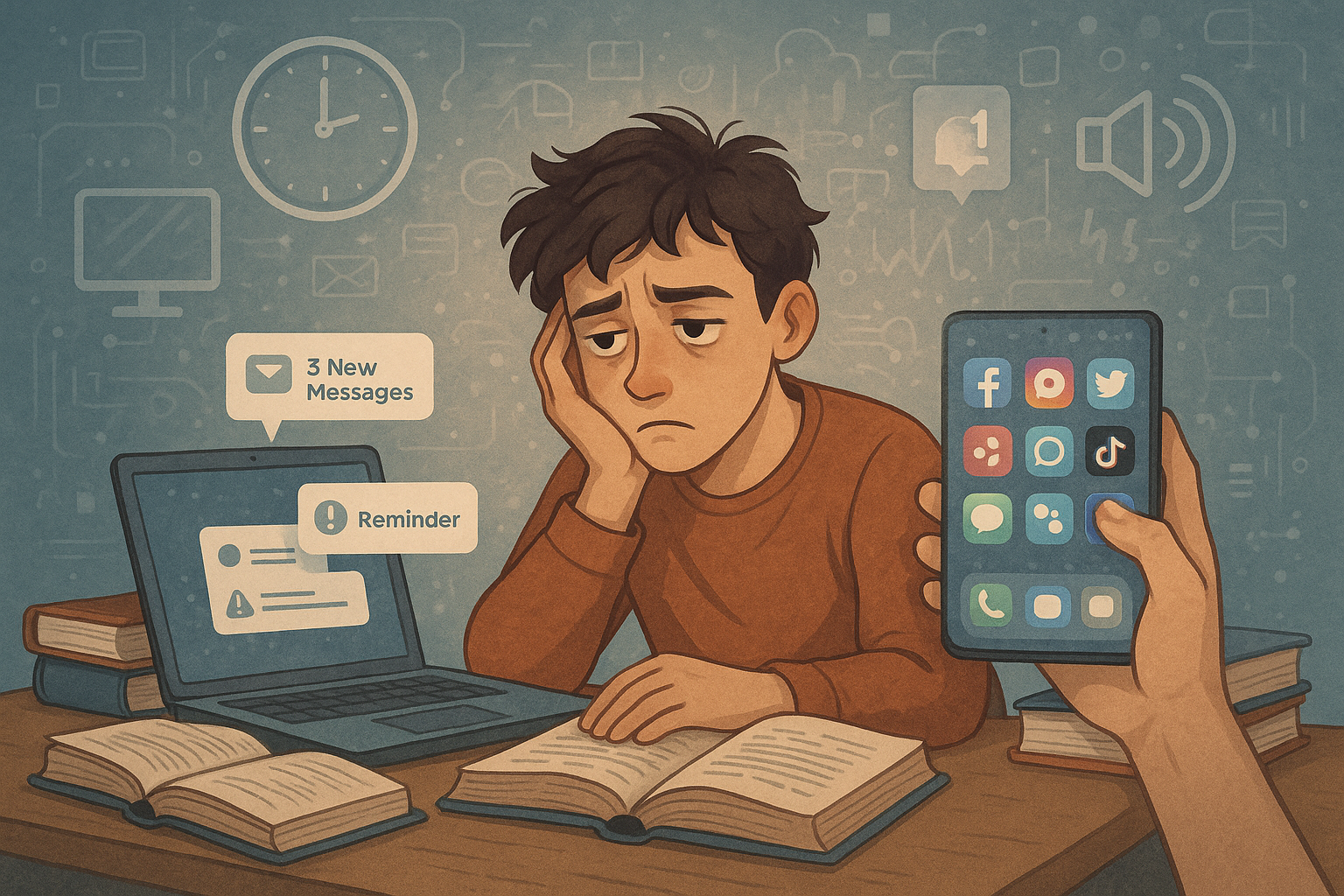
Many students today sit with books open, screens glowing and study plans ready, yet struggle to concentrate for even short periods. Parents often describe this as laziness or lack of discipline, while students feel frustrated and confused about why focusing feels so difficult. The challenge is not limited to one age group or academic board. Students across CBSE, ICSE and IB face similar struggles.
The difficulty in focusing is not a personal failure. It is a reflection of how learning environments, technology, expectations and daily routines have changed. Understanding why focus feels harder today is the first step toward rebuilding it. When students and parents understand the reasons behind distraction, they can respond with strategies instead of frustration.
The Modern Attention Environment Is Constantly Competing for the Brain
Today’s students grow up in environments filled with constant stimulation. Notifications, videos, messages and games compete for attention throughout the day. The brain becomes used to frequent changes in focus, making sustained attention feel uncomfortable.
Unlike earlier generations, students rarely experience long periods without interruption. This constant switching weakens the ability to stay with one task for extended time. When students sit down to study, their brains expect novelty and quick rewards.
Focus becomes difficult not because students lack willpower, but because their attention systems are overstimulated.
Screens Have Changed How Students Process Information
Screens play a major role in education, entertainment and communication. While technology offers many benefits, it also trains the brain to consume information in short bursts. Videos, reels and scrolling create habits of rapid attention shifts.
This makes traditional study feel slow and demanding. Students may find it hard to read long passages or solve problems without checking their phones. Learning improves when screen use becomes intentional rather than constant.
Parents can explore strategies from turning screen time into learning time to help students use digital tools without letting them dominate attention.
Distractions Are Often Mental, Not Just External
Many students believe distractions come only from phones or noise. In reality, internal distractions such as anxiety, comparison and pressure play an equally strong role. Worrying about marks, deadlines or expectations pulls attention away from the task at hand.
Students who feel behind or insecure often struggle to focus because their minds are busy with self-doubt. This reduces learning efficiency and increases frustration.
Addressing emotional distractions is as important as managing physical ones.
Academic Pressure Weakens Focus Over Time
High expectations can motivate students, but constant pressure often has the opposite effect. When learning feels like a race or a test of worth, students enter survival mode rather than learning mode.
Pressure narrows attention and increases fear of mistakes. This makes it harder to engage deeply with subjects. Over time, students associate studying with stress rather than curiosity.
Focus improves when students feel safe to learn without constant evaluation.
Why Students Lose Interest Before They Lose Ability
Many students do not lose ability when they struggle to focus. They lose interest. Boredom, repeated failure or lack of relevance disconnects them from learning.
This process is explored in why students lose interest in studies and how to bring it back. When interest fades, attention follows.
Rebuilding focus often requires rebuilding meaning and relevance in learning.
The Role of Motivation in Sustained Attention
Motivation acts as fuel for focus. Students who see purpose in learning stay engaged longer. Those who feel forced struggle to sustain effort.
Motivation improves when students experience small successes and progress. This builds belief and curiosity. Guidance on this appears in building academic confidence in the average student.
Confidence strengthens focus by reducing mental resistance.
Why Gamified Learning Helps Restore Attention
Traditional study methods do not always match modern attention patterns. Gamified learning introduces challenge, feedback and engagement in a structured way.
Interactive learning games help students practise concepts without monotony. Games provide immediate feedback, which helps the brain stay engaged.
Engagement is not a distraction when it supports learning goals.
Focus Struggles Change Across Age Groups
Younger students may struggle with focus due to limited attention spans, while older students face cognitive overload from complex syllabi. Each stage requires different support.
Students in Grade 8 and Grade 9 often need structure and routine. By Grade 10, exam pressure increases distractions.
In Grade 11 and Grade 12, focus is challenged by volume, competition and future uncertainty.
The Home Environment Shapes Attention Patterns
Learning does not happen in isolation. Family dynamics, routines and communication influence focus. Constant reminders, comparisons or conflicts reduce attention.
A supportive learning environment improves focus. Parents can strengthen this through ideas shared in building a positive parent learning relationship.
Trust and calm conversations help students feel mentally present.
Micromanagement Often Reduces Focus
Well-meaning supervision can turn into constant monitoring. When students feel watched or controlled, they focus on avoiding mistakes rather than understanding concepts.
Allowing autonomy builds responsibility and engagement. Students focus better when they feel ownership of their work.
Balance between guidance and independence supports sustained attention.
Why Routine Is Essential for Focus
Focus improves when the brain knows what to expect. Predictable routines reduce decision fatigue and mental resistance.
Simple, consistent study routines make attention easier to access. This idea connects with how to turn study time into a positive daily habit for kids.
Routine creates mental safety, which supports concentration.
Teaching Responsibility Improves Attention
Students focus better when they feel responsible for outcomes. External pressure often weakens internal motivation.
Encouraging ownership through planning and reflection builds engagement. Parents can explore strategies from how to encourage children to take responsibility for their studies.
Responsibility shifts focus from avoidance to involvement.
Digital Platforms Can Support Focus When Used Well
Digital learning platforms can either fragment attention or support it. Structured platforms reduce randomness and guide focus.
Platforms like AllRounder.ai provide organised lessons, interactive practice and clear learning paths. Students across CBSE, ICSE and IB benefit from clarity and structure.
Structure reduces mental clutter and improves attention.
Practice Builds Focus Through Engagement
Practice trains attention when it is meaningful. Random repetition weakens focus, while targeted practice strengthens it.
Using practice tests helps students concentrate on specific goals and track improvement. Clear feedback sustains engagement.
Purposeful practice turns focus into a habit.
Why Focus Cannot Be Forced
Many students try to force concentration. This often leads to frustration. Focus emerges naturally when conditions support it.
Calm environments, clear goals and manageable tasks allow attention to settle. Forcing long sessions without breaks reduces effectiveness.
Gentle consistency builds stronger focus than pressure.
Rebuilding Focus Takes Time and Patience
Attention skills develop gradually. Students should not expect instant results. Small improvements matter.
Celebrating short focused sessions builds confidence and motivation. Over time, focus strengthens naturally.
Patience supports sustainable growth.
Conclusion: Focus Is a Skill Shaped by Environment and Habits
Students today struggle to focus not because they lack ability, but because the world around them constantly pulls their attention. Screens, pressure, expectations and habits shape how the brain engages with learning.
When students understand these influences, they can rebuild focus through structure, engagement and support. Parents play a key role by creating calm environments and encouraging responsibility rather than control.
Focus is not lost forever. With the right approach, students can learn to concentrate deeply, enjoy learning again and build skills that support lifelong success.