
Module 3: Energy, Work, and Power
Interactive Audio Lesson
Listen to a student-teacher conversation explaining the topic in a relatable way.
Understanding Energy
🔒 Unlock Audio Lesson
Sign up and enroll to listen to this audio lesson

Today, we will explore the concept of energy! Energy is essentially the capacity to do work or to cause change. Can anyone tell me why energy is a vital topic in physics?

Because it affects everything around us! Like when I move or when the sun warms us!
Exactly! Energy is present in all interactions and transformations. Let's remember it with the acronym WAVE - Work, Affect change, Various forms, Everywhere! What are some forms of energy you can think of?

There's kinetic energy when something is moving and potential energy when something can fall!

And chemical energy, like in our food!
Great examples! So energy manifests in various forms—kinetic, potential, thermal, electrical, and more. Let’s summarize: Energy exists as many types but all represent the same fundamental concept.
Work and Energy Transfer
🔒 Unlock Audio Lesson
Sign up and enroll to listen to this audio lesson

Now, let's discuss work. Work in physics is defined specifically when a force causes displacement. Can anyone give me that definition in simpler terms?
It’s like pushing something that moves because of that push!
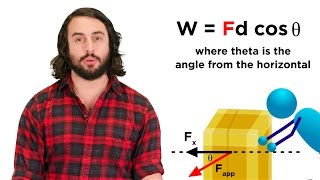
Exactly! And we also have a formula for work: W = F × d × cos(θ). Who can explain the components of this formula?

W is work, F is the force applied, d is how far it moves, and θ is the angle between the force and movement!
Great job! Remember: if the force and movement are in the same direction, work is maximized. Let’s wrap up by summarizing that work results in the transfer of energy.
Power and Efficiency
🔒 Unlock Audio Lesson
Sign up and enroll to listen to this audio lesson
Next, we’ll look at power. Power is essentially how quickly work gets done. Can anyone tell me how we measure power?
Is it in watts, like light bulbs?
Correct! Power is measured in watts, where 1 Watt equals 1 Joule per second. It’s important to understand how power affects energy use. Can anyone explain what efficiency means?
It’s about how well energy gets used without wasting it!
Exactly! Efficiency shows us how much useful energy output we get from our energy input. We often express it as a percentage. Remember: the higher the efficiency, the less waste!
Energy in Daily Life
🔒 Unlock Audio Lesson
Sign up and enroll to listen to this audio lesson
Let’s reflect on how these concepts apply in daily life. Can anyone think of an example of energy transforming from one type to another?
Like when I ride a bike, and my legs give it power!
Great example! That’s a transformation of chemical energy in your muscles to kinetic energy in the bike. What about electricity in our homes?
It’s the same! We turn on lights, and electrical energy becomes light and heat energy.
Exactly right! Energy transformations are all around us. It’s important we think about these transformations to promote efficiency and reduce waste.
Introduction & Overview
Read summaries of the section's main ideas at different levels of detail.
Quick Overview
Standard
The section discusses energy as the ability to do work or cause change, detailing its various forms such as kinetic and potential energy. It also introduces the concepts of work, power, and efficiency, explaining how they relate to energy transfer in physical systems, and highlighting their real-world applications.
Detailed
In this module, we delve into the crucial concepts of energy, work, and power, foundational elements in understanding physics. Energy is described as the capacity to do work, existing in several forms, including kinetic energy (energy of motion) and potential energy (stored energy). The principles governing energy transformations and transfers are addressed, leading to a discussion of work, defined as the force applied to move an object over distance. Power, the rate of work done or energy transferred over time, is examined with its relevant formulas and units. Furthermore, the notion of efficiency illustrates how machines convert energy input to useful output, with practical examples showing efficiency in daily energy use. Overall, these concepts establish a framework for analyzing physical phenomena and understanding the significance of energy utilization in society.
Youtube Videos


Audio Book
Dive deep into the subject with an immersive audiobook experience.
Energy: The Fundamental Ability to Cause Change
Chapter 1 of 7
🔒 Unlock Audio Chapter
Sign up and enroll to access the full audio experience
Chapter Content
At its core, energy is the capacity or ability to do work or to cause change. It is a fundamental property of the universe, pervasive in every interaction and transformation we observe. From the warmth of the sun on your skin to the rustling of leaves in the wind, energy is constantly being transferred and transformed. Physics seeks to understand these transformations and the laws that govern them.
Detailed Explanation
Energy is essentially the ability to do work or create an effect. It's not something we can physically touch or see, but we can observe its presence through its effects in the world. For example, you feel the warm energy from the sun, which can cause changes in temperature, or you notice how wind affects leaves. Scientists study energy to understand how these changes occur and what rules govern them.
Examples & Analogies
Think of energy like the fuel that powers a car. While you can't see the fuel directly being used to create movement, you can see the car drive forward. Similarly, energy is like the invisible force that makes things happen in nature.
Understanding Energy: A Deeper Dive
Chapter 2 of 7
🔒 Unlock Audio Chapter
Sign up and enroll to access the full audio experience
Chapter Content
Energy is not something that can be seen or touched directly, but its effects are evident everywhere. When an object moves, it has kinetic energy. When a spring is compressed, it stores elastic potential energy. When food is digested, chemical energy is released to fuel our bodies. The amount of energy a system possesses determines its potential to affect its surroundings or undergo internal changes.
Detailed Explanation
Energy comes in different forms, each demonstrating how energy can exist and be transformed. Kinetic energy relates to movement (like a moving car), while potential energy is stored energy that has the capability to work (like a wound-up spring). Food provides chemical energy, which our bodies convert into energy for movement and other activities. Essentially, the type and amount of energy an object has can influence its behavior and the changes it can enact.
Examples & Analogies
Imagine a bow and arrow: the stretched bow represents elastic potential energy. When you release the bowstring, that potential energy is converted into kinetic energy, shooting the arrow forward. This transformation shows how energy shifts from one form to another, just like in our bodies when we convert food into energy to move.
Forms of Energy: Diverse Manifestations of the Same Concept
Chapter 3 of 7
🔒 Unlock Audio Chapter
Sign up and enroll to access the full audio experience
Chapter Content
Energy exists in numerous forms, often categorized by the context in which they are observed. It's crucial to remember that these are simply different manifestations of the same underlying concept.
Detailed Explanation
Energy can take several forms, including kinetic, potential, thermal, electrical, and chemical energy, among others. Each type plays a critical role in various physical processes. Understanding these forms helps us see how energy operates in different situations and allows us to harness it effectively.
Examples & Analogies
Consider a water cycle: the water at the top of a hill has gravitational potential energy due to its height. As it flows downwards, that potential energy converts into kinetic energy as it rushes down, eventually creating thermal energy when it splashes at the bottom. This simple example captures the dynamic nature of energy forms.
The Principle of Conservation of Energy: A Universal Law
Chapter 4 of 7
🔒 Unlock Audio Chapter
Sign up and enroll to access the full audio experience
Chapter Content
One of the most fundamental and profound principles in physics is the Law of Conservation of Energy. It states: Energy cannot be created or destroyed, only transformed from one form to another, or transferred from one system to another. The total amount of energy in a closed system remains constant.
Detailed Explanation
This law is crucial for understanding how energy moves and changes in the universe. It tells us that while energy might take different forms (like from chemical energy in batteries to light energy in a flashlight), the total energy remains the same. Therefore, energy can change forms but cannot simply disappear or spontaneously appear.
Examples & Analogies
If you think of a battery-powered toy, when you turn it on, the chemical energy stored in the battery is converted into kinetic energy that moves the toy. Even though the chemical energy is used, the total energy remains constant throughout, demonstrating the conservation principle.
Energy Transformations in Everyday Scenarios
Chapter 5 of 7
🔒 Unlock Audio Chapter
Sign up and enroll to access the full audio experience
Chapter Content
Understanding energy conservation often involves tracing the path of energy as it changes forms.
Detailed Explanation
In our daily lives, energy transformations can be seen in various scenarios. For example, when you drop a ball, its gravitational potential energy converts to kinetic energy as it falls. When it bounces, that kinetic energy can convert to elastic potential energy and eventually to sound and thermal energy when it hits the ground. This illustrates how energy shifts form without being lost.
Examples & Analogies
Think about riding a bike downhill. As you descend, you feel faster – your gravitational potential energy transforms into kinetic energy, making you go quicker. Once you reach the bottom, you may apply brakes, which converts some of that kinetic energy into thermal energy as the brake pads generate heat. Each phenomenon captures real-world energy transformations consistently at play.
Work: The Mechanism of Energy Transfer
Chapter 6 of 7
🔒 Unlock Audio Chapter
Sign up and enroll to access the full audio experience
Chapter Content
In everyday language, 'work' often refers to any effortful activity. However, in physics, the term work has a precise and quantifiable meaning: Work is done when a force causes a displacement (movement) of an object in the direction of the force.
Detailed Explanation
In physics, 'work' isn’t just about exerting effort; it's specifically defined as force causing movement. For work to occur, three conditions must be met: a force is applied, movement happens, and that movement is in the direction of the force. If any of these conditions aren't satisfied, no work is done.
Examples & Analogies
Imagine pushing a heavy box across the floor. If you apply force and it moves, you've done work. But, if instead you're pushing against a wall and it doesn't budge, even though you're exerting effort, you've done no work according to the physics definition.
The Formula for Work Done
Chapter 7 of 7
🔒 Unlock Audio Chapter
Sign up and enroll to access the full audio experience
Chapter Content
The amount of work (W) done on an object by a constant force (F) is given by the formula: W=F×d×cosθ.
Detailed Explanation
This formula quantifies work done: W represents work measured in Joules, F is the force applied in Newtons, d is the distance moved in meters, and cosθ accounts for the angle between the force and the direction of movement. This formula helps us determine how much work is performed based on the direction and amount of force exerted over a distance.
Examples & Analogies
If you push a cart with a force of 10 Newtons for 5 meters in the same direction it moves, you've done 50 Joules of work. However, if you're pushing at an angle, the effective force still doing the work changes, shown by cosθ — similar to how pushing a swing from a certain angle can be more or less effective depending on how directly you're aligned with the motion.
Key Concepts
-
Energy: The capacity to do work or cause change.
-
Work: A measure of energy transfer when a force moves an object.
-
Power: The rate at which work is done.
-
Efficiency: The effectiveness of energy conversion processes.
-
Kinetic and Potential Energy: Different forms of energy.
Examples & Applications
A moving bicycle demonstrates kinetic energy, while a raised weight exhibits potential energy.
Switching on a flashlight shows the transformation of chemical energy in batteries into electrical energy and then into light energy.
Memory Aids
Interactive tools to help you remember key concepts
Rhymes
Energy flows, like a river wide, in every change, it's our guide.
Stories
Once upon a time, in a kingdom where energy could transform into light, there lived a wizard named Work who taught villagers to save their energy for efficiency and power their dreams.
Memory Tools
When remembering forms of energy, think K-P-T-E-C: Kinetic, Potential, Thermal, Electrical, Chemical.
Acronyms
WAVE - Work, Affect change, Various forms, Everywhere.
Flash Cards
Glossary
- Energy
The capacity to do work or cause change, existing in various forms.
- Work
A measure of energy transfer when a force causes displacement.
- Power
The rate at which work is done or energy is transferred.
- Efficiency
The ratio of useful output to total input energy, often expressed as a percentage.
- Kinetic Energy
The energy an object possesses due to its motion.
- Potential Energy
Stored energy based on an object's position or configuration.
- Mechanical Advantage
The ratio of output force to input force in a mechanical system.
- Conservation of Energy
A principle stating that energy cannot be created or destroyed, only transformed.
Reference links
Supplementary resources to enhance your learning experience.