
AllRounder.ai

Enrol to start learning

Reading is open to everyone. Enrolling is free, and it is what unlocks the audio lessons, practice tests and progress tracking.
Enrol free
4. Globalisation and Recent Trends in Business

4. Globalisation and Recent Trends in Business

Learn about 4. Globalisation and Recent Trends in Business and discover its key concepts through interactive lessons and practical exercises.

Sections

Globalisation and Recent Trends in Business

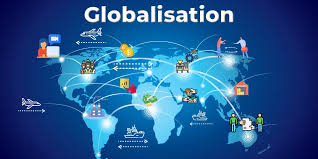
Globalisation has transformed businesses by enabling them to operate on a global scale, bringing both opportunities and challenges.

4 Section Overview

Start current section content and materials

4.1 Introduction

Globalisation reshapes business by transcending borders, driven by technology and market integration.

4.2 Meaning of Globalisation

Globalisation is the process of worldwide integration among people, companies, and governments, impacting trade, investment, and cultural exchange.

4.3 Features of Globalisation

This section outlines the key features of globalisation which have significantly reshaped the way businesses operate internationally.

4.3.1 Integration of Economies

The section discusses how globalization leads to the economic integration of nations through trade, investment, and the movement of resources.

4.3.2 Liberalisation of Trade

Liberalisation of trade involves the removal of tariffs and trade barriers to foster free trade among nations.

4.3.3 Free Flow of Capital

The free flow of capital refers to the ease with which investments can move across international borders, contributing to globalization.

4.3.4 Global Workforce

The Global Workforce refers to the recruitment and employment of talent from various countries, significantly impacted by globalization.

4.3.5 Technological Advancement

Technological advancement is a key driver of globalisation, facilitating connections across borders and transforming business operations.

4.3.6 International Brands

International brands play a pivotal role in globalisation by exemplifying the reach and impact of global businesses.

4.4 Factors Leading to Globalisation

This section explores various factors that have contributed to the increasing phenomenon of globalisation.

4.4.1 Technological Advancements

Technological advancements are pivotal in driving globalization, enabling businesses to connect globally through improved communication and innovation.

4.4.2 Deregulation and Liberalisation

Deregulation and liberalisation are key drivers of globalisation, promoting free trade and investment by reducing government restrictions on businesses.

4.4.3 International Agreements

International agreements play a pivotal role in promoting globalisation through cooperation in trade, investment, and cultural exchange.

4.4.4 Improved Infrastructure

Improved infrastructure significantly enhances global trade by facilitating transportation and logistics.

4.4.5 Rise of Multinational Corporations (MNCs)

The rise of Multinational Corporations (MNCs) illustrates the growing interconnectedness of the global economy and their critical role in shaping international business.

4.5 Impact of Globalisation on Business

This section discusses the profound effects of globalisation on businesses, highlighting both positive and negative aspects.

4.5.1 Positive Effects

This section outlines the positive effects of globalization on businesses.

4.5.1.1 Expansion of Markets

The expansion of markets due to globalisation allows businesses to reach international customers and compete globally.

4.5.1.2 Improved Quality and Efficiency

This section discusses how globalisation enhances the quality and efficiency of businesses through competitive pressures and innovation.

4.5.1.3 Access to Global Capital and Technology

This section discusses how globalization facilitates access to global capital and technology, impacting business dynamics.

4.5.1.4 Employment Generation

Employment generation refers to the job opportunities created as a result of increased production and investment driven by globalization.

4.5.1.5 Cultural Exchange

Cultural exchange significantly influences globalization and enhances understanding between people across different nations.

4.5.2 Negative Effects

Globalisation can lead to several negative effects on local economies, including threats to local industries and cultural erosion.

4.5.2.1 Threat to Local Industries

This section discusses how globalisation poses a significant challenge to local industries, particularly small businesses that struggle to compete with larger multinational corporations.

4.5.2.2 Economic Inequality

Economic inequality refers to the disparity in wealth and income between different groups within and between nations, heavily influenced by globalization.

4.5.2.3 Exploitation of Labour

The exploitation of labor highlights how globalization can lead to the neglect of labor rights in pursuit of cheaper production costs.

4.5.2.4 Cultural Erosion

Cultural erosion refers to the diminishing of local cultures due to the influence of global culture.

4.6 Recent Trends in Business Due to Globalisation

This section discusses the recent trends in business catalyzed by globalisation, highlighting the transformative impact on commerce and operations.

4.6.1 E-commerce and Digital Business

This section discusses how e-commerce and digital business models have emerged and evolved in the context of globalisation, reshaping traditional retail practices.

4.6.2 Outsourcing and Offshoring

Outsourcing and offshoring allow businesses to reduce costs by sourcing services from external vendors and foreign countries.

4.6.3 Rise of Start-ups and Unicorns

The rise of start-ups and unicorns signifies a new wave of rapid growth in technology-driven businesses in the global market.

4.6.4 Sustainability and Green Business

This section discusses the growing importance of sustainability and green practices in business operations.

4.6.5 Remote Work and Virtual Teams

Remote work and virtual teams enable businesses to operate with global teams using digital tools, revolutionizing workplace dynamics.

4.6.6 AI and Automation

AI and automation are reshaping business sectors, enhancing efficiency while presenting new challenges.

4.6.7 FinTech and Digital Payments

This section discusses the transformative impact of financial technologies (FinTech) and digital payment systems on modern transactions.

4.6.8 Global Supply Chains

The section explores the significance of global supply chains in the context of globalization and how they have transformed business operations across borders.

4.7 Role of MNCs in Globalisation

Multinational corporations (MNCs) play a critical role in globalisation by investing in developing economies and promoting global trade, while also bringing challenges such as monopolistic practices.

4.8 Challenges to Globalisation

This section discusses the various challenges facing globalisation, including trade wars, political instability, and environmental concerns.

4.9 India and Globalisation

This section discusses India's role in globalization, including the liberalization policies adopted since 1991 and the presence of Indian and multinational companies in the global market.

4.10 Steps Taken by the Government of India to Promote Globalisation

The Indian government has implemented several strategies to promote globalisation, focusing on liberal policies and reforms.

4.10.1 Liberal FDI policy

The Liberal FDI policy aims to attract foreign investment by minimizing restrictions, fostering economic growth, and enhancing global competitiveness.

4.10.2 Establishment of SEZs (Special Economic Zones)

Special Economic Zones (SEZs) are designated areas aimed at enhancing economic activity and attracting foreign investment through favorable policies.

4.10.3 Reforms in labour and tax laws

This section discusses the reforms in labour and tax laws as part of India's effort to promote globalisation.

4.10.4 Digital India and Start-up India initiatives

The Digital India and Start-up India initiatives aim to promote technology adoption and entrepreneurial growth in India.

4.10.5 Bilateral and multilateral trade agreements

Bilateral and multilateral trade agreements are crucial for facilitating international trade and enhancing economic cooperation between countries.

4.11 Summary

Globalisation reshapes business by opening new markets and creating both opportunities and challenges.

Learning Objectives

  • Master the fundamentals of 4. Globalisation and Recent Trends in Business

  • Apply learned concepts in practical scenarios

  • Successfully complete all chapter exercises

Practice Exercises

Total Questions

3

Estimated Time

6 min

Passing Score

70%

Instructions

  • Read each question carefully
  • You can use hints if you need help
  • Complete all questions before submitting