
Figures of Speech: Simile, Metaphor, Personification, Alliteration, etc.
Interactive Audio Lesson
Listen to a student-teacher conversation explaining the topic in a relatable way.
Understanding Simile
🔒 Unlock Audio Lesson
Sign up and enroll to listen to this audio lesson

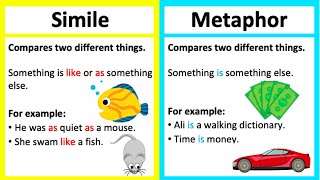
Today, we're starting with similes. A simile is a comparison between two different things using 'like' or 'as'. Can anyone give me an example of a simile?

Her smile was as bright as the sun!
Good job, Student_1! That shows how bright her smile is. Remember, similes help create vivid images in our minds. Can anyone think of another simile?

He runs like the wind!
Exactly! It suggests he's very fast. Let's try to remember this with the mnemonic: 'Similes Compare Us'. How can we apply similes in writing?

We can describe feelings or characters to make them more relatable!
Yes! Similes enrich our descriptions. Let's summarize: similes use 'like' or 'as' for comparisons to boost imagery.
Exploring Metaphors
🔒 Unlock Audio Lesson
Sign up and enroll to listen to this audio lesson

Next, let’s discuss metaphors. A metaphor suggests that one thing is another. It doesn't use 'like' or 'as'. Can someone provide a metaphor?

Time is a thief?
Great! That implies time steals moments from us. Who can explain why metaphors are powerful?
They evoke emotions and create strong imagery in just a few words!
Exactly! Let's remember with the acronym: 'Metaphors Make Meaning'. Why do authors prefer metaphors?
They make writing more engaging and artistic.
Yes! In summary, metaphors create deeper meanings by equating one thing to another.
Personification and Its Impact
🔒 Unlock Audio Lesson
Sign up and enroll to listen to this audio lesson
Now we focus on personification. This gives human traits to non-human things. Can anyone share an example?
The wind whispered secrets!
Excellent! This makes the wind seem alive and relatable. Why is personification effective in writing?
It helps readers connect with elements of nature or objects emotionally.
Correct! Let's use the memory aid: 'Personification Pairs Non-humans'. How does it enhance our understanding of literature?
It helps convey themes or emotions in a relatable way.
Exactly! In summary, personification brings life to non-human subjects, deepening our connection to the text.
The Role of Alliteration
🔒 Unlock Audio Lesson
Sign up and enroll to listen to this audio lesson
Today, we explore alliteration. It’s the repetition of the same consonant sound at the beginning of words. Can anyone give a classic example?
Peter Piper picked a peck of pickled peppers!
Perfect! This creates a musical quality. Why do you think authors utilize alliteration in their work?
To make phrases catchy and memorable!
Yes! Let’s remember this with the mnemonic 'Alliteration Attracts Attention'. What effects can it have on the overall tone?
It can make it feel joyful or playful.
Exactly! In summary, alliteration enhances the auditory experience and can set the tone of a piece.
Visual Power of Imagery
🔒 Unlock Audio Lesson
Sign up and enroll to listen to this audio lesson
Finally, let's talk about imagery. It’s when language appeals to the senses. Can anyone provide an example?
The sweet scent of jasmine filled the garden.
Great! It paints a vivid picture, doesn’t it? Why is imagery important in literature?
It engages readers and helps them visualize the scene better!
Exactly! Remember with the acronym: 'Imagery Invokes Imagination'. How does it help convey deeper themes?
Imagery allows readers to feel emotions and understand the characters' perspectives.
Well said! In summary, imagery enhances the beauty of writing, creating emotional connections.
Introduction & Overview
Read summaries of the section's main ideas at different levels of detail.
Quick Overview
Standard
The section discusses several pivotal figures of speech—like similes, metaphors, personification, and alliteration—that enrich writing by creating vivid imagery and emphasizing ideas. Understanding these devices allows readers to appreciate deeper meanings and emotional impacts in texts.
Detailed
Figures of Speech Overview
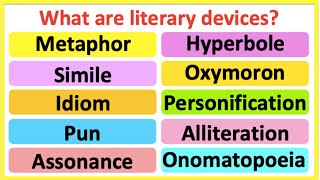
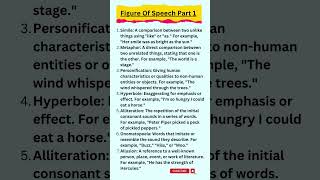
Figures of speech are integral to making language vibrant and engaging. This section explores several key figures of speech by defining each and providing illustrative examples to aid understanding. These devices include:
1. Simile
- Definition: A direct comparison between two unlike things using 'like' or 'as'.
- Examples: "Her smile was as bright as the sun." or "He fought like a lion."
2. Metaphor
- Definition: An indirect comparison that states one thing is another.
- Examples: "The classroom was a zoo during the lunch break."
3. Personification
- Definition: Attributing human qualities to inanimate objects, animals, or abstract ideas.
- Examples: "The flowers danced in the gentle breeze."
4. Alliteration
- Definition: The repetition of initial consonant sounds in close proximity.
- Examples: "Sally sells seashells by the seashore."
5. Onomatopoeia
- Definition: Words that imitate the sound they represent.
- Examples: "The clock went tick-tock."
6. Hyperbole
- Definition: An exaggerated statement not meant to be taken literally.
- Examples: "I'm so hungry I could eat a horse."
7. Imagery
- Definition: Language that appeals to the senses to create vivid pictures.
- Examples: "The crisp, cold air bit at my nose."
Understanding these figures of speech is crucial for comprehensive literary analysis, as they contribute significantly to the depth and enjoyment of literature.
Youtube Videos
Audio Book
Dive deep into the subject with an immersive audiobook experience.
Introduction to Figures of Speech
Chapter 1 of 8
🔒 Unlock Audio Chapter
Sign up and enroll to access the full audio experience
Chapter Content
Figures of speech are literary devices that use language in a non-literal way to create vivid images, emphasize ideas, or add beauty and depth to writing. They make language more expressive and impactful.
Detailed Explanation
Figures of speech are techniques used in writing that help express ideas in creative ways. Rather than simply stating facts, these devices allow writers to convey emotions, paint pictures in the reader's mind, and underscore meaning. By using figures of speech, writers can make their language more lively and memorable.
Examples & Analogies
Think of figures of speech as colorful paint on a canvas. Just like a painter uses vibrant colors to create a stunning image, writers use figures of speech to add vibrance and emotion to their words, making them more engaging for readers.
Simile
Chapter 2 of 8
🔒 Unlock Audio Chapter
Sign up and enroll to access the full audio experience
Chapter Content
Definition: A direct comparison between two unlike things using the words "like" or "as."
Examples:
- Her smile was as bright as the sun.
- He fought like a lion.
- The clouds looked like cotton balls.
Detailed Explanation
A simile is a figure of speech used to compare two different things in a way that highlights a shared characteristic. The words 'like' or 'as' are used to connect the two elements. For instance, saying 'her smile was as bright as the sun' suggests that her smile radiates warmth and cheerfulness, just like the sun does. It creates a visual image that makes the description more vivid.
Examples & Analogies
Imagine if someone says, 'Running in the rain felt refreshing like a cold drink on a hot day.' This simile paints a refreshing image, helping you recall the feeling of a cold drink when you're thirsty.
Metaphor
Chapter 3 of 8
🔒 Unlock Audio Chapter
Sign up and enroll to access the full audio experience
Chapter Content
Definition: An indirect comparison between two unlike things, stating that one thing is another. It does not use "like" or "as."
Examples:
- The classroom was a zoo during the lunch break.
- He is a towering giant among his friends.
- Love is a battlefield.
Detailed Explanation
A metaphor directly states that one thing is another, which can create a more forceful image than a simile. For example, when we say, 'the classroom was a zoo,' we imply that it was chaotic and noisy without actually saying it was chaotic. Metaphors can evoke strong imagery and feelings because they relate disparate concepts.
Examples & Analogies
If you call a very busy day at work 'a rollercoaster ride,' you're using a metaphor. This suggests that your day was full of ups and downs, much like the thrills of a rollercoaster, helping others visualize how intense your day was without needing to elaborate.
Personification
Chapter 4 of 8
🔒 Unlock Audio Chapter
Sign up and enroll to access the full audio experience
Chapter Content
Definition: Giving human qualities, characteristics, or actions to inanimate objects, animals, or abstract ideas.
Examples:
- The wind whispered secrets through the trees.
- The flowers danced in the gentle breeze.
- The old house groaned in the storm.
Detailed Explanation
Personification is a technique where non-human entities are described as possessing human traits. This technique can create emotional connections and enhance imagery in writing. For instance, saying 'the flowers danced in the gentle breeze' suggests a lively and joyful ambiance, allowing readers to feel the beauty of nature as if it were alive.
Examples & Analogies
When you say, 'The angry storm pounded on my door,' it's like giving the storm human emotions. It invites readers to feel as if the storm is not just weather, but a being that is expressing fury, making the narrative more engaging.
Alliteration
Chapter 5 of 8
🔒 Unlock Audio Chapter
Sign up and enroll to access the full audio experience
Chapter Content
Definition: The repetition of the same initial consonant sound in words that are close together in a sentence or line of poetry. It creates a musical effect and emphasizes certain words.
Examples:
- Sally sells seashells by the seashore.
- Peter Piper picked a peck of pickled peppers.
- Wonderful winter weather.
Detailed Explanation
Alliteration involves the repetition of the initial consonant sounds in a series of words. This creates a rhythmic and musical quality in writing, drawing attention to the phrases where it occurs. For example, 'Sally sells seashells by the seashore' is catchy and memorable because of the repeating 's' sound.
Examples & Analogies
Think of alliteration as the catchy jingles you hear in ads. When they say things like 'Picky people pick Peter Piper's pickled peppers,' the repetition makes it more memorable, just like a song that sticks in your head!
Onomatopoeia
Chapter 6 of 8
🔒 Unlock Audio Chapter
Sign up and enroll to access the full audio experience
Chapter Content
Definition: Words that imitate the sound they represent.
Examples:
- The buzz of the bee.
- The clock went tick-tock.
- The balloon popped.
- The cat meowed.
Detailed Explanation
Onomatopoeia refers to words that sound like what they mean. These words help create a vivid sound effect in writing, bringing the reader closer to the experience described. For instance, 'buzz' effectively represents the sound a bee makes, enhancing clarity and engagement in the text.
Examples & Analogies
Imagine you're describing a fireworks show and you say 'Boom!' This word not only tells the audience what kind of sound to expect, but it also immerses them in the experience, much like how you might feel the excitement of the show.
Hyperbole
Chapter 7 of 8
🔒 Unlock Audio Chapter
Sign up and enroll to access the full audio experience
Chapter Content
Definition: An extreme exaggeration used for emphasis or effect, not meant to be taken literally.
Examples:
- I'm so hungry I could eat a horse.
- I've told you a million times.
- My backpack weighs a ton.
Detailed Explanation
Hyperbole is a literary device used to convey strong emotions or feelings through exaggerated statements. These are not meant to be taken literally but serve to emphasize a point. Saying, 'I've told you a million times' suggests frustration more than an actual count of times.
Examples & Analogies
If your friend says, 'I am so tired I could sleep for a year,' it’s a hyperbole. It's not possible to sleep for a year but this exaggeration humorously expresses just how exhausted they feel—in a way that makes you sympathize.
Imagery
Chapter 8 of 8
🔒 Unlock Audio Chapter
Sign up and enroll to access the full audio experience
Chapter Content
Definition: Language that appeals to the five senses (sight, sound, smell, taste, touch) to create vivid mental pictures or sensations for the reader. While not a "figure of speech" in the same way as simile, it's a crucial poetic device.
Examples:
- The crisp, cold air bit at my nose. (Touch/Temperature)
- The sweet scent of jasmine filled the garden. (Smell)
- He heard the crunch of fallen leaves under his boots. (Sound)
Detailed Explanation
Imagery consists of descriptive language that engages the senses, allowing readers to visualize scenes and experiences vividly. It can involve any of the five senses, making descriptions more lively and relatable. For instance, 'the sweet scent of jasmine' creates a sensory experience that transports the reader into a garden filled with that specific aroma.
Examples & Analogies
Imagine attending a fair and hearing someone describe it as 'The smell of roasted corn and cotton candy hung in the air, while laughter echoed like music.' Here, the imagery helps you 'see,' 'smell,' and 'hear' the fair, making it feel more alive in your imagination.
Key Concepts
-
Simile: A direct comparison using 'like' or 'as'.
-
Metaphor: An indirect comparison that equates two unlike things.
-
Personification: Granting human traits to non-human entities.
-
Alliteration: Repetition of initial sounds for emphasis and rhythm.
-
Onomatopoeia: Words that sound like their meanings.
-
Hyperbole: Exaggerated statements for emphasis.
-
Imagery: Sensory language that creates mental pictures.
Examples & Applications
Simile: 'Her smile was as bright as the sun.'
Metaphor: 'Life is a journey.'
Personification: 'The wind howled through the night.'
Alliteration: 'Betty Botter bought some butter.'
Onomatopoeia: 'The thunder boomed.'
Hyperbole: 'I’m so sleepy I could sleep for a year!'
Imagery: 'The golden sunflowers danced in the warm breeze.'
Memory Aids
Interactive tools to help you remember key concepts
Rhymes
If to compare, be sure to say, 'Like' or 'as' is the way!
Stories
In a bustling town, a brave knight fought fiercely like a lion, while gentle winds whispered secrets to the trees, bringing them to life and filling the skies with bright colors in spring.
Memory Tools
To remember figures of speech, think of the acronym SIM-PHAO: Simile, Imagery, Metaphor, Personification, Hyperbole, Alliteration, Onomatopoeia.
Acronyms
S-P-A-M H-O
Simile
Personification
Alliteration
Metaphor
Hyperbole
Onomatopoeia.
Flash Cards
Glossary
- Simile
A figure of speech that compares two unlike things using 'like' or 'as'.
- Metaphor
A figure of speech that implies a comparison between two unlike things without using 'like' or 'as'.
- Personification
Attributing human characteristics to non-human entities, objects, or ideas.
- Alliteration
The repetition of the initial consonant sounds in a series of words.
- Onomatopoeia
Words that phonetically imitate the sounds they describe.
- Hyperbole
An exaggerated statement used for emphasis or effect.
- Imagery
Language that evokes sensory experience.
Reference links
Supplementary resources to enhance your learning experience.