
Module 1: Introduction to Databases
Interactive Audio Lesson
Listen to a student-teacher conversation explaining the topic in a relatable way.
Introduction to Database Systems
🔒 Unlock Audio Lesson
Sign up and enroll to listen to this audio lesson

Welcome, everyone! Today we're diving into what defines a database system. Can anyone tell me what a database system fundamentally is?

Isn't it just a place where we store data?
That's a good start! A database system is not just about storing data; it's about managing that data effectively and securely. It consists of two main components: the database itself, which is the structured collection of data, and the Database Management System, or DBMS, which is the software that interacts with that data.

So, the DBMS is like a coordinator for data?
Exactly! The DBMS orchestrates the flow of information, handling everything from data access to integrity maintenance. A mnemonic to remember this is 'B-DMS,' which stands for 'Both Database and Management System.'

What are some problems that arise when we don't have a database system?
Great question! Without a structured database, data can become fragmented, redundant, and inconsistent—making management a nightmare. This leads us right into our next topic!
In summary, a database system combines a structured data collection and a management software system to ensure effective data handling.
Characteristics of Database Systems
🔒 Unlock Audio Lesson
Sign up and enroll to listen to this audio lesson

Now, let's explore the defining characteristics of database systems. What do you think some of these characteristics might be?

Maybe how they handle multiple user access?
That's one! Let's dive into some key characteristics: first is the self-describing property, which means that databases store not just the data but also metadata—data about data. Can anyone give an example of metadata?
Would information like data types and relationships count as metadata?
Yes! Exactly. Next is program-data independence, which means that the structure of the data can change without altering how the applications interact with it. Remember the acronym PDI for Program-Data Independence!
What about security? How do databases manage that?
Good point! Databases also offer controlled data sharing through defined user levels, and they enforce access controls to secure sensitive information. That leads to our systems performing better as both by supporting concurrent user access and maintaining data integrity.
To wrap up, the defining characteristics of a database system ensure not just the efficient storage of data but also its integrity, accessibility, and security.
Evolution of Database Systems
🔒 Unlock Audio Lesson
Sign up and enroll to listen to this audio lesson
Let's talk about the evolution of database systems. What were the early systems known as before databases were mainstream?
They were called file processing systems, right?
That's correct! File processing systems managed data in isolated files, which led to issues like data redundancy and inconsistency. Can anyone explain why this redundancy is a problem?
If we have the same information in multiple places, it’s easy for some of them to get outdated, leading to wrong data.
Exactly! This is why the transition to database systems was vital. They centralize data storage, therefore allowing for better integrity and efficiency.
What kind of advantages do database systems really have over the older systems?
Database systems consolidate data management and enforce standards that maintain data quality. By eliminating duplication and ensuring consistent access methods, they empower organizations to utilize their data more effectively.
In summary, the evolution from file systems to database systems underscores the need for improved data management and quality.
Introduction & Overview
Read summaries of the section's main ideas at different levels of detail.
Quick Overview
Standard
This module introduces database systems as critical components in modern computing architectures. It explains the intrinsic nature of databases, the significance of DBMS, and contrasts traditional file systems with contemporary database paradigms, highlighting the benefits they offer in terms of data integrity, accessibility, and management.
Detailed
Module 1: Introduction to Databases
This module serves as the foundational cornerstone for comprehending database systems, their historical progression, and their indispensable role in modern computing architectures. This exploration begins by investigating the motivations behind the inception of database technologies, emphasizing how modern database paradigms differ from rudimentary data management approaches.
The intrinsic nature of a database system is discussed, illustrating how databases are more than mere data collections; they are integrated environments designed for efficient and secure data management. Distinctions are drawn between the database itself and the Database Management System (DBMS), which facilitates data interaction and ensures data integrity.
Key characteristics that elevate robust database systems above simple file storage include: self-describing properties (metadata management), program-data independence (decoupling), support for multiple views of data, data sharing and concurrency control, and more. The evolution from traditional file processing systems to modern databases is explored, illustrating the systemic problems of redundancy, inconsistency, and data isolation that led to the development of DBMS.
Through this module, learners will acquire a strong conceptual foundation necessary for navigating advanced database design, implementation, and administration.
Youtube Videos
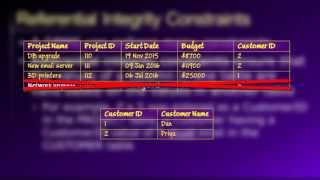

Audio Book
Dive deep into the subject with an immersive audiobook experience.
Foundational Overview of Database Systems
Chapter 1 of 4
🔒 Unlock Audio Chapter
Sign up and enroll to access the full audio experience
Chapter Content
This module serves as the foundational cornerstone for comprehending database systems, their historical progression, and their indispensable role in the architecture of modern computing. We will embark on a meticulous examination of the motivations behind their inception, drawing sharp distinctions between contemporary database paradigms and the rudimentary data management approaches that preceded them.
Detailed Explanation
This chunk introduces the concept of database systems and highlights their importance in today’s computing landscape. It sets the stage for understanding databases by explaining that they are not just data storage tools, but essential components that support complex architectures and improve data management. By learning about historical motivations and contrasts with older systems, students will appreciate why databases evolved.
Examples & Analogies
Think of databases like the foundation of a modern building. Just as a solid foundation is crucial for supporting the entire structure, a well-designed database is essential for managing and organizing data effectively in any software application.
Understanding Data Abstraction
Chapter 2 of 4
🔒 Unlock Audio Chapter
Sign up and enroll to access the full audio experience
Chapter Content
You will acquire an exhaustive grasp of data abstraction, the multi-layered architectural framework that underpins the robustness and flexibility of database systems, and the diverse set of human roles that collectively govern their lifecycle.
Detailed Explanation
This chunk emphasizes the concept of data abstraction, which simplifies how users interact with databases by separating how data is stored from how it is used. It also indicates that multiple roles exist within the ecosystem of database management, and these roles work together to ensure that data is managed efficiently throughout its lifecycle.
Examples & Analogies
Imagine a smartphone app that shows you restaurant options. You don’t need to know how the app retrieves data from databases or what technical processes occur behind the scenes; you just need to use it easily. This is similar to how abstraction in databases allows users to access complex systems without needing to understand the underlying mechanics.
The Importance of Understanding Human Roles
Chapter 3 of 4
🔒 Unlock Audio Chapter
Sign up and enroll to access the full audio experience
Chapter Content
By the culmination of this module, you will possess an exceptionally robust and nuanced conceptual framework, indispensable for navigating the complexities of advanced database design, implementation, and administration.
Detailed Explanation
As students progress through the module, they will build a conceptual framework that encompasses various database roles, including designers, administrators, and users. Understanding these roles is crucial for successful database implementation and ensures that students are prepared to tackle complex scenarios in database management.
Examples & Analogies
Consider a movie production where the director, actors, and crew all have specific roles that contribute to the film's success. Similarly, in database management, each role plays a critical part in achieving effective data utilization and system performance.
Historical Progression of Database Systems
Chapter 4 of 4
🔒 Unlock Audio Chapter
Sign up and enroll to access the full audio experience
Chapter Content
You will embark on a meticulous examination of the motivations behind their inception, drawing sharp distinctions between contemporary database paradigms and the rudimentary data management approaches that preceded them.
Detailed Explanation
This chunk underscores the historical context of database systems by examining their evolution from basic data management techniques to sophisticated modern paradigms. By understanding this progression, students will recognize the necessity for databases in handling increasingly complex data and operational requirements.
Examples & Analogies
Think about how automobiles evolved from basic horse-drawn carriages to high-tech electric vehicles. Just like vehicles became crucial for modern transportation, databases have become essential for managing the vast amounts of data generated in today's digital world.
Key Concepts
-
Database: A structured collection of data managed for efficient access.
-
Database Management System (DBMS): Software that manages data interactions.
-
Metadata: Data that provides information about other data.
-
Program-Data Independence: Separation of data structure change from application code.
-
Data Redundancy: Unnecessary duplication of data leading to inconsistencies.
-
Data Integrity: Consistency and accuracy of stored data.
Examples & Applications
An example of metadata would be columns in a database table that describe the data types of each field.
A relational database like MySQL efficiently stores data in tables and uses SQL to manage data interactions.
Memory Aids
Interactive tools to help you remember key concepts
Rhymes
To keep data neat, organized and sweet, use a DBMS, that can't be beat!
Stories
Imagine a library where books are stored willy-nilly (like file systems) versus an organized library with a catalog and library system (like a DBMS). The organized library allows you to find books quickly without hassle.
Memory Tools
Remember the acronym 'DBMS' as 'Data Base Management Simplification' when considering its role!
Acronyms
PDI stands for Program-Data Independence, meaning changes in the database structure don’t affect applications.
Flash Cards
Glossary
- Database
A structured collection of data that is managed to enable efficient retrieval and manipulation.
- Database Management System (DBMS)
Software that facilitates interactions with a database, managing data storage, access, and integrity.
- Metadata
Data that describes other data, such as data types, relationships, and constraints.
- ProgramData Independence
The ability to change data structure without impacting application programs that access the data.
- Data Redundancy
The unnecessary duplication of data in multiple locations, leading to potential inconsistencies.
- Data Integrity
The accuracy and consistency of data stored in a database.
Reference links
Supplementary resources to enhance your learning experience.