
Week 3: Embedded System Peripherals: Interfacing with the World
Interactive Audio Lesson
Listen to a student-teacher conversation explaining the topic in a relatable way.
Digital I/O Components
🔒 Unlock Audio Lesson
Sign up and enroll to listen to this audio lesson

Today, we’re going to discuss Digital Input/Output, or GPIOs. Can anyone tell me what GPIO stands for?

It stands for General Purpose Input/Output!
Correct! GPIO pins allow us to interface with push buttons and LEDs. Why do you think these are important in embedded systems?

They help us interact with the user and provide feedback, right?
Exactly! They form the fundamental way of input and output in many devices. Remember, input devices might include sensors or buttons, while outputs might involve LEDs and buzzers. Now, can someone give me a practical example using GPIO?

Like turning on an LED when a button is pressed?
Yes, that's a classic example! In this scenario, we can use a simple condition to control the LED when the button input changes. Always remember the acronym GPIO to keep the function of these crucial components in mind!
In summary, GPIOs are essential for user interaction in embedded systems by facilitating basic input and output operations.
Analog I/O and ADCs
🔒 Unlock Audio Lesson
Sign up and enroll to listen to this audio lesson

Let’s expand our discussion to Analog I/O. Who can tell me the purpose of an Analog-to-Digital Converter, or ADC?

An ADC converts analog signals into digital data, right?
Correct! Why is this conversion necessary in embedded systems?
Because most microcontrollers work with digital data, so we need to convert the real-world signals, like temperature or light, into a format they can process.
Exactly! And what about Digital-to-Analog Converters, DACs? How do they fit into this?
DACs take digital signals and convert them back into analog form for controlling devices?
Absolutely! Together, ADCs and DACs allow for real-time interaction with the physical world. Can anyone think of an application where both an ADC and DAC might be used?
In audio processing! The microphone uses an ADC to convert sound waves into digital signals, and a DAC is used to convert digital audio data back to sound for playback.
Great example! Always remember the role of ADCs and DACs in bridging the gap between our digital systems and the analog outside world.
Timers and PWM
🔒 Unlock Audio Lesson
Sign up and enroll to listen to this audio lesson
This session is about timers and PWM. Who can tell me what PWM stands for?
It stands for Pulse Width Modulation!
Exactly! Timers are used to create PWM signals. Can anyone explain what PWM does?
It adjusts the power supplied to devices by changing the width of the pulses!
That's right! By varying the width of each pulse, we can control the average power delivered to a device, like dimming an LED. Why is PWM useful in embedded systems?
It allows for efficient control of motors and lights with fewer components.
Correct! PWM is energy efficient and reduces the heat generated in devices. Can someone give an example where PWM is beneficial?
In motor speed control! We can vary the speed by changing the duty cycle of the PWM signal.
Excellent observation! Timers and PWM are essential for dynamic control in embedded systems.
Serial Communication Protocols
🔒 Unlock Audio Lesson
Sign up and enroll to listen to this audio lesson
Now, let’s discuss serial communication protocols. What are some examples of these, can anyone name a few?
UART, SPI, and I2C!
Great job! Each of these protocols serves different applications. Can someone explain what UART is?
UART stands for Universal Asynchronous Receiver-Transmitter, and it's used for asynchronous serial communication.
Exactly! And what about SPI? How does it differ from UART?
SPI is synchronous and allows high-speed communication between devices.
That's right! The synchronous nature of SPI allows it to be faster than UART. Can anyone tell me when you might use I2C over the others?
I2C is great for connecting multiple devices with just two wires, like in sensors that require a common bus.
Absolutely! The choice of protocol depends on factors like speed and the number of devices. To remember, think SPI for speed and I2C for multiple devices. Very important to keep in mind!
DMA Introduction
🔒 Unlock Audio Lesson
Sign up and enroll to listen to this audio lesson
Finally, let’s talk about Direct Memory Access, or DMA. Who can explain what DMA does?
DMA allows peripherals to access system memory without CPU involvement!
Correct! This offloads data transfer tasks from the CPU, improving processing efficiency. Why is this advantageous in embedded applications?
It allows the CPU to focus on executing code while data transfers happen in the background.
Exactly! This can lead to better performance and lower latency. Can someone give an example of where DMA might be particularly useful?
In audio streaming! DMA can transfer audio data continuously, freeing up CPU resources.
Great example! DMA is crucial in high-performance applications that require efficient data handling.
Introduction & Overview
Read summaries of the section's main ideas at different levels of detail.
Quick Overview
Standard
In this section, learners will explore the key components involved in interfacing embedded systems with the external world, including Digital I/O, Analog I/O, timers, and communication protocols like UART, SPI, and I2C. Understanding these concepts is crucial for developing responsive and integrated embedded applications.
Detailed
Embedded System Peripherals: Interfacing with the World
This section provides a comprehensive examination of the various peripherals that allow embedded systems to interface with the external environment. The key areas covered include:
1. Digital I/O
- General Purpose Input/Output (GPIO) Pins: Essential for controlling push buttons and LEDs, enabling interaction with user inputs and outputs.
2. Analog I/O
- Analog-to-Digital Converters (ADCs): Convert analog signals from sensors into digital data for processing.
- Digital-to-Analog Converters (DACs): Reverse the process, allowing digital signals to control physical devices like motors or speakers.
3. Timers and Counters
- Pulse Width Modulation (PWM): Utilizes timers for generating analog-like signals through duty cycle modulation in digital outputs.
- Input Capture/Output Compare: Essential for measuring time intervals and generating specific output timings.
4. Serial Communication Protocols
- UART, SPI, I2C: Protocols that facilitate data exchange between devices. Understanding these is critical for networking multiple peripherals effectively.
5. Parallel Communication
- Parallel Ports: Allow multiple bits of data to be transmitted simultaneously, streamlining data flow for more complex applications.
6. Direct Memory Access (DMA)
- Introduction to DMA: Enables peripherals to communicate with memory without CPU intervention, increasing efficiency in data transfer and processing.
Overall, this section highlights the significance of these peripherals in creating functional embedded systems that can react and integrate with their environments efficiently.
Youtube Videos




Audio Book
Dive deep into the subject with an immersive audiobook experience.
Digital I/O: GPIOs, Push Buttons, LEDs
Chapter 1 of 6
🔒 Unlock Audio Chapter
Sign up and enroll to access the full audio experience
Chapter Content
Digital Input/Output (I/O) is a fundamental aspect of interfacing embedded systems with the external world. General Purpose Input/Output (GPIO) pins are used to read input signals or send output signals. Push buttons serve as input devices, while LEDs act as output indicators.
Detailed Explanation
Digital I/O components include GPIO pins, which allow microcontrollers to interact with the outside world. An input from a push button can send a signal to the microcontroller that signifies a user action (like pressing a button), while an output to an LED can indicate a system state (like 'on' or 'off'). By configuring these GPIO pins, developers can create user interfaces and visual feedback mechanisms in their embedded systems.
Examples & Analogies
Consider a simple remote control. When you press a button (input), it sends a signal to the remote that tells it to turn on the TV (output). In our embedded system, the push button serves similarly, sending a signal to the microcontroller, which then activates an LED to indicate that the action has been successful.
Analog I/O: ADCs and DACs
Chapter 2 of 6
🔒 Unlock Audio Chapter
Sign up and enroll to access the full audio experience
Chapter Content
Analog Input/Output allows embedded systems to process continuous signals. Analog-to-Digital Converters (ADCs) transform analog signals into digital data, while Digital-to-Analog Converters (DACs) convert digital signals back into analog form.
Detailed Explanation
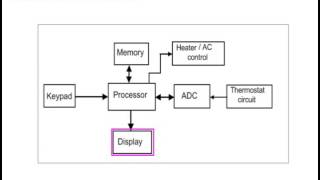
ADCs are critical for reading sensor data such as temperature, light levels, or sound levels. They take an analog signal that varies continuously and convert it into a digital representation that the microcontroller can process. Conversely, DACs allow the microcontroller to output a variable voltage or current, enabling it to control devices like motors or audio speakers that require analog signals.
Examples & Analogies
Imagine a thermometer that gives you a temperature reading. The actual temperature is a continuous value (analog), but your microcontroller needs a number it can work with (digital). The ADC in your embedded system adjusts this value, much like turning a continuously changing temperature into a discrete number on a display. Similarly, if you want to play a sound, the DAC converts the digital signal from your computer back into an audible sound wave.
Timers and Counters
Chapter 3 of 6
🔒 Unlock Audio Chapter
Sign up and enroll to access the full audio experience
Chapter Content
Timers and counters in embedded systems are used for various timing-related tasks, such as generating precise time delays, measuring time intervals, and producing Pulse Width Modulation (PWM) outputs for controlling motors and LEDs.
Detailed Explanation
Timers keep track of time intervals in microcontrollers, essential for tasks that need precise timing, like generating signals at regular intervals (PWM). For instance, using a timer, a controller can decide to turn an LED on for a certain duration and then turn it off, creating a dimming effect. Counters can keep track of events, such as counting the number of pushes on a button or pulses from a sensor, enabling applications in automation and feedback systems.
Examples & Analogies
Think of a stopwatch used when racing. It counts seconds as you run and signals when to stop. Similarly, in an embedded system, a timer counts or measures the duration of how long an LED should stay lit. PWM signals generated by timers operate like a dimmer switch, adjusting how 'bright' an LED appears by changing how long it's on during a specific time period.
Serial Communication Protocols
Chapter 4 of 6
🔒 Unlock Audio Chapter
Sign up and enroll to access the full audio experience
Chapter Content
Serial communication protocols such as UART, SPI, and I2C facilitate data exchange between microcontrollers and peripherals. They determine how data is transmitted and received, enabling devices to share information effectively.
Detailed Explanation
These protocols define the rules for sending and receiving data bits between devices. UART (Universal Asynchronous Receiver-Transmitter) is often used for simple, low-speed connections, while SPI (Serial Peripheral Interface) and I2C (Inter-Integrated Circuit) allow multiple devices to communicate on the same bus, making them efficient for embedded systems. These serial protocols are crucial in scenarios where numerous devices need to interact with the microcontroller smoothly.
Examples & Analogies
Imagine a group of friends passing notes in class. If one friend writes a note (data), they need to follow specific guidelines (the communication protocol) on how to pass this note so that everyone understands what it says. UART is like a one-on-one note exchange, while SPI and I2C are more like a conversation around a table where multiple friends can share information at once.
Parallel Communication: Parallel Ports
Chapter 5 of 6
🔒 Unlock Audio Chapter
Sign up and enroll to access the full audio experience
Chapter Content
Parallel communication allows multiple data bits to be transmitted simultaneously over multiple channels. Parallel ports were commonly used for high-speed data transfer in older computing systems.
Detailed Explanation
Unlike serial communication, which sends data one bit at a time, parallel communication sends multiple bits simultaneously. This can significantly increase data transfer rates, making it ideal for applications where speed is critical. However, it is less common in modern systems due to increased complexity and wiring requirements compared to serial communication protocols.
Examples & Analogies
Imagine a group of workers carrying boxes to a truck. If each worker can only take one box at a time (like serial communication), it takes longer for all the boxes to be loaded. But if multiple workers can carry several boxes at once (parallel communication), the truck gets loaded much faster. Parallel ports, though faster, require more organization and planning compared to the simpler, but slower serial methods.
Direct Memory Access (DMA)
Chapter 6 of 6
🔒 Unlock Audio Chapter
Sign up and enroll to access the full audio experience
Chapter Content
DMA enables peripherals to communicate with system memory independently of the CPU, allowing for efficient data transfers without burdening the processor with direct data handling tasks.
Detailed Explanation
With DMA, devices like ADCs can directly write data to the memory without CPU intervention, allowing high-speed data transfers and freeing up the CPU to perform other tasks. This is particularly beneficial in systems that handle large amounts of data, such as audio or video processing, where processing speed is critical.
Examples & Analogies
Think of a student who has to file documents (data) in a binder (memory). If the student does it themselves for each document, they take a lot of time. But if an assistant (DMA) helps by putting multiple documents in the binder, the student can focus on other tasks, making everything more efficient. DMA helps the CPU manage multiple data transfers without getting overloaded.
Key Concepts
-
GPIO: Allows digital interaction through pins.
-
ADC: Converts real-world analog signals to digital.
-
DAC: Converts digital output back to analog.
-
PWM: Modulates signal width for device control.
-
UART: Enables serial communication asynchronously.
-
SPI: Permits high-speed synchronous communication.
-
I2C: Connects multiple devices using a simple two-wire interface.
-
DMA: Streamlines memory access for peripherals.
Examples & Applications
Using GPIO pins to turn on an LED when a button is pressed.
Utilizing an ADC to read temperature from a thermistor.
Employing PWM to control the brightness of an LED.
Implementing UART for sending debug messages to a terminal.
Using I2C to communicate between a microcontroller and multiple sensors.
Memory Aids
Interactive tools to help you remember key concepts
Rhymes
GPIO for input, ADC for read; PWM for control, that’s all we need.
Stories
Imagine a concert where the sound engineer uses ADCs to capture the music, and DACs to amplify it on stage, while the lights fade in and out using PWM signals.
Memory Tools
GAP-AD for GPIO, ADC, and PWM: General for GPIO, Analog for ADC, Power modulated for PWM.
Acronyms
DAP- Direct Access Protocol for dancing through DMA, UART, and I2C.
Flash Cards
Glossary
- GPIO
General Purpose Input/Output; pins used to interface with various digital components.
- ADC
Analog-to-Digital Converter; converts analog signals into digital data.
- DAC
Digital-to-Analog Converter; converts digital data back into analog signals.
- PWM
Pulse Width Modulation; a technique used to control the power delivered to a device.
- UART
Universal Asynchronous Receiver-Transmitter; a communication protocol for asynchronous serial communication.
- SPI
Serial Peripheral Interface; a synchronous communication protocol for high-speed data transfer.
- I2C
Inter-Integrated Circuit; a communication protocol used for connecting multiple peripheral devices.
- DMA
Direct Memory Access; allows peripherals to access system memory without involving the CPU.
Reference links
Supplementary resources to enhance your learning experience.