
Dynamic-Priority Preemptive Scheduling Algorithms
Interactive Audio Lesson
Listen to a student-teacher conversation explaining the topic in a relatable way.
Introduction to Dynamic-Priority Scheduling
🔒 Unlock Audio Lesson
Sign up and enroll to listen to this audio lesson

Today, we're diving into dynamic-priority preemptive scheduling algorithms. Can anyone tell me why deadlines are so important in real-time systems?

Deadlines ensure that certain tasks complete on time, right?
Exactly! Deadlines are crucial for maintaining system functionality. Dynamic-priority scheduling adjusts task priorities as deadlines approach, allowing for optimal execution.

So, higher-priority tasks get processed first as their deadlines get closer?
Correct! This is the primary concept behind algorithms like Earliest Deadline First, or EDF.

What about tasks with later deadlines?
Tasks with later deadlines are deprioritized until their deadlines approach. This adaptability is a major advantage of dynamic-priority scheduling.
To remember this, think of the acronym 'DEAD' — Dynamic Execution according to Approaching Deadlines.
Now, let's summarize what we discussed: dynamic scheduling allows tasks to adapt their priority based on deadlines, promoting better resource utilization. Any questions?
Earliest Deadline First (EDF)
🔒 Unlock Audio Lesson
Sign up and enroll to listen to this audio lesson

Now, let’s focus on the Earliest Deadline First algorithm. Can someone explain how EDF determines which task to run next?

It selects the task with the earliest deadline, right?
Correct! By always executing the task with the closest deadline, EDF can optimize task scheduling effectively. What about its optimality?
Doesn’t it mean that if tasks can be scheduled by any method, they can also be scheduled by EDF?
Spot on! This is one of the significant strengths of EDF. However, what do you think are some challenges associated with EDF?
I think it has high overhead because it needs to check deadlines constantly.
Absolutely! And what happens when the system is overloaded?
Tasks might miss their deadlines, not just the lower-priority ones?
Yes, the 'domino effect' is a significant problem under overload conditions. To remember this, think of 'Task Tidal Wave' where a small overload can drown many tasks.
Least Laxity First (LLF)
🔒 Unlock Audio Lesson
Sign up and enroll to listen to this audio lesson
So next is the Least Laxity First algorithm. Who can explain what laxity is?
Isn't it the time left until a task's deadline minus its remaining execution time?
Exactly! LLF selects the task with the smallest laxity. This offers a dynamic way to prioritize tasks. What are some advantages of LLF?
Like EDF, it is also optimal for scheduling!
Right! However, LLF has significant challenges. Any thoughts on those?
It can have an extremely high overhead from calculating laxity for many tasks constantly.
Correct! This can lead to excessive context switching, also called 'thrashing.' To remember this, visualize a 'Laxity Limbo' where tasks are stuck in an endless cycle of switching!
Comparative Challenges
🔒 Unlock Audio Lesson
Sign up and enroll to listen to this audio lesson
Now, let’s compare EDF and LLF. Both are optimal but face different challenges. What overlap do you see?
They both struggle with overhead costs but in slightly different ways.
Yes! EDF has overhead from dynamic priority assignment, while LLF suffers from frequent laxity calculations. What about in overload situations?
In EDF, all tasks might miss deadlines, but in LLF, we might experience thrashing, right?
Exactly! Think of 'Festival Overload' representing busy times when both schemes can falter under pressure. Let’s summarize: EDF is deadline-driven; LLF is laxity-driven with unique challenges for each regarding overhead and overload behaviors.
Real-Life Applications
🔒 Unlock Audio Lesson
Sign up and enroll to listen to this audio lesson
Finally, let's look at where we can apply these scheduling algorithms. Can anyone think of examples in real-time systems?
Would video streaming applications use these algorithms?
Absolutely! They need to maintain deadlines to ensure smooth playback. What about critical systems like flight control?
These systems can also rely on these algorithms to manage multiple tasks effectively.
Precisely! Both EDF and LLF can be instrumental in ensuring optimal operation in various applications. Remember ‘RTS’ — Real-Time Systems need dynamic management! Any questions?
Introduction & Overview
Read summaries of the section's main ideas at different levels of detail.
Quick Overview
Standard
In this section, we delve into dynamic-priority preemptive scheduling algorithms, focusing on the Earliest Deadline First (EDF) and Least Laxity First (LLF) algorithms. We explore how each algorithm assigns priorities based on runtime parameters, their optimality, and the challenges they face, particularly regarding implementation overhead and responsiveness. Additionally, we lay out the schedulability tests applicable to these algorithms.
Detailed
In the realm of real-time scheduling, dynamic-priority preemptive algorithms adjust task priorities in response to real-time conditions, particularly deadlines. This section covers two notable algorithms: Earliest Deadline First (EDF) and Least Laxity First (LLF).
Earliest Deadline First (EDF)
The EDF scheduling algorithm operates on the principle that the task with the nearest absolute deadline is given the highest priority. This means that as deadlines approach, tasks are dynamically prioritized, allowing the system to optimize for timely execution.
Key Properties of EDF:
- Optimality: EDF is recognized as optimal for preemptive scheduling. If any task set can be scheduled without missing deadlines, it can be scheduled using EDF, which allows for 100% CPU utilization under optimal task configurations.
- Dynamic Priorities: The algorithm inherently supports changing priorities based on deadlines, promoting flexibility.
Challenges of EDF:
- Higher Implementation Overhead: Continuous reassessment of task priorities incurs overhead.
- Overload Behavior: In cases where tasks exceed 100% utilization, EDF may lead to more complex deadline misses compared to fixed-priority systems.
Least Laxity First (LLF)
LLF selects the task with the least laxity (the smallest slack time) for execution, where laxity is defined as the time remaining until a task's deadline subtracted by its remaining execution time.
Properties of LLF:
- Optimality: Like EDF, LLF is also optimal for preemptive scheduling, achieving up to 100% utilization under certain conditions.
- Dynamic Priorities: Task priorities change rapidly, depending on their laxity.
Challenges of LLF:
- Extremely High Overhead: The frequent calculations of laxity for all ready tasks can create substantial task-switching overhead.
- Thrashing Behavior: LLF may lead to thrashing if the system is overloaded, consuming excessive computational resources for minimal progress.
In summary, both EDF and LLF offer unique strengths in dynamic-priority scheduling; however, their implementations come with specific trade-offs that need careful consideration in real-time systems.
Youtube Videos




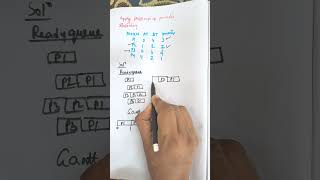
Audio Book
Dive deep into the subject with an immersive audiobook experience.
Introduction to Dynamic-Priority Scheduling
Chapter 1 of 7
🔒 Unlock Audio Chapter
Sign up and enroll to access the full audio experience
Chapter Content
In dynamic-priority scheduling, the priority of a task can change during its execution based on certain runtime parameters.
Detailed Explanation
Dynamic-priority scheduling is a method where tasks don't have fixed priorities. Instead, their priority can increase or decrease based on their deadlines or other factors during execution. This is different from static scheduling, where each task has a set priority that does not change. This flexibility allows the system to adapt to real-time conditions and respond more effectively to urgent tasks.
Examples & Analogies
Consider a busy restaurant kitchen where chefs prioritize orders based on how soon customers need their food. If a new order comes in marked as urgent, the chef will shift focus from a lower-priority meal to ensure the urgent order is completed first, similar to how dynamic-priority scheduling works by adjusting task priorities based on deadlines.
Earliest Deadline First (EDF) Scheduling
Chapter 2 of 7
🔒 Unlock Audio Chapter
Sign up and enroll to access the full audio experience
Chapter Content
EDF is a powerful and widely studied dynamic-priority preemptive scheduling algorithm.
- Principle: At any given moment, the scheduler always selects the ready task that has the earliest absolute deadline to execute. Priorities are dynamic: a task's priority increases as its deadline approaches.
- Example: If Task A has an absolute deadline at 10:00:00 and Task B has an absolute deadline at 10:00:05, Task A will be assigned a higher priority and run first. If another task C arrives later with a deadline of 09:59:00, it will immediately pre-empt A.
Detailed Explanation
In Earliest Deadline First (EDF) scheduling, the algorithm dynamically selects the task that needs to finish the soonest. This means that if a new task comes in with a nearer deadline, it pre-empts any currently running task. This approach not only ensures that tasks are completed on time but also allows for better overall system utilization since the server can handle tasks of varying importance and urgency.
Examples & Analogies
Imagine a group of students working on a project with multiple deadlines. If a student knows they must submit their section by the next hour, they will focus on completing that section before aiding another student whose work is due later. This prioritization is akin to EDF, where the task with the nearest deadline is completed first.
Properties of EDF Scheduling
Chapter 3 of 7
🔒 Unlock Audio Chapter
Sign up and enroll to access the full audio experience
Chapter Content
- Optimality: EDF is optimal for preemptive scheduling on a single processor. This means if a set of tasks (periodic, aperiodic, or mixed, with arbitrary deadlines) can be scheduled by any algorithm without missing deadlines, then it can also be scheduled by EDF.
- Dynamic Priorities: Priorities change at runtime based on deadlines.
- Higher Theoretical Utilization: Can achieve 100% CPU utilization for schedulable task sets on a single processor, meaning it can fully utilize the CPU's capacity if tasks are appropriately designed.
Detailed Explanation
The EDF algorithm is renowned for its optimality in task scheduling, meaning if any tasks can be completed on time by any method, EDF can also complete them. Its ability to adapt task priorities dynamically based on deadlines enables it to utilize CPU resources to their fullest, potentially achieving perfect efficiency of 100%. This is a significant advantage in environments where every millisecond counts.
Examples & Analogies
Think of a traffic control system that adjusts traffic lights based on the urgency of approaching emergency vehicles. If an ambulance is on its way, traffic lights will prioritize the path of that vehicle, allowing it to get through intersections. This prioritization is like EDF, ensuring that the most urgent tasks get completed promptly, contributing to the overall efficiency of the traffic system.
Schedulability Analysis for EDF
Chapter 4 of 7
🔒 Unlock Audio Chapter
Sign up and enroll to access the full audio experience
Chapter Content
For a set of independent periodic tasks, the schedulability test for EDF is remarkably simple compared to RM's RTA:
- Utilization-Based Test (Necessary and Sufficient Condition): A set of tasks is schedulable by EDF if and only if their total utilization does not exceed 100%.
- The Condition: For n independent periodic tasks, the task set is schedulable by EDF if and only if: Utotal =∑i=1n (Ci /Ti )≤1.0 (100%)
Detailed Explanation
To check if a group of tasks can be scheduled successfully using EDF, all we need to do is calculate their total CPU utilization and ensure that it does not exceed 100%. If it does, then it's guaranteed that at least one task will miss its deadline. This simplicity makes EDF very practical for real-time systems, simplifying the analysis required to ensure timely execution of tasks.
Examples & Analogies
Imagine planning a day of errands where you allocate time slots for each task, knowing you have a limit of 8 hours. If you schedule tasks that together require more than 8 hours, you will inevitably have to rush or miss some tasks. Just like tracking the total time prevents overlapping responsibilities in your day, the utilization-based test ensures that all tasks can be completed within their time limits.
Challenges and Limitations of EDF
Chapter 5 of 7
🔒 Unlock Audio Chapter
Sign up and enroll to access the full audio experience
Chapter Content
- Higher Implementation Overhead: The dynamic nature of priorities means the scheduler needs to constantly track and sort tasks by their deadlines, which adds more overhead compared to fixed-priority schedulers.
- Overload Behavior: If the system becomes overloaded (total utilization temporarily exceeds 100% due to unexpected events or WCET overruns), EDF's behavior can be unpredictable and undesirable.
- Complexity with Resources: Handling shared resources and priority inversion with EDF is more complex than with fixed-priority schemes.
- Debugging: The dynamic nature of priorities can make debugging more challenging, as task execution order is not fixed.
Detailed Explanation
While EDF provides excellent theoretical performance, it also comes with significant challenges. The constant need to monitor and adjust task priorities can lead to higher computational overhead. In situations where the system is pushed beyond its limits, tasks may fail to meet deadlines without predictability as to which will suffer. Additionally, dealing with common programming issues like shared resources becomes more complicated. This added complexity can also make identifying bugs more difficult, adding to the development challenges.
Examples & Analogies
Consider a multi-tasking app on your smartphone that adjusts resource allocation based on what apps you're using at the moment. If too many demanding apps run simultaneously, the phone may struggle, causing slowdowns and occasional crashes. Managing which app to prioritize can lead to complex issues, similar to how EDF handles dynamic priorities under load. The task may take longer to execute correctly if conditions are unfavorably overloaded.
Least Laxity First (LLF) Scheduling
Chapter 6 of 7
🔒 Unlock Audio Chapter
Sign up and enroll to access the full audio experience
Chapter Content
- Principle: At any given moment, the scheduler selects the ready task that has the smallest laxity (also known as slack time) to execute.
- Laxity (L): For a task at time t, its laxity is calculated as:
- L=Absolute Deadline−Current Time−Remaining Execution Time (L=Dabs −t−Crem)
Detailed Explanation
The Least Laxity First (LLF) algorithm works based on the concept of 'laxity.' Laxity is the amount of time left before a task's deadline, minus the time it still needs to run. Essentially, LLF selects the task that is closest to missing its deadline. This can also provide quick responses to urgent tasks but does add certain constraints to implementation.
Examples & Analogies
Think about a student with multiple assignments due soon. The student pays close attention to which assignments require the least remaining time to finish and are due soonest. Consequently, they focus on those tasks first to avoid potential penalties for late submissions, resembling how LLF prioritizes tasks based on their remaining time until a deadline.
Challenges of LLF
Chapter 7 of 7
🔒 Unlock Audio Chapter
Sign up and enroll to access the full audio experience
Chapter Content
- Extremely High Overhead: Calculating laxity for all ready tasks at every scheduling point is computationally intensive.
- Thrashing: LLF can be prone to "thrashing" during overload conditions, where the system spends excessive time context switching without making significant progress.
Detailed Explanation
While LLF can achieve high utilization rates, its overhead is considerable due to the constant need to recalculate laxity for potentially many tasks. In high-demand scenarios, this can lead to what's known as 'thrashing,' where the system gets stuck in a continuous loop of switching between tasks without actually completing anything. This is decidedly inefficient and problematic for a real-time system.
Examples & Analogies
Consider a person trying to juggle multiple tasks at once, constantly switching between them but never completing any. They frequently get distracted and redirect their focus to another task, resulting in nothing being accomplished. This is akin to thrashing in the LLF scheduling, where overloading causes a breakdown in efficiency instead of progress.
Key Concepts
-
Dynamic Priority: A method of scheduling where priorities change based on timing.
-
Overhead: Extra computational cost incurred by more dynamic scheduling approaches.
-
Optimality: Both EDF and LLF can achieve optimal CPU utilization under certain conditions.
Examples & Applications
In video streaming applications, EDF can be used to ensure timely buffering and playback.
Air traffic control systems may implement LLF to prioritize collision avoidance tasks with impending deadlines.
Memory Aids
Interactive tools to help you remember key concepts
Rhymes
If a task has a date, don't be late; the one who's nearest wins the race!
Stories
Imagine a race where tasks are runners, and the one with the nearest finish line always pushes ahead. This is how EDF works in prioritizing tasks based on approaching deadlines.
Memory Tools
For remembering EDF vs LLF, think: 'Early Deadlines Finish!' for EDF and 'Less Laxity First!' for LLF.
Acronyms
LLF
Laxity Leads First.
Flash Cards
Glossary
- Earliest Deadline First (EDF)
A dynamic-priority preemptive scheduling algorithm that selects the task with the earliest absolute deadline for execution.
- Least Laxity First (LLF)
A scheduling algorithm that selects the task with the smallest laxity, calculated as the time remaining until its deadline minus the remaining execution time.
- Laxity
The available time for a task before its deadline, calculated as the absolute deadline minus the current time minus the remaining execution time.
- Dynamic Priority
A scheduling approach where task priorities are adjusted at runtime based on specific parameters like deadlines.
- Overhead
The additional computational burden involved in executing scheduling algorithms, particularly related to context switching and priority calculations.
Reference links
Supplementary resources to enhance your learning experience.