
Rasa Theory: The Concept of Aesthetic Emotions and their Experience in Arts
Interactive Audio Lesson
Listen to a student-teacher conversation explaining the topic in a relatable way.
Overview of Rasa Theory
🔒 Unlock Audio Lesson
Sign up and enroll to listen to this audio lesson

Today, we're discussing Rasa theory, which is foundational to understanding aesthetic emotions in Indian performing arts. Rasa translates to 'essence' or 'flavor.' Can anyone tell me what that might mean in an artistic context?

Does it mean the emotions we feel when we watch a play or a dance?
Exactly! Rasa refers to the emotional experiences audiences derive from artistic expressions. It goes beyond mere emotion; it's the transformation of personal feelings into universal experiences. Now, what do you think the significance of this transformation might be?

It could help the audience relate to the art on a deeper level, right?
Absolutely! By converting personal emotions into shared experiences, art enhances emotional connections among the audience. Let's delve deeper into the Sthayi Bhavas that underpin Rasa.
Understanding Sthayi Bhavas
🔒 Unlock Audio Lesson
Sign up and enroll to listen to this audio lesson

Rasa theory outlines eight primary Sthayi Bhavas. Can anyone name one of them?

I remember Rati is about love or delight!
Correct! Each Sthayi Bhava leads to its corresponding Rasa. For example, Rati leads to Shringara or the love rasa. Can anyone think of another Sthayi Bhava?

How about Krodha? That’s anger, right?
Yes! Krodha gives rise to Raudra, the furious rasa. These connections are essential in creating the emotional journey for an audience. Can someone explain why this emotional clarity is vital in arts?
It helps portray a clear narrative and guide the audience’s feelings.
Exactly! Clear emotional expressions enrich the storytelling experience, drawing the audience into the performance.
Components that evoke Rasa
🔒 Unlock Audio Lesson
Sign up and enroll to listen to this audio lesson
Now, let’s discuss how Rasa is evoked through various components: Vibhava, Anubhava, and Vyabhichari Bhavas. Who can explain what Vibhava is?
Vibhava are the determinants that stimulate an emotion?
Correct! It includes the Alambana Vibhava, the main cause, like a hero, and Uddipana Vibhava, the exciting elements like the setting. What's the role of Anubhava?
Anubhava are the external manifestations of emotions, like crying or smiling?
Right again! And Vyabhichari Bhavas are those fleeting emotions that complement the stable ones. Why might these elements be crucial in a performance?
They create a rich tapestry of feelings that engage the audience more deeply.
Precisely! These components work together to create an immersive aesthetic experience.
The traditional Rasas
🔒 Unlock Audio Lesson
Sign up and enroll to listen to this audio lesson
Let’s identify the traditional Rasas derived from the Sthayi Bhavas. Who can list some?
I know Hasya is the comic rasa and Karuna is the pathetic one!
Excellent! Can anyone explain how these are felt in performance?
In a comedy, the audience feels joy from funny moments, and in a tragic play, sorrow from the character's plight.
Great explanation! Each rasa plays a unique role. Now, what about the ninth Rasa introduced later?
That’s Shanta Rasa, which represents peace, right?
Yes! Shanta Rasa represents tranquility and is significant in spiritual and devotional contexts. This expansive range of Rasas enriches the emotional nuances in arts.
Significance of Rasa in Arts
🔒 Unlock Audio Lesson
Sign up and enroll to listen to this audio lesson
Finally, let’s talk about the broader implications of Rasa theory. Why do you think it’s essential to view art in these terms?
It elevates art beyond entertainment, showing its role in moral and spiritual realms?
Exactly! Rasa encourages us to see art as a medium of spiritual upliftment. Can someone share how this might affect an artist’s approach?
Artists can aim to create deeper connections with their audience, rather than just perform.
Well said! This perspective ensures that art remains a pathway for profound experiences and insights, reflective of higher states of consciousness.
Introduction & Overview
Read summaries of the section's main ideas at different levels of detail.
Quick Overview
Standard
Rasa theory, a fundamental concept in Indian aesthetics, outlines how art transforms personal emotions (Bhava) into universal aesthetic experiences (Rasa). It identifies eight primary Sthayi Bhavas that serve as the basis for different Rasas, shaping the emotional landscape of performing arts and revealing their significance in moral and spiritual dimensions.
Detailed
Rasa Theory: The Concept of Aesthetic Emotions and their Experience in Arts
Rasa theory stands as a pivotal achievement in the Natya Shastra and forms the bedrock of Indian aesthetics. The term Rasa translates to "juice," "essence," or "flavor," and it signifies the aesthetic emotions that are experienced by spectators (rasikas) of art. This theory highlights that art goes beyond merely reflecting emotions; it refines and transforms personal, mundane emotions (Bhava) into elevated, universal aesthetic emotions (Rasa) that invoke pleasure in audiences.
The transformation from Bhava to Rasa is achieved through the artist's skillful presentation that engages the audience’s feelings, allowing them to experience a purified essence of these emotions rather than their direct counterparts.
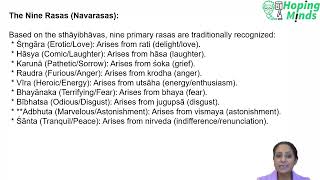
The Natya Shastra categorizes eight permanent emotional states, known as Sthayi Bhavas, which underlie different Rasas: 1) Rati (Delight), 2) Hasa (Mirth), 3) Shoka (Sorrow), 4) Krodha (Anger), 5) Utsaha (Heroism), 6) Bhaya (Fear), 7) Jugupsa (Disgust), and 8) Vismaya (Wonder).
Through the interplay of Vibhava (determinants), Anubhava (consequents), and Vyabhichari Bhavas (transitory emotions), these Sthayi Bhavas manifest in distinct Rasas:
1) Shringara (Erotic), 2) Hasya (Comic), 3) Karuna (Pathetic), 4) Raudra (Furious), 5) Vira (Heroic), 6) Bhayanaka (Terrifying), 7) Bibhatsa (Odious), and 8) Adbhuta (Wondrous).
Later additions recognized a ninth Rasa, Shanta Rasa (Peace), representing ultimate tranquility and spiritual insight. In essence, the experience of Rasa enables spectators to transcend their everyday lives, reaching an elevated state of bliss akin to that of Brahman realization.
Youtube Videos

Audio Book
Dive deep into the subject with an immersive audiobook experience.
Introduction to Rasa Theory
Chapter 1 of 6
🔒 Unlock Audio Chapter
Sign up and enroll to access the full audio experience
Chapter Content
Rasa theory is the crowning achievement of the Natya Shastra and the most foundational concept in Indian aesthetics. It provides a sophisticated framework for understanding the emotional experience evoked by art, particularly in performing arts. The term Rasa literally translates to "juice," "essence," or "flavor," and in an aesthetic context, it refers to the relished aesthetic emotion that arises in the heart of a sensitive spectator (a rasika) who experiences a work of art.
Detailed Explanation
Rasa theory is a key concept that helps us understand how emotions are expressed and experienced through art forms like dance and drama. The word 'Rasa' means a special flavor or essence. When an audience member (called a rasika) watches a performance, they don't just see it; they feel emotions that resonate deeply within them. This theory emphasizes that art transforms ordinary feelings into something more universal and pleasurable. Instead of just feeling sadness or joy from personal experiences, the audience connects with deeper, purer forms of these emotions.
Examples & Analogies
Think of Rasa theory like enjoying a delicious fruit juice. When you taste the juice, it's not just the fruit itself but the way it's blended that creates a unique flavor. Similarly, when artists present their work skillfully, they blend feelings to create a complex emotional experience for the viewer.
Transformation of Emotions
Chapter 2 of 6
🔒 Unlock Audio Chapter
Sign up and enroll to access the full audio experience
Chapter Content
The theory articulates that art doesn't just mirror real-life emotions; it transforms mundane, personal emotions (Bhava) into universal, idealized aesthetic experiences (Rasa). The spectator doesn't feel their own sorrow or anger, but a purified, generalized, and universally appealing form of it, which is inherently pleasurable. This transformation is achieved through the skillful presentation of various components by the artist.
Detailed Explanation
In Rasa theory, emotions in art are not exact replicas of real-life feelings. Instead, they are elevated or transformed. For example, when a dancer expresses sorrow, the audience feels a more profound and beautiful version of that sorrow, which is entertaining and pleasurable. This lifelike emotion becomes more abstract, allowing spectators to connect with it without feeling the pain of their own experiences directly. The artists achieve this transformation through careful choices in how they present the performance.
Examples & Analogies
Consider watching a sad movie. Instead of just feeling your personal sadness, you might feel a deeper emotional resonance that touches on more universal themes. The sadness portrayed in the film evokes strong feelings that are less about your own life and more about the human experience as a whole.
Eight Permanent Emotions (Sthayi Bhavas)
Chapter 3 of 6
🔒 Unlock Audio Chapter
Sign up and enroll to access the full audio experience
Chapter Content
The Natya Shastra identifies eight primary Sthayi Bhavas (permanent or basic psychological states) that are inherent in human beings and form the potential basis for Rasa:
1. Rati (Delight/Love): The underlying emotion of attachment and affection.
2. Hasa (Mirth/Laughter): The feeling of amusement or joy.
3. Shoka (Sorrow/Grief): The emotion of distress or sadness.
4. Krodha (Anger/Rage): The feeling of intense displeasure.
5. Utsaha (Heroism/Enthusiasm): The emotion of energy and determination.
6. Bhaya (Fear/Terror): The feeling of apprehension or dread.
7. Jugupsa (Disgust/Aversion): The emotion of repulsion.
8. Vismaya (Wonder/Astonishment): The feeling of awe or surprise.
Detailed Explanation
The eight Sthayi Bhavas are essential emotional states that all individuals experience. Each of these emotions can lead to a corresponding Rasa when expressed through art. For instance, Rati, the emotion of love, can cultivate a romantic Rasa in a performance. Similarly, Krodha (anger) may evoke a furious Rasa. Understanding these emotions helps artists harness them to evoke specific responses in their audience, allowing spectators to connect deeply with the performance.
Examples & Analogies
Think of these emotions as colors on a painter's palette. Just as an artist combines different colors to create a picturesque painting, performers use different emotional experiences (Sthayi Bhavas) to create a rich, engaging performance, leading to various aesthetic experiences (Rasas).
Components of Rasa Formation
Chapter 4 of 6
🔒 Unlock Audio Chapter
Sign up and enroll to access the full audio experience
Chapter Content
When these Sthayi Bhavas are developed and intensified through artistic presentation, they give rise to their corresponding Rasa (aesthetic flavors). The artistic elements that contribute to evoking Rasa include:
● Vibhava (Determinants): These are the causes or stimuli that awaken an emotion. They include the Alambana Vibhava (the main exciting cause, e.g., the hero/heroine) and the Uddipana Vibhava (excitant causes, e.g., setting, season, adornments).
● Anubhava (Consequents): These are the outward physical manifestations or expressions of an emotion (e.g., tears, trembling, blushing, gestures, facial expressions).
● Vyabhichari Bhavas (Transitory or Complementary Emotions): These are fleeting mental states that support and enrich the dominant Sthayi Bhava but do not have a lasting quality (e.g., anxiety, joy, depression, shame, impatience).
Detailed Explanation
The formation of Rasa relies on three key components. First, Vibhava consists of the factors that elicit an emotional response, such as the setting or character interactions. Second, Anubhava captures the physical expressions of these emotions shown by actors. For example, an actor may cry (Anubhava) when displaying grief (Shoka). Lastly, Vyabhichari Bhavas are temporary feelings that enhance the main emotion without overshadowing it. Together, these elements ensure that the audience fully engages with the emotional journey of the performance and experiences the intended Rasa.
Examples & Analogies
Imagine a great storytelling performance where the storyteller vividly describes the setting (Vibhava) and expresses emotions through gestures (Anubhava) while also sharing brief feelings of anxiety about the story's climax (Vyabhichari Bhavas). The combination of these elements creates a richer experience for the listener, allowing them to feel the emotions more profoundly.
Traditional Rasas
Chapter 5 of 6
🔒 Unlock Audio Chapter
Sign up and enroll to access the full audio experience
Chapter Content
The eight traditional Rasas derived from these Sthayi Bhavas are:
1. Shringara (Erotic/Love Rasa): Arising from Rati, associated with attraction, beauty, and romance.
2. Hasya (Comic Rasa): Arising from Hasa, associated with humor and laughter.
3. Karuna (Pathetic/Sorrowful Rasa): Arising from Shoka, associated with compassion and sadness.
4. Raudra (Furious Rasa): Arising from Krodha, associated with anger and fury.
5. Vira (Heroic Rasa): Arising from Utsaha, associated with valor, courage, and pride.
6. Bhayanaka (Terrifying Rasa): Arising from Bhaya, associated with fear and horror.
7. Bibhatsa (Odious/Disgusting Rasa): Arising from Jugupsa, associated with revulsion.
8. Adbhuta (Wondrous/Astonishing Rasa): Arising from Vismaya, associated with surprise and awe.
Detailed Explanation
The Rasas are the refined emotional flavors that arise from the fundamental Sthayi Bhavas. Each Rasa, such as Shringara or Hasya, corresponds to particular emotional contexts. For example, Shringara (love) evokes feelings of beauty and attraction, while Hasya (comedy) brings laughter and joy. The traditional Rasas summarize the range of emotions that can be explored in performing arts, providing a structured way for artists to evoke specific feelings in their audience.
Examples & Analogies
Consider watching different genres of movies – a romantic comedy (evoking Shringara and Hasya) versus a horror film (evoking Bhayanaka). Each genre targets different emotional responses and influences the way audiences experience the stories being told.
The Ninth Rasa: Shanta Rasa
Chapter 6 of 6
🔒 Unlock Audio Chapter
Sign up and enroll to access the full audio experience
Chapter Content
Later theorists, particularly Abhinavagupta, famously added a ninth Rasa, Shanta Rasa (Peace/Tranquility), with its corresponding Sthayi Bhava of Nirveda (detachment/tranquility). Shanta Rasa became particularly important in spiritual and devotional arts, representing the ultimate state of repose and inner calm, often associated with the realization of the divine. The experience of Rasa is considered a form of aesthetic bliss that temporarily elevates the spectator beyond their mundane existence, providing a glimpse of universal joy.
Detailed Explanation
The addition of the ninth Rasa, Shanta Rasa, highlights the significance of peace and tranquility as a deeper emotional experience, especially in spiritual contexts. It emphasizes an inner calmness that can arise through art, allowing spectators to momentarily transcend the chaos of their daily lives. This Rasa helps individuals connect with profound spiritual or divine experiences, portraying art as not just entertainment but as a spiritual journey.
Examples & Analogies
Picture attending a serene music concert where the melodies evoke feelings of calmness and bliss (Shanta Rasa), similar to how yoga or meditation practices can lead to a peaceful state of mind. Such performances offer not just enjoyment but a soothing relief that elevates your spirit and fosters a sense of universal connection.
Key Concepts
-
Rasa: Aesthetic emotion experienced in art.
-
Sthayi Bhavas: Permanent emotional states that lead to different Rasas.
-
Bhava: Personal emotions that are transformed into universal experiences.
-
Vibhava: Determinants that evoke emotions in art.
-
Anubhava: Physical expressions of these emotions.
-
Vyabhichari Bhavas: Complementary fleeting mental states.
Examples & Applications
In a comedic play, humor (Hasya) evokes laughter and delight in the audience.
In a tragic play, sorrow (Karuna) leads the audience to experience profound feelings of empathy for the characters.
Memory Aids
Interactive tools to help you remember key concepts
Rhymes
Rasa is the heart of art, emotions shared, played a part.
Stories
Once there was a painter who could turn his sadness into a beautiful canvas that made everyone smile—showing how emotions can be transformed into different aesthetic experiences.
Acronyms
R-E-S-P-E-C-T. Relate Emotions to Spectators to Produce Emotional Connection and Transformations.
Rasa
Relish Aesthetic Sensations and Art.
Flash Cards
Glossary
- Rasa
The aesthetic emotion experienced by the audience during a work of art, which translates to 'juice,' 'essence,' or 'flavor.'
- Sthayi Bhavas
Permanent or basic psychological states underlying the aesthetic experience.
- Bhava
Mundane personal emotions that can be transformed into universal aesthetic experiences.
- Vibhava
Determinants or stimuli that awaken emotions in a spectator.
- Anubhava
Physical manifestations or expressions of emotions in the audience.
- Vyabhichari Bhavas
Transitory mental states that complement the dominant Sthayi Bhava.
- Shringara
The erotic or love rasa, arising from the Sthayi Bhava of Rati.
- Hasya
The comic rasa, arising from the Sthayi Bhava of Hasa.
- Karuna
The pathetic rasa, arising from the Sthayi Bhava of Shoka.
- Raudra
The furious rasa, arising from the Sthayi Bhava of Krodha.
- Vira
The heroic rasa, arising from the Sthayi Bhava of Utsaha.
- Bhayanaka
The terrifying rasa, arising from the Sthayi Bhava of Bhaya.
- Bibhatsa
The odious rasa, arising from the Sthayi Bhava of Jugupsa.
- Adbhuta
The wondrous rasa, arising from the Sthayi Bhava of Vismaya.
- Shanta Rasa
The peace or tranquil rasa, representing ultimate tranquility.
Reference links
Supplementary resources to enhance your learning experience.