
Week 3: Logic, Reality, and Consciousness (Nyaya, Vaisheshika, Samkhya)
Interactive Audio Lesson
Listen to a student-teacher conversation explaining the topic in a relatable way.
Introduction to Nyaya: Logic and Epistemology
🔒 Unlock Audio Lesson
Sign up and enroll to listen to this audio lesson

Welcome class! Today, we're diving into the Nyaya school of philosophy. Can anyone tell me what Nyaya means?

I think it means 'rule' or 'method.'
Exactly! Nyaya emphasizes a systematic approach to understanding knowledge. One of its key contributions is the concept of Pramanas. Can someone recall what Pramanas are?

Are they the means of knowledge?
Correct! Nyaya identifies four main Pramanas: Pratyaksha, Anumana, Upamana, and Shabda. Let's break these down. Starting with Pratyaksha, what do we understand by perception?

It's knowledge gained directly through our senses.
Right on! Pratyaksha has two forms: Nirvikalpaka, which is undifferentiated perception, and Savikalpaka, which is differentiated perception. Can someone give me an example of each?

Nirvikalpaka is just seeing a color without knowing what it is, while Savikalpaka is identifying a blue flower.
Great examples! Remember, understanding these distinctions helps us appreciate the Nyaya approach to logic. To summarize, Nyaya provides a method to distinguish truth from error, supporting philosophical inquiry.
Delving into Anumana: Inference
🔒 Unlock Audio Lesson
Sign up and enroll to listen to this audio lesson

Let’s explore Anumana, or inference. Who can share how we derive knowledge through inference?
It involves reasoning from what we know to arrive at conclusions.
Exactly! The Nyaya tradition formalizes this process through syllogisms. Can anyone outline the five steps involved in forming a valid inference?
We have Pratijna, Hetu, Udaharana, Upanaya, and Nigamana.
Perfect! Let's elaborate. Pratijna is the proposition we want to prove, Hetu provides the reason, and Udaharana gives an example. For Upanaya, we apply the general rule to a specific case, and finally, Nigamana is our conclusion. Let's create a syllogism together. Can we formulate one?
Sure! 'The hill has fire (Pratijna) because it has smoke (Hetu). Where there's smoke, there's fire (Udaharana). The hill has smoke (Upanaya), so the hill must have fire (Nigamana).'
Excellent collaboration! These logical structures aid us in sound reasoning. To summarize, inference is essential for knowledge acquisition in Nyaya through systematic reasoning.
Vaisheshika: Atomistic Theory and Categories of Reality
🔒 Unlock Audio Lesson
Sign up and enroll to listen to this audio lesson
Now, let's shift our focus to the Vaisheshika school. Who remembers what Vaisheshika is known for?
It's centered around the idea of atomism!
Exactly! Vaisheshika posits that the universe is made up of indivisible particles called atoms. Can anyone identify the key categories that Vaisheshika uses to classify reality?
There are six primary categories, known as Padarthas!
Well done! Let's list them. Can someone name them for me?
Dravya, Guna, Karma, Samanya, Vishesha, and Samavaya.
Great job! Each of these categories plays a role in defining reality. For example, Dravya refers to substances, while Guna refers to their qualities. Can we think of examples for these categories?
An example of Dravya could be water, and for Guna, it could be the color of the water.
Correct! Vaisheshika's classifications help us systematically comprehend the world. To conclude, Vaisheshika provides an atomistic view of reality that complements Nyaya's focus on logical reasoning.
Samkhya: Dualism in Philosophy
🔒 Unlock Audio Lesson
Sign up and enroll to listen to this audio lesson
Finally, let’s discuss Samkhya. Can anyone tell me what Samkhya means?
It means 'enumeration' or 'discrimination.'
Exactly! Samkhya introduces a duality between Prakriti and Purusha. Who can explain what Prakriti and Purusha signify?
Prakriti refers to nature or matter, while Purusha represents consciousness.
Correct! This dualism is fundamental. Purusha is eternal and unchanging, whereas Prakriti is material, undergoing transformation. What are the three Gunas that characterize Prakriti?
Sattva, Rajas, and Tamas.
Exactly! How do these Gunas affect the evolution of the cosmos in Samkhya philosophy?
They create an imbalance that drives the evolution of the universe.
Well said! This evolution results in the various forms of reality we experience. Ultimately, the goal of Samkhya is to achieve Kaivalya, or liberation, by realizing our true nature as Purusha. To summarize, Samkhya’s dualism offers a rich framework for understanding our existence.
Introduction & Overview
Read summaries of the section's main ideas at different levels of detail.
Quick Overview
Standard
The section delves into the key principles of Nyaya, Vaisheshika, and Samkhya, examining their contributions to logic, reality, and consciousness. Nyaya emphasizes valid knowledge and reasoning, Vaisheshika categorizes reality through an atomistic lens, and Samkhya differentiates between the unchanging consciousness (Purusha) and the changing matter (Prakriti), highlighting the interplay between these fundamental components of existence.
Detailed
Detailed Summary of Week 3: Logic, Reality, and Consciousness
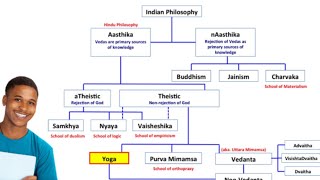
This section focuses on three influential philosophical schools in Indian thought: Nyaya, Vaisheshika, and Samkhya, each contributing uniquely to our understanding of logic, epistemology, reality, and consciousness.
Nyaya: The Science of Logic and Epistemology
Nyaya, meaning 'rule' or 'method,' is centered on epistemology, seeking a reliable method for acquiring valid knowledge. A key concept is Pramanas, which are means of knowledge, classified into four types:
- Pratyaksha (Perception): This is knowledge acquired through the senses, further divided into Nirvikalpaka (indeterminate) and Savikalpaka (determinate) types.
- Anumana (Inference): This involves reasoning based on prior knowledge. Nyaya uses syllogisms to structure valid inferences.
- Upamana (Analogy): Understanding an unknown object by comparing it with a known one.
- Shabda (Testimony): Knowledge derived from reliable sources, emphasizing authority and accuracy in testimony.
Nyaya’s rigorous methodologies promote clarity and objectivity in philosophical and spiritual inquiries, preventing baseless speculation.
Vaisheshika: Atomistic Theory and Categories of Reality
Closely linked with Nyaya, Vaisheshika presents an atomistic model of the universe. Key points include:
- Atomic Composition: The universe comprises indivisible eternal particles (atoms) that combine in various configurations to form all physical entities.
- Categories of Reality: Six or seven categories (Padarthas) classify everything in existence. These include:
- Dravya (Substance): Fundamental entities like earth and fire.
- Guna (Quality): Properties inherent to substances.
- Karma (Action): Activities substances can undertake.
- Samanya (Generality): Common characteristics across entities.
- Vishesha (Particularity): Unique traits of individual substances.
- Samavaya (Inherence): The relationship between substances and their properties.
- Abhava (Non-existence): The varied forms of non-existence, recognized in later texts.
By detailing the nature and functioning of reality, Vaisheshika complements Nyaya's knowledge concerns.
Samkhya: Dualistic Philosophy of Prakriti and Purusha
Samkhya, one of the oldest philosophical schools, introduces a dualistic perspective differentiating between two ultimate realities: Prakriti (matter) and Purusha (consciousness).
- Purusha: Represents pure consciousness—eternal, unchanging, and independent. Individual Purushas mistake their identities by associating with matter.
- Prakriti: The evolving principle of nature, undergoing constant transformation, characterized by three Gunas: Sattva (purity), Rajas (passion), and Tamas (inertia).
- Cosmic Evolution: Samkhya outlines a process where Prakriti’s evolution includes stages from Mahat (Great Intellect) to the physical elements, culminating in the manifest universe.
- Goal: The aim is to achieve Kaivalya, or liberation, by realizing the distinction between Purusha and Prakriti.
These schools collectively provide a thorough exploration of how logic, reality, and consciousness interconnect within Indian philosophy.
Youtube Videos



Audio Book
Dive deep into the subject with an immersive audiobook experience.
Nyaya: The Science of Logic and Epistemology
Chapter 1 of 7
🔒 Unlock Audio Chapter
Sign up and enroll to access the full audio experience
Chapter Content
Nyaya, literally meaning "rule," "method," or "judgment," is a school primarily concerned with epistemology (the theory of knowledge) and logic. Its central aim is to provide a sound method for acquiring valid knowledge, thereby enabling individuals to distinguish truth from error. The Nyaya system developed a sophisticated framework for reasoning and argumentation, which significantly influenced other Indian philosophical schools. At the heart of Nyaya philosophy lies the concept of Pramanas, which are the valid means of knowledge. Nyaya traditionally recognizes four main Pramanas:
Detailed Explanation
Nyaya is a philosophical school that focuses on how we know things—this is known as epistemology. It aims to provide clear methods to help us tell what is true from what is false. A significant concept in Nyaya is 'Pramanas,' which refers to the valid means of knowledge. There are four main Pramanas that Nyaya scholars identify, each playing an essential role in the process of attaining knowledge.
Examples & Analogies
Imagine you're trying to find out if it’s raining outside. You might look out the window (perception), ask a friend who is outside (testimony), use a weather app (inference), or remember that it rained yesterday when you had similar weather (analogy). Each of these methods acts as a 'Pramana' to help you conclude whether you need an umbrella.
The Four Pramanas of Nyaya
Chapter 2 of 7
🔒 Unlock Audio Chapter
Sign up and enroll to access the full audio experience
Chapter Content
Nyaya traditionally recognizes four main Pramanas: 1. Pratyaksha (Perception): This is direct knowledge acquired through the senses. Nyaya distinguishes between two types of perception: 1. Nirvikalpaka Pratyaksha (Indeterminate Perception): This is the initial, undifferentiated awareness of an object, without any categorization or conceptualization. 2. Savikalpaka Pratyaksha (Determinate Perception): This involves the conceptualization and categorization of the perceived object, associating it with a name, quality, or class. 3. Anumana (Inference): Inference is knowledge derived from prior knowledge of a universal concomitance (invariable relationship) between two things. 4. Upamana (Comparison/Analogy): This is knowledge gained through comparison or analogy. 5. Shabda (Testimony/Verbal Cognition): This refers to knowledge acquired from the reliable statements of trustworthy persons or sacred texts.
Detailed Explanation
The four Pramanas provide fundamental ways for us to acquire valid knowledge: 1. Pratyaksha (Perception): Knowledge gained through our senses, like seeing or hearing. There are two types: Indeterminate (just seeing without understanding) and Determinate (recognizing and naming the object). 2. Anumana (Inference): Knowledge that comes from deducing something based on observations, like seeing smoke and inferring that there's a fire. 3. Upamana (Comparison/Analogy): Understanding something new by comparing it to something familiar. 4. Shabda (Testimony): Knowledge based on trusted sources, like teachers or sacred texts. Together, these methods help us build a reliable understanding of reality.
Examples & Analogies
Consider you're learning about different animals: 1. You see a cat (perception). 2. You learn that cats usually have fur and claws (inference). 3. Someone tells you about a breed of cat you've never seen, explaining it resembles a domestic cat (analogy). 4. You read in a book about cat behaviors (testimony). Each of these methods enriches your understanding of what a cat is.
Vaisheshika: Atomistic Theory and Categories of Reality
Chapter 3 of 7
🔒 Unlock Audio Chapter
Sign up and enroll to access the full audio experience
Chapter Content
The Vaisheshika school, closely allied with Nyaya, focuses on the nature of reality (ontology). Its distinctive contribution is its atomistic theory and its classification of all knowable objects into categories (Padarthas). The term "Vaisheshika" is derived from "vishesha," meaning "particularity," reflecting its emphasis on the unique individuality of substances. Vaisheshika postulates that the universe is composed of indivisible, eternal, and ultimate particles called atoms (anu). These atoms, though imperceptible, possess specific qualities and combine in various ways to form all gross objects.
Detailed Explanation
Vaisheshika explores what reality is made of, focusing on the idea that everything is composed of tiny, indivisible particles called atoms. This school classifies all objects into specific categories, emphasizing their unique characteristics. For instance, just like a recipe for a cake requires specific ingredients, everything in the universe can be broken down into these fundamental elements, which combine in various ways to create the diverse world we see around us.
Examples & Analogies
Think of a Lego set: each Lego piece represents an atom. Just as you can combine Lego pieces in countless ways to build different structures, Vaisheshika suggests that atoms can combine in different ways to form various objects in the universe. Each Lego piece retains its individual qualities, similar to how each atom retains its properties while contributing to the overall structure.
Key Categories of Vaisheshika
Chapter 4 of 7
🔒 Unlock Audio Chapter
Sign up and enroll to access the full audio experience
Chapter Content
The Vaisheshika system categorizes all existent and knowable things into six (and sometimes a seventh) fundamental Padarthas (categories of reality): 1. Dravya (Substance), 2. Guna (Quality), 3. Karma (Action), 4. Samanya (Generality/Universality), 5. Vishesha (Particularity), 6. Samavaya (Inherence), 7. Abhava (Non-existence).
Detailed Explanation
Vaisheshika identifies categories to better understand and classify the reality around us: 1. Dravya: The basic substances like water or earth. 2. Guna: The qualities they possess, like color or size. 3. Karma: The actions substances can perform, like movement. 4. Samanya: General characteristics that can classify multiple items together. 5. Vishesha: Unique characteristics that distinguish one substance from another. 6. Samavaya: The relationship between a substance and its qualities. 7. Abhava: Understanding non-existence, which teaches us about things that do not exist at all. By categorizing reality, Vaisheshika helps us navigate and comprehend the complex world we interact with daily.
Examples & Analogies
Imagine sorting a toolbox: 1. The Dravya are all the different tools (hammers, wrenches). 2. The Guna are their characteristics (color, size). 3. The Karma is what each tool can do (hammering, tightening bolts). 4. The Samanya is organizing tools by type (all hammers together). 5. The Vishesha is knowing that one hammer is different from another because one is heavier. 6. The Samavaya is how a hammer (substance) has its handle and head (qualities). 7. Abhava is like realizing you have no screwdrivers in that toolbox—it acknowledges their absence.
Samkhya: Dualistic Philosophy of Prakriti and Purusha
Chapter 5 of 7
🔒 Unlock Audio Chapter
Sign up and enroll to access the full audio experience
Chapter Content
Samkhya is one of the oldest and most influential schools of Indian philosophy, known for its radical dualism between two ultimate, independent realities: Prakriti (primordial matter/nature) and Purusha (consciousness). The term "Samkhya" literally means "enumeration" or "discrimination," referring to its analytical approach to understanding the components of reality.
Detailed Explanation
Samkhya philosophy identifies two fundamental aspects of existence: Prakriti and Purusha. Prakriti represents all of nature and material reality—things we can see, touch, or measure. In contrast, Purusha refers to consciousness—the observer, the 'self' inside us. This school emphasizes that these two are separate and coexist independently. To understand life, Samkhya teaches us to analyze and differentiate between what is material and what is conscious.
Examples & Analogies
Think of a movie: the screen represents Prakriti, the physical part where events happen, while the audience is like Purusha, the observer experiencing emotions and understanding the plot. Just as the movie might have various scenes (actions and forms), the audience remains a separate viewer who isn't actually part of the story being portrayed. Recognizing this distinction can help us navigate our lives between our material experiences and inner consciousness.
Prakriti and Its Gunas
Chapter 6 of 7
🔒 Unlock Audio Chapter
Sign up and enroll to access the full audio experience
Chapter Content
Prakriti is composed of three fundamental constituents or forces called Gunas: Sattva (purity, lightness), Rajas (activity and passion), and Tamas (inertia and ignorance). These three Gunas are always present in Prakriti in varying proportions, and their imbalance drives the process of cosmic evolution.
Detailed Explanation
Prakriti manifests through three qualities known as Gunas: 1. Sattva signifies clarity and balance and is linked to knowledge and goodness. It's like a calm and clear sky. 2. Rajas is about motion, desire, and restlessness. It's like a powerful wind, stirring things up. 3. Tamas represents darkness and inertia, akin to a stagnant pond. The interplay of these three qualities influences everything in nature and even affects our thoughts and actions.
Examples & Analogies
Imagine a cooking pot with three ingredients: salt (Sattva) that enhances flavors, spices (Rajas) that add excitement, and a burnt bottom (Tamas) that can spoil the dish. A balanced dish needs the right amount of each ingredient; too much salt might make it bitter (excess Sattva), too many spices might overpower (excess Rajas), and too much burnt flavor would ruin it (excess Tamas). Similarly, our lives thrive when these inner qualities are in harmony.
Evolution of the Cosmos (Tattvas)
Chapter 7 of 7
🔒 Unlock Audio Chapter
Sign up and enroll to access the full audio experience
Chapter Content
The Samkhya philosophy describes a detailed evolutionary process (Prakriti-parinama) where Prakriti, in the presence of Purusha, unfolds into various categories or principles called Tattvas. This evolution is not a creation out of nothing but an unfolding of what is already implicit in Prakriti.
Detailed Explanation
The cosmos evolves through a process described as Prakriti-parinama, meaning that the material world unfolds naturally from Prakriti when influenced by Purusha. It's akin to a seed growing into a tree. The tree doesn't appear out of nowhere; it evolves from what is inherently contained in the seed. In the same way, reality unfolds, revealing various principles or Tattvas as Prakriti interacts with Purusha.
Examples & Analogies
Think of a film reel. Each frame represents a Tattva. The film is created from the underlying film strip and not just projected out of thin air. Just like a story unfolds frame by frame, reality itself unfolds from the underlying essence of Prakriti when the observer (Purusha) is present, allowing for growth and transformation.
Key Concepts
-
Pramanas: The valid means of knowledge as defined by the Nyaya school.
-
Gunas: The three qualities (Sattva, Rajas, Tamas) that constitute Prakriti in Samkhya philosophy.
-
Kaivalya: Liberation or isolation achieved by realizing the distinction between Purusha and Prakriti.
Examples & Applications
An example of Pratyaksha is seeing a red apple without knowing its name, whereas Savikalpaka would be recognizing it as an apple.
A syllogism example: 'The hill has fire (Pratijna) because there is smoke (Hetu).'
Memory Aids
Interactive tools to help you remember key concepts
Rhymes
Nyaya's reasoning is a bright ray, guiding through knowledge night and day.
Stories
Imagine two friends discussing whether it will rain. One uses their senses to feel the drops (Pratyaksha), while the other recalls previous rain patterns to infer the likelihood of rain (Anumana).
Memory Tools
To remember the four Pramanas: 'PAUS' - Pratyaksha, Anumana, Upamana, Shabda.
Acronyms
G-PARS for the categories of Vaisheshika
for Guna
for Prakriti
for Abhava
for Rajas
and S for Samanya.
Flash Cards
Glossary
- Nyaya
A school of Indian philosophy focusing on logic and epistemology.
- Vaisheshika
An atomistic philosophy categorizing reality into distinct categories.
- Samkhya
A dualistic school of thought emphasizing the distinction between consciousness (Purusha) and matter (Prakriti).
- Pramanas
Means of knowledge in Nyaya philosophy.
- Pratyaksha
Direct perception, a type of Pramana.
- Anumana
Knowledge gained through inference, another type of Pramana.
- Gunas
Three fundamental qualities of Prakriti in Samkhya: Sattva, Rajas, and Tamas.
- Kaivalya
The state of liberation or isolation achieved in Samkhya philosophy.
Reference links
Supplementary resources to enhance your learning experience.