
Photosynthesis
Interactive Audio Lesson
Listen to a student-teacher conversation explaining the topic in a relatable way.
Introduction to Photosynthesis
🔒 Unlock Audio Lesson
Sign up and enroll to listen to this audio lesson

Today, we will explore photosynthesis, a critical process for all life on Earth. Can anyone tell me what photosynthesis involves?

Isn't it about how plants make their food using sunlight?
Exactly! Photosynthesis uses light energy to create glucose from carbon dioxide and water. This process not only provides energy for plants but also releases oxygen, which is essential for us.

How do plants actually do that?
Great question! Let's break it down into the two main stages: light-dependent reactions and light-independent reactions, also known as the Calvin Cycle.
Light-Dependent Reactions
🔒 Unlock Audio Lesson
Sign up and enroll to listen to this audio lesson

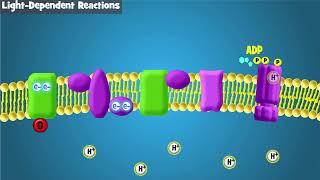
The first stage is the light-dependent reactions, which occur in the thylakoid membranes. Can anyone describe what happens during this stage?

I think light excites electrons, right? And water gets split?
Correct! When light hits chlorophyll, it excites electrons and splits water molecules, generating oxygen as a byproduct. The energy from the excited electrons is used to create ATP and NADPH.

What do ATP and NADPH do?
ATP provides energy, while NADPH provides reducing power for the next stage, the Calvin Cycle.
Calvin Cycle
🔒 Unlock Audio Lesson
Sign up and enroll to listen to this audio lesson
Now, let’s discuss the Calvin Cycle. Who can explain what happens here?
Is this where CO₂ gets converted into glucose?
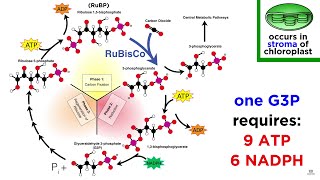
Exactly! The Calvin Cycle occurs in the stroma, where ATP and NADPH from the light-dependent reactions are used to fix carbon dioxide into glucose, facilitated by the enzyme RuBisCO.
Why is RuBisCO so important?
RuBisCO is crucial because without it, the plants wouldn't be able to convert carbon dioxide into glucose, which is vital for their energy supply.
Photosynthesis Equation
🔒 Unlock Audio Lesson
Sign up and enroll to listen to this audio lesson
Let’s take a look at the overall equation for photosynthesis. Can someone tell me what it is?
Is it 6CO₂ + 6H₂O + light energy → C₆H₁₂O₆ + 6O₂?
Exactly! This equation encapsulates the entire process, showing how carbon dioxide and water are transformed into glucose and oxygen. Why is understanding this equation important?
It shows how plants make food and release oxygen, which is essential for us!
Well said! Understanding this process emphasizes the importance of plants in the ecosystem.
Introduction & Overview
Read summaries of the section's main ideas at different levels of detail.
Quick Overview
Standard
In photosynthesis, plants utilize light energy to convert carbon dioxide and water into glucose and oxygen. This process consists of two main stages: the light-dependent reactions, which produce ATP and NADPH, and the light-independent reactions (Calvin Cycle), where CO₂ is fixed into glucose.
Detailed
Photosynthesis
Photosynthesis is a vital biological process primarily performed by plants, algae, and some bacteria, which converts light energy into chemical energy stored as glucose. It occurs in two main stages: light-dependent reactions and light-independent reactions (Calvin Cycle).
Light-Dependent Reactions
These reactions take place within the thylakoid membranes of chloroplasts. When chlorophyll absorbs light, it excites electrons, leading to the splitting of water molecules (photolysis), which releases oxygen. The energy from these excited electrons is used to generate ATP (adenosine triphosphate) and NADPH (nicotinamide adenine dinucleotide phosphate).
Light-Independent Reactions (Calvin Cycle)
These reactions occur in the stroma of the chloroplasts. ATP and NADPH produced in the light-dependent reactions are then used to fix carbon dioxide into glucose. The process is catalyzed by the enzyme RuBisCO (Ribulose bisphosphate carboxylase/oxygenase), which plays a crucial role in incorporating CO₂.
Photosynthesis Equation
The general equation for photosynthesis can be summarized as:
6CO₂ + 6H₂O + light energy → C₆H₁₂O₆ + 6O₂
This equation highlights the conversion of carbon dioxide and water into glucose and oxygen, demonstrating the significance of photosynthesis in sustaining life on Earth.
Youtube Videos



![Photosynthesis [IB Biology SL/HL]](https://img.youtube.com/vi/i4aqrW9BW2k/mqdefault.jpg)
Audio Book
Dive deep into the subject with an immersive audiobook experience.
Overview of Photosynthesis
Chapter 1 of 4
🔒 Unlock Audio Chapter
Sign up and enroll to access the full audio experience
Chapter Content
Process plants use to convert light energy into chemical energy stored as glucose.
Detailed Explanation
Photosynthesis is a vital process through which plants, algae, and some bacteria convert light energy from the sun into chemical energy in the form of glucose. This process occurs mainly in the leaves of plants, where chlorophyll, the green pigment, captures light energy. The formula basically states that using light energy, plants take in carbon dioxide from the air and water from the soil to create glucose, which they use as food.
Examples & Analogies
Think of photosynthesis like cooking. Just as you need ingredients and heat to make food, plants use sunlight (heat), carbon dioxide, and water (ingredients) to 'cook' their own food in the form of glucose.
Light-Dependent Reactions
Chapter 2 of 4
🔒 Unlock Audio Chapter
Sign up and enroll to access the full audio experience
Chapter Content
● Occur in thylakoid membranes.
● Light excites electrons, splitting water to release oxygen.
● ATP and NADPH are produced.
Detailed Explanation
The light-dependent reactions, also known as the photochemical phase, happen in the thylakoid membranes of the chloroplasts. When sunlight hits these membranes, it excites electrons in the chlorophyll, prompting them to move. To replace these excited electrons, water molecules are split, releasing oxygen as a byproduct. This energy from the moving electrons is then used to form ATP (adenosine triphosphate) and NADPH (nicotinamide adenine dinucleotide phosphate), which store energy and are essential for the next stage of photosynthesis.
Examples & Analogies
Imagine a solar panel converting sunlight into electricity. Just like the solar panel captures sunlight to produce power, the plant captures light energy to create ATP and NADPH.
Light-Independent Reactions (Calvin Cycle)
Chapter 3 of 4
🔒 Unlock Audio Chapter
Sign up and enroll to access the full audio experience
Chapter Content
● Occur in stroma.
● Use ATP and NADPH to fix CO₂ into glucose.
● Enzyme Rubisco catalyzes CO₂ fixation.
Detailed Explanation
The light-independent reactions, commonly known as the Calvin Cycle, take place in the stroma of the chloroplasts. In this process, the ATP and NADPH produced in the light-dependent reactions are used to convert carbon dioxide (CO₂) from the atmosphere into glucose. This process involves several steps including the fixation of CO₂ facilitated by the enzyme rubisco. This cycle ultimately builds glucose molecules that plants can use for energy and growth.
Examples & Analogies
Think of the Calvin Cycle like a factory assembly line where raw materials (CO₂) are transformed into a finished product (glucose). Just as workers use tools (ATP and NADPH) to assemble items on the line, plants use energy from the light-dependent reactions to build glucose.
Photosynthesis Equation
Chapter 4 of 4
🔒 Unlock Audio Chapter
Sign up and enroll to access the full audio experience
Chapter Content
6CO₂ + 6H₂O + light energy → C₆H₁₂O₆ + 6O₂
Detailed Explanation
The overall process of photosynthesis can be represented by a chemical equation. This equation shows that six molecules of carbon dioxide (CO₂) and six molecules of water (H₂O), using light energy, are transformed into one molecule of glucose (C₆H₁₂O₆) and six molecules of oxygen (O₂). This highlights the inputs and outputs of photosynthesis, demonstrating how plants not only create their food but also release oxygen into the atmosphere, which is crucial for life on Earth.
Examples & Analogies
You can liken this equation to a recipe. Just as a recipe shows how to combine specific ingredients to create a dish, the photosynthesis equation summarizes how plants combine CO₂ and H₂O, with the help of sunlight, to create glucose and oxygen.
Key Concepts
-
Photosynthesis: The conversion of light energy into chemical energy in the form of glucose.
-
Light-Dependent Reactions: Occur in the thylakoid membranes and produce ATP and NADPH.
-
Calvin Cycle: Uses ATP and NADPH to fix CO₂ into glucose in the stroma.
-
RuBisCO: The enzyme responsible for catalyzing carbon fixation.
Examples & Applications
A plant using sunlight to produce glucose during a sunny day.
Algae in a pond conducting photosynthesis, releasing oxygen into the water.
Memory Aids
Interactive tools to help you remember key concepts
Rhymes
In the light, plants take flight, converting sun into sugar so bright.
Stories
Once in a verdant forest, a green plant used sunlight to mix CO₂ and water, making sweet food and sending oxygen to the world.
Memory Tools
Light reactions create ATP and NADPH - remember 'A Plant Dances Happy!'
Acronyms
Use 'CARBO' to remember the Calvin Cycle components
CO₂
ATP
RuBisCO
and output (Glucose
Oxygen).
Flash Cards
Glossary
- Photosynthesis
The process by which plants convert light energy into chemical energy stored as glucose.
- Thylakoid
Membrane-bound compartments inside chloroplasts where the light-dependent reactions occur.
- Calvin Cycle
The set of light-independent reactions in photosynthesis that fix carbon dioxide into glucose.
- RuBisCO
An enzyme that catalyzes the fixation of carbon dioxide during the Calvin Cycle.
- ATP
Adenosine triphosphate, the primary energy carrier in cells.
- NADPH
Nicotinamide adenine dinucleotide phosphate, an electron carrier that provides reducing power for the Calvin Cycle.
Reference links
Supplementary resources to enhance your learning experience.