Professional Courses
Industry-relevant training in Business, Technology, and Design
Categories
Interactive Games
Fun games to boost memory, math, typing, and English skills
Typing
Memory
Math
English Adventures
Knowledge

The Complete JoSAA Counselling Guide After Your JEE Advanced Result

The Complete JoSAA Counselling Guide After Your JEE Advanced Result
You’ve cleared one of the toughest exams in the country, JEE Advanced and your result is out. Congratulations! But while this marks the end of a major phase, it also opens the door to the next critical step: JoSAA counselling.
The Joint Seat Allocation Authority (JoSAA) is responsible for the centralized admission process to IITs, NITs, IIITs, and GFTIs. Every student who qualifies JEE Advanced (for IITs) or JEE Main (for NITs, IIITs, and GFTIs) must go through this process to secure a seat.
The JoSAA counselling system ensures transparency and fairness by assigning seats based on rank, preferences, category, and seat availability. But to make the most of this opportunity, you must understand how the process works, what documents are required, and how to avoid common mistakes that can cost you your seat.
Let’s break it all down, step by step.
For more detailed insights, check:
- How much percentile is required for JEE Advanced
- How many marks to clear JEE Advanced 2026
- How many seats are available in JEE Advanced
- Next steps after your JEE Advanced result
- Choosing branch vs college in JEE Advanced
What Is JoSAA and Why Is It Important?
JoSAA, or the Joint Seat Allocation Authority, is a government body that manages the seat allocation for all premier engineering institutions participating in JEE Main and JEE Advanced. Its purpose is to simplify admissions into top institutes through a single online platform.
Before JoSAA existed, students had to apply separately to IITs, NITs, and other colleges. The process was lengthy and confusing. Now, through one portal, you can fill your preferences and get admission offers based on your performance and eligibility.
JoSAA counseling covers over 110 institutions, including:
- 23 IITs
- 32 NITs
- 26 IIITs
- 33 Government Funded Technical Institutes (GFTIs)
Understanding how to navigate JoSAA can be the difference between getting your dream seat and missing out.
Step 1: Registration on the JoSAA Portal
The first step begins after the JEE Advanced results are declared. JoSAA opens its registration portal within a few days.
You must log in using your JEE roll number, password, and security pin. For JEE Advanced qualifiers, the same credentials used for the exam will apply.
During registration, you must verify your details such as name, gender, category, and nationality. Once confirmed, these details cannot be changed.
Keep these in mind:
-
Registration is mandatory even if you are not sure whether you will accept a seat later.
-
Missing the registration deadline disqualifies you from the counselling process entirely.
For clarity on qualification and marks, read: How many marks are required to clear JEE Advanced 2026.
Step 2: Choice Filling, The Heart of JoSAA
Once registration is complete, you can move to choice filling. This is where you select your preferred institutes and branches.
Every student has their own list of priorities. Some may prefer a particular branch like Computer Science or Mechanical, while others focus on the reputation of a specific IIT or NIT.
Here’s how to fill your choices effectively:
-
List your preferences in order of priority. For instance, if IIT Bombay CSE is your dream option, put it at the top.
-
Fill as many options as possible. The more choices you add, the higher your chance of getting a seat in one of your preferred colleges.
-
Check previous year cut-offs. These help you estimate which institutes are realistic for your rank.
-
Be strategic. Mix aspirational, moderate, and safe options.
Once the choices are locked, you cannot modify them later.
For help deciding, refer to: Branch vs College – Which should you choose after JEE Advanced.
Step 3: Choice Locking
After filling your preferences, you must lock your choices before the deadline. This confirms your selections officially.
Failing to lock choices means they won’t be considered during seat allocation, even if you registered.
Before locking, double-check everything including college names, branch codes, and priority order. Once locked, the system generates a confirmation slip. Download and keep it safe.
Step 4: Seat Allotment Rounds
JoSAA conducts multiple rounds of seat allotment, usually six or seven.
During each round, seats are offered based on your rank, category, preferences, and seat availability. You can view your allotment by logging into the JoSAA portal.
Each round offers three choices:
-
Freeze: Accept the allotted seat and end participation in further rounds.
-
Float: Accept the seat but continue to be considered for higher preferences.
-
Slide: Accept the seat within the same institute but be considered for a higher preferred branch.
Choosing the right option depends on how satisfied you are with the current offer.
For a complete idea of seat distribution, explore: How many seats are available in JEE Advanced.
Step 5: Document Verification and Reporting
Once you are allotted a seat, you must report to the designated reporting centre either online or in person for document verification.
Here’s what you’ll need:
-
JEE Main/Advanced admit card
-
JEE Main/Advanced scorecard
- Class 10 and 12 marksheets
- Category certificates (if applicable)
- Passport-size photographs
- Proof of identity
Make sure all documents are clear and authentic. Mismatched information can lead to cancellation of your seat.
Step 6: Seat Acceptance and Fee Payment
After verification, you must pay the seat acceptance fee through the JoSAA portal. The payment confirms your admission.
Keep the payment receipt safe as it is required during final reporting at the institute.
If you choose to “Float” or “Slide,” your seat may change in the next round, but you won’t have to pay the fee again.
Step 7: Final Reporting at the Allotted Institute
After the final round of allotments, candidates must report physically to the allotted institute to complete the admission process.
Here, you’ll need to:
- Submit original documents.
- Complete registration forms.
- Pay the remaining tuition fees.
Once verified, you officially become a part of your chosen IIT, NIT, or IIIT.
Special Rounds and Upgrades
After the regular JoSAA rounds end, the CSAB (Central Seat Allocation Board) sometimes conducts special rounds to fill vacant seats.
These rounds give students one last chance to upgrade or secure a seat if they missed earlier rounds. Keep checking the official website after JoSAA closes for such announcements.
Tips for a Smooth JoSAA Counselling Experience
-
Check your rank and eligibility early. Use your JEE Advanced or JEE Main score to determine realistic options.
-
Research colleges and branches thoroughly. Every institute has unique advantages like faculty, placements, location, and culture.
-
Avoid last-minute panic. Register and fill choices well before deadlines.
-
Stay informed. Follow official JoSAA notifications closely.
-
Use mock allotment rounds. These help you adjust preferences before final locking.
Common Mistakes to Avoid
Even small mistakes can cause big problems during JoSAA counselling. Avoid these pitfalls:
-
Forgetting to lock choices after filling.
-
Providing incorrect category certificates.
-
Missing deadlines for reporting or payment.
-
Ignoring options beyond the top few IITs or NITs.
Being meticulous can prevent unnecessary stress later.
After JoSAA: What Comes Next?
Once JoSAA concludes, you’re officially admitted. But your learning journey is just beginning. Adjusting to the academic environment of IITs or NITs can be challenging, especially for students transitioning from school or coaching.
That’s where platforms like AllRounder.ai come in handy. They help students strengthen conceptual foundations with CBSE courses, ICSE curriculum, and IB programs.
You can also use engaging learning games and practice tests to build problem-solving confidence. Students from Class 8 to Class 12 can start early, preparing for competitive exams systematically.
Final Thoughts
Clearing JEE Advanced is a remarkable achievement, but understanding the JoSAA counselling process ensures that hard work translates into the right college and course.
From registration to final reporting, each step requires attention, patience, and timely action. Whether your goal is IIT Bombay, NIT Trichy, or IIIT Hyderabad, the strategy remains the same: fill wisely, verify carefully, and act promptly.
For further preparation, check:
The counselling journey can be stressful, but with the right knowledge, you can make it smooth and rewarding. Stay calm, double-check every step, and soon enough, you’ll find yourself walking through the gates of your dream institute, ready to begin the next chapter of your academic story.
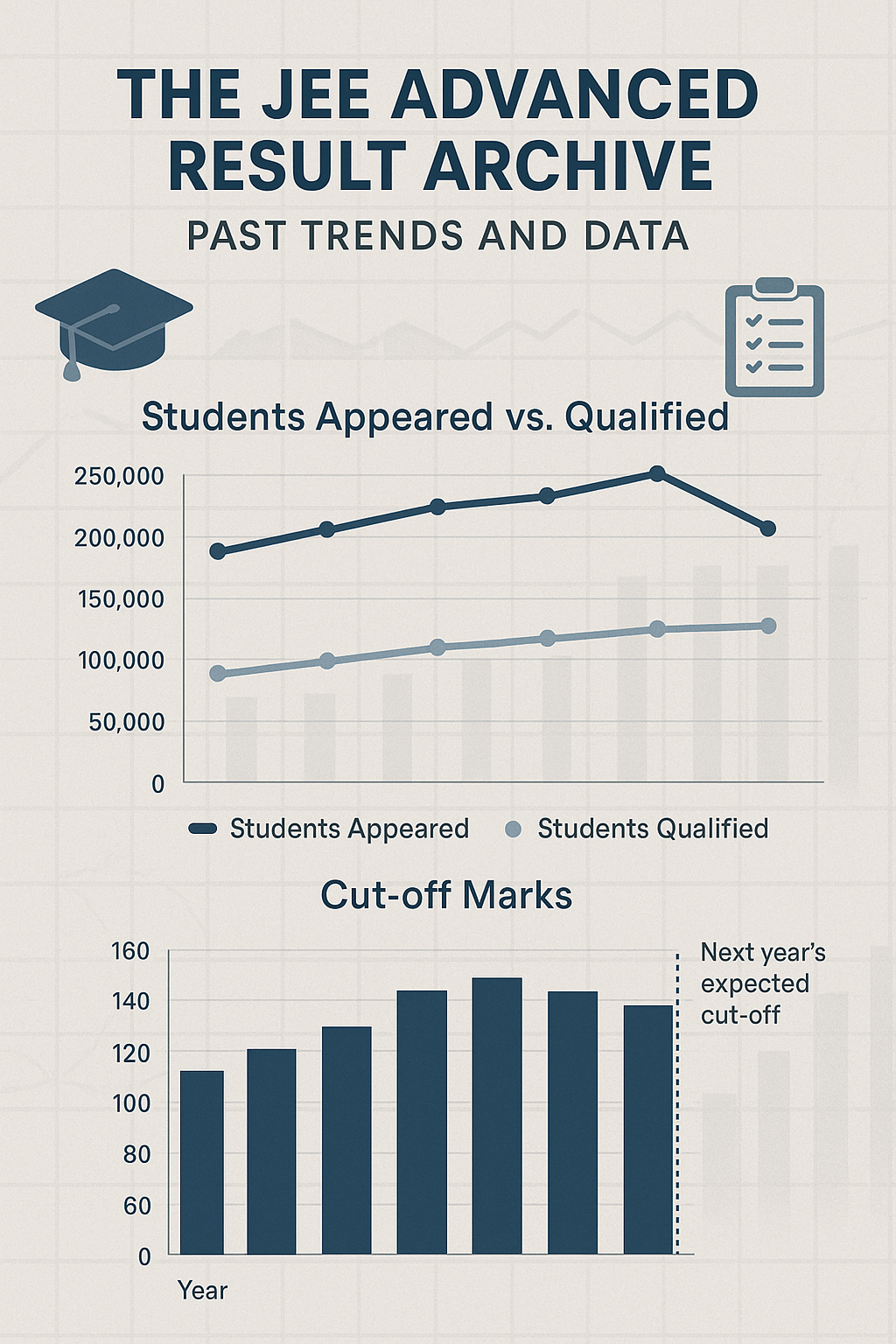
Explore the JEE Advanced Result Archive with past years’ data, insights on students appeared vs qualified, cut-off...
Got your JEE Advanced result? Here’s the complete step-by-step guide to the JoSAA counselling process from...
.jpg?width=500)
How many seats in JEE Advanced? Explore IIT seat distribution across all branches like CSE, Mechanical, Aerospace,...
Compare all IITs for JEE Advanced aspirants. Learn about academics, placements, campus life, and find which IIT is...
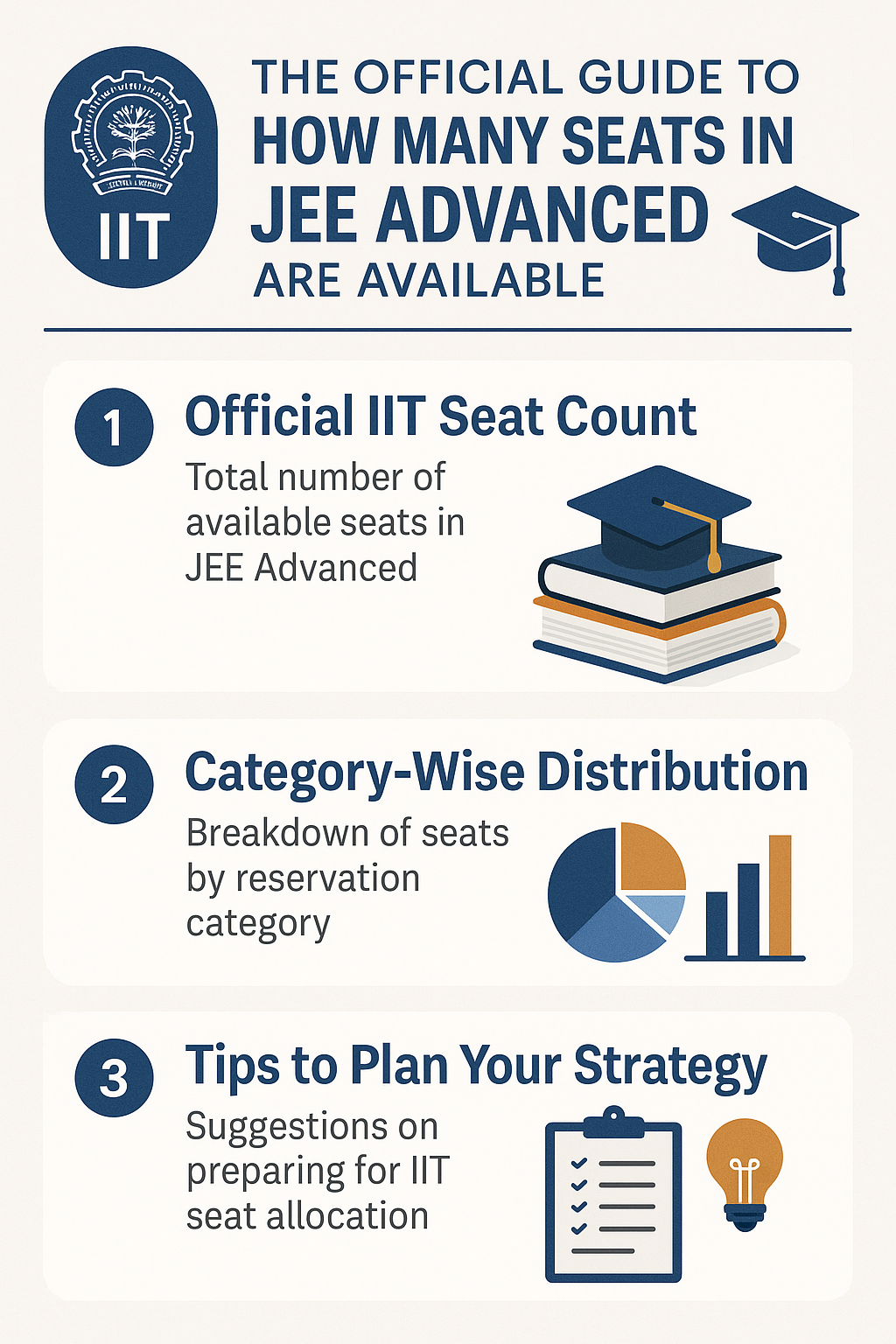
Wondering how many seats in JEE Advanced are available? Get the official IIT seat count, category-wise distribution,...
Explore the Chemistry JEE Advanced syllabus with chapter-wise importance, key formulas, named reactions, and the...
Explore the Maths JEE Advanced syllabus with chapter-wise importance, high-scoring topics, and the best books to...
Explore the Physics portion of the JEE Advanced syllabus. Get chapter-wise importance, high-scoring topics, and the...
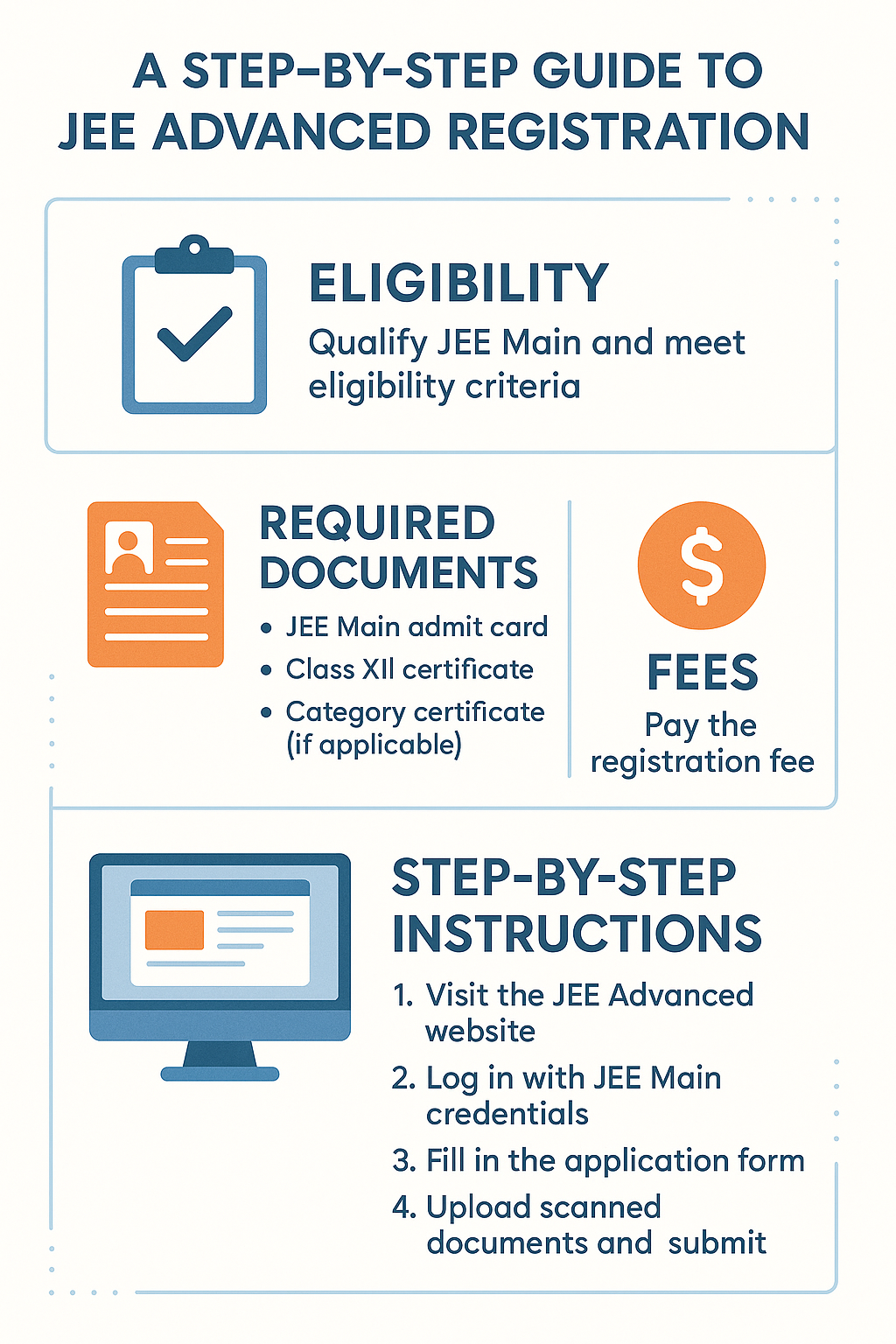
Learn the complete JEE Advanced registration process. Check eligibility, required documents, fees, and step-by-step...
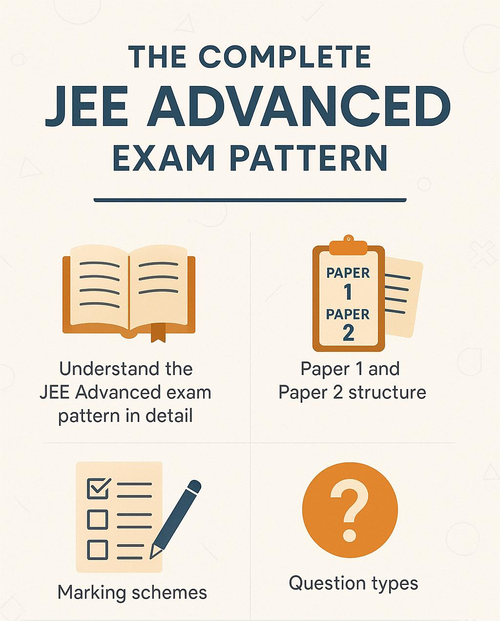
Understand the JEE Advanced exam pattern in detail. Learn about Paper 1 and Paper 2 structure, marking schemes,...
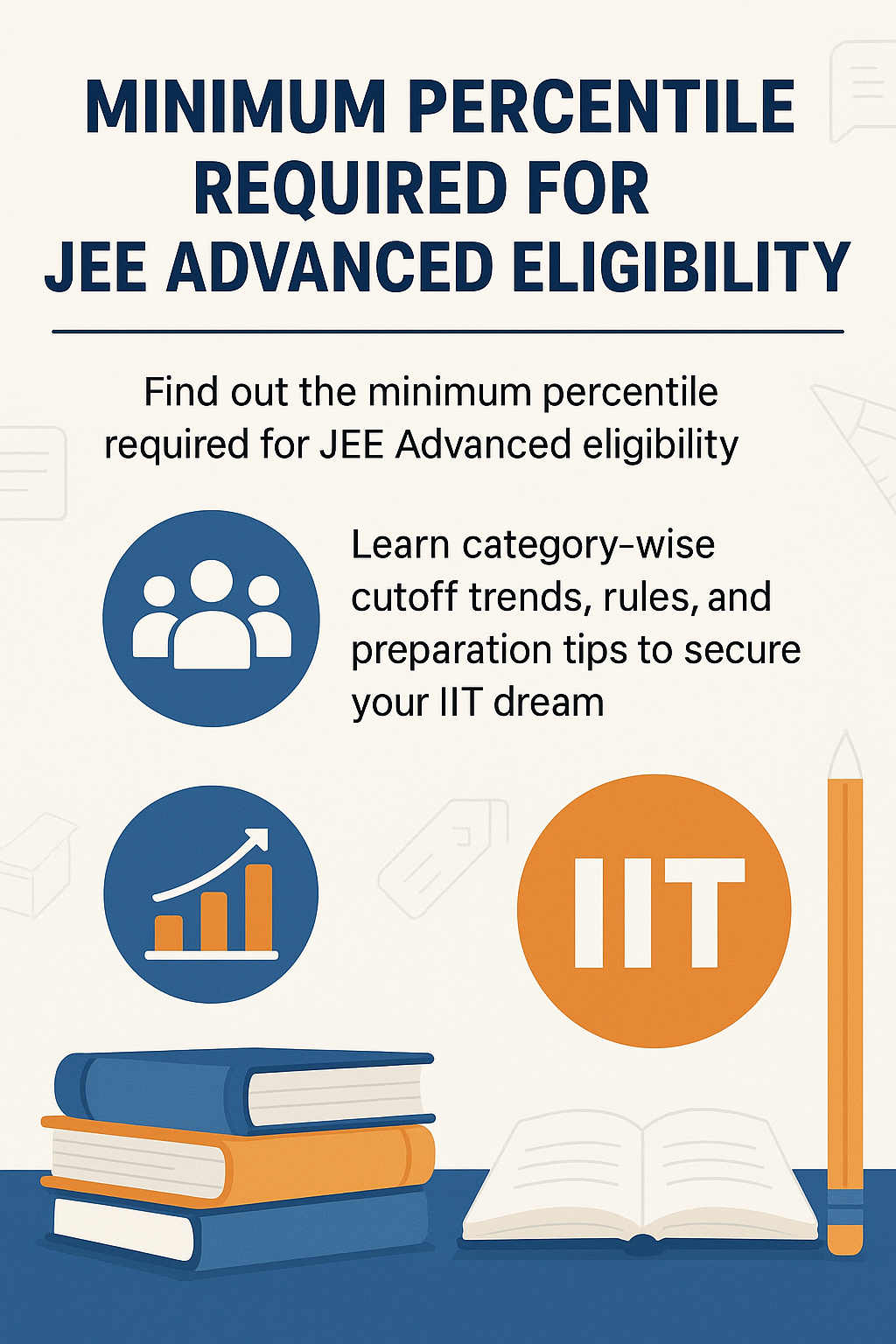
Find out the minimum percentile required for JEE Advanced eligibility. Learn category-wise cutoff trends, rules, and...
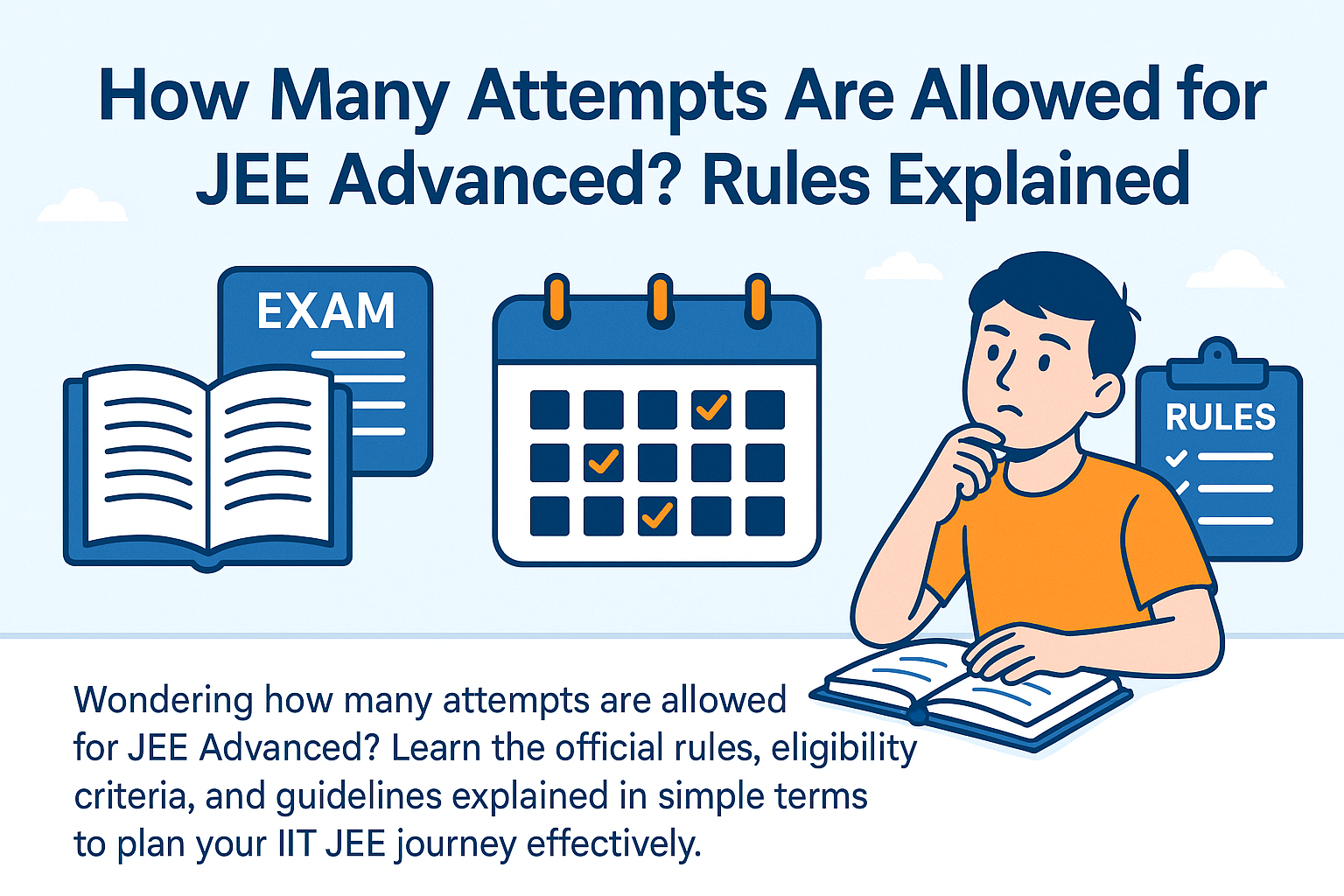
Wondering how many attempts are allowed for JEE Advanced? Learn the official rules, eligibility criteria, and...
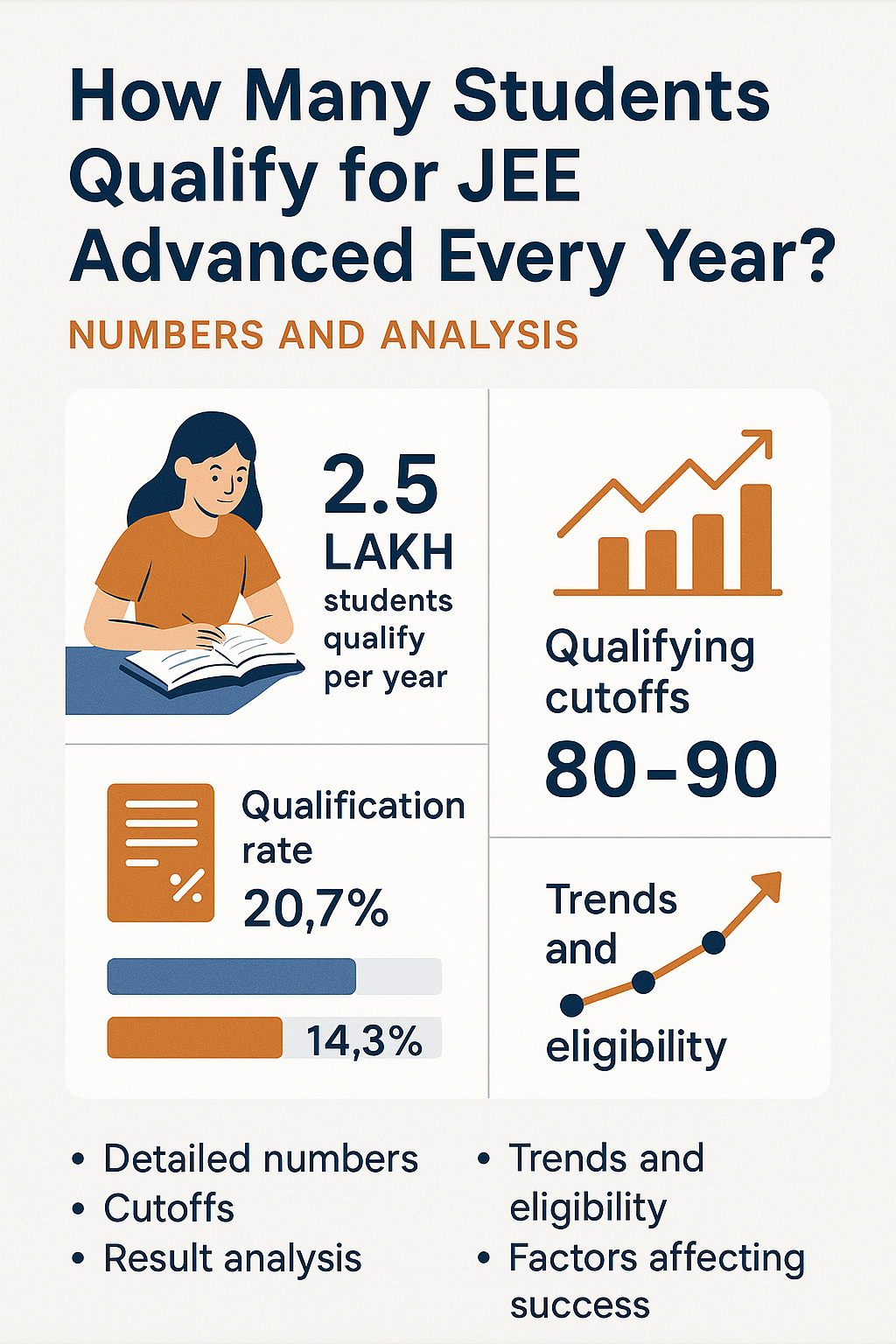
Discover how many students qualify for JEE Advanced every year with detailed numbers, cutoffs, and result analysis....

Stay updated with the latest JEE Advanced news. Get details on exam dates, registration process, results, and...
Explore the complete JEE Advanced syllabus with subject-wise topics, chapter weightage, and best books for Physics,...
Stay updated on JEE Advanced 2026 with complete details on exam date, registration deadline, and full schedule. Get...
Get a quick overview of JEE Advanced with key details on eligibility, exam pattern, syllabus, marking scheme, and...
Curious about JEE Advanced marks vs rank? Explore expected cutoffs, past year trends, and how your score translates...
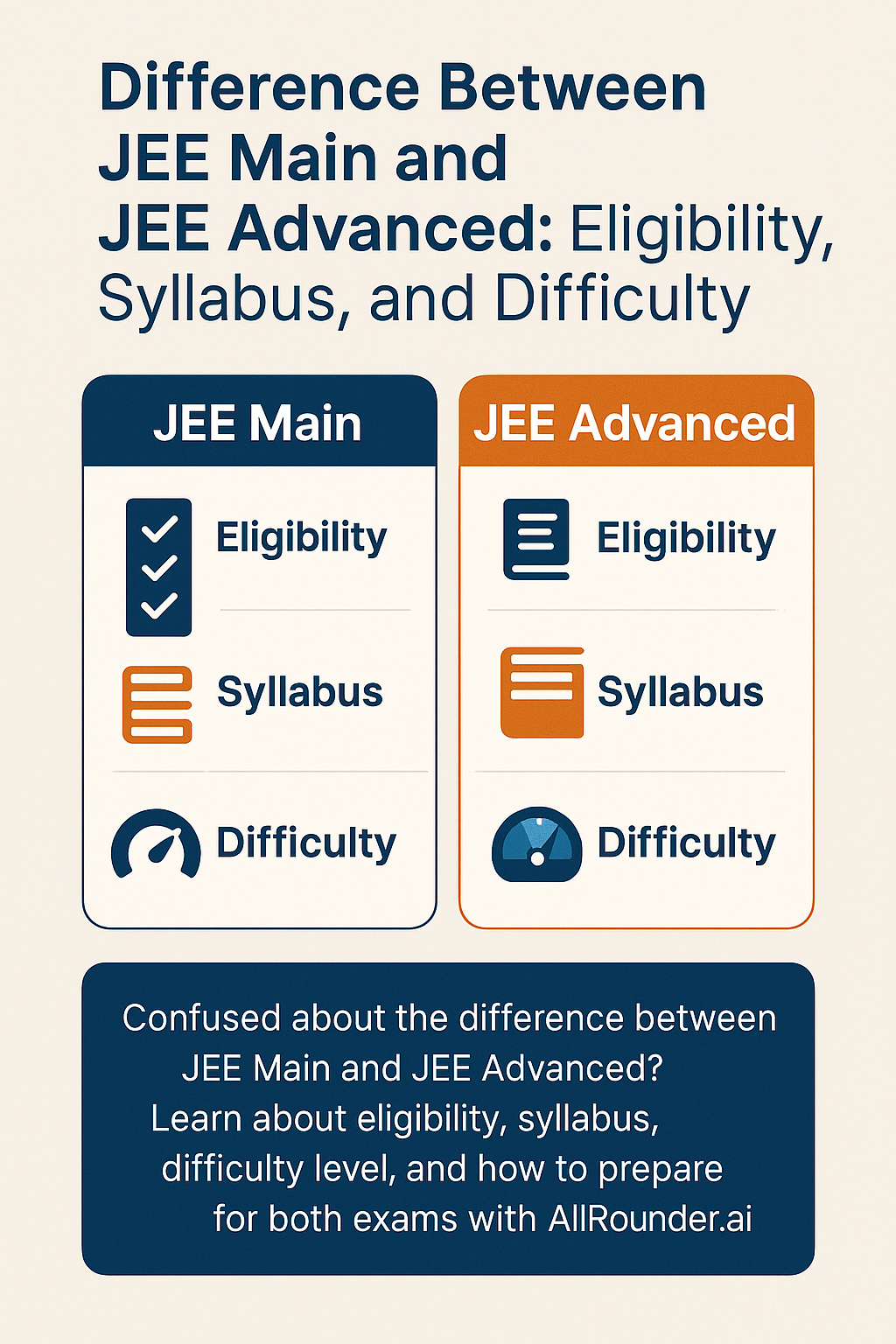
Confused about the difference between JEE Main and JEE Advanced? Learn about eligibility, syllabus, difficulty...
Resources
-
Your complete JEE Advanced resource for eligibility, exam dates, syllabus, marks vs rank, and...
-

Understand the entire JEE Main process, from application and eligibility rules to the exam...
-

Explore the IB Board – a global curriculum emphasizing holistic, student-centered learning...
-

Learn about CBSE – India’s national school board offering a standardized curriculum, NCERT...
-

Explore everything about the ICSE board – its curriculum, subjects, exam format, and academic...