Why Academic Pressure Affects Learning Quality?
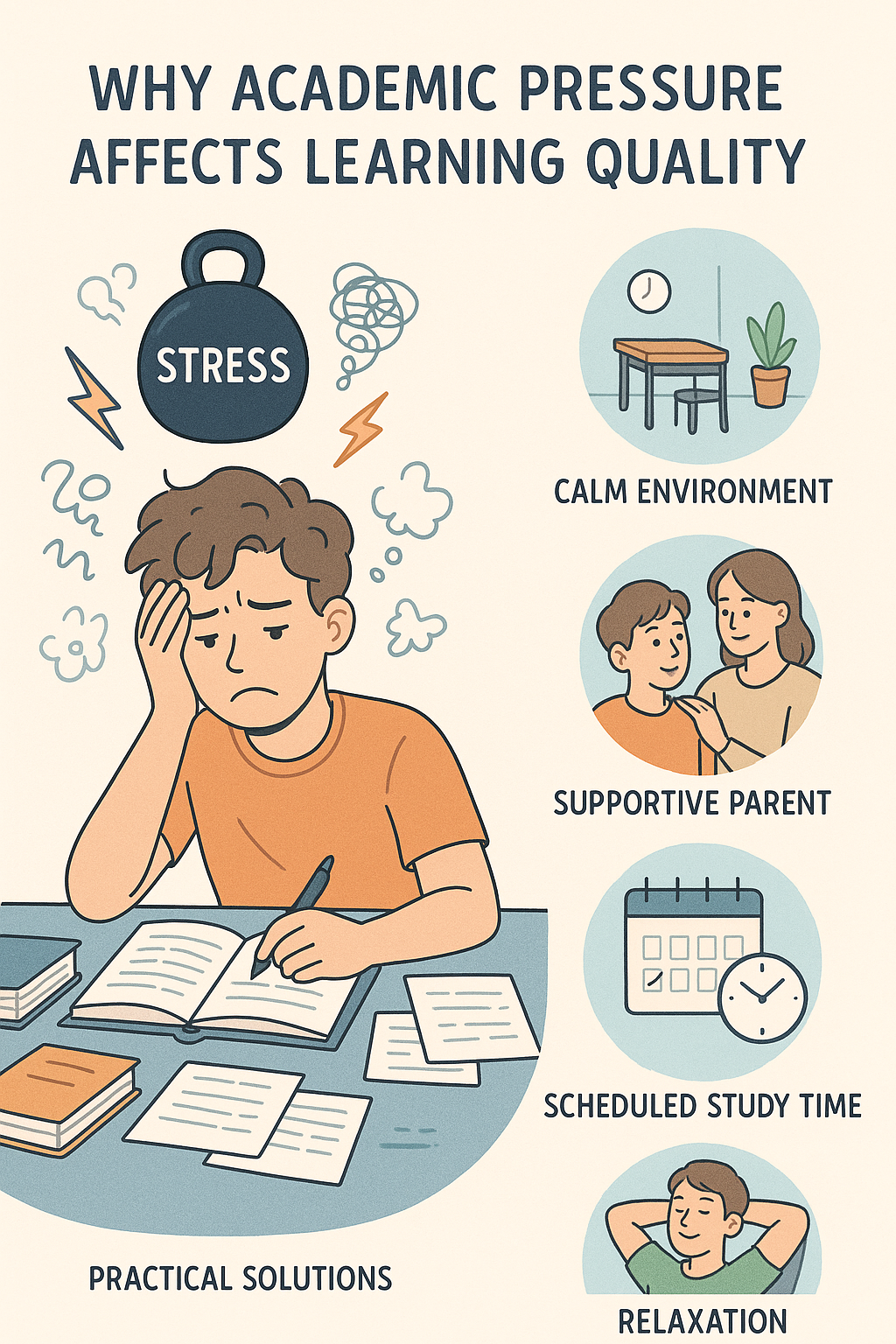
Academic pressure has become an almost invisible part of modern schooling. From early grades to senior classes, students are constantly reminded of marks, ranks, exams, and future outcomes. While a certain level of challenge can motivate students, excessive academic pressure often does the opposite. Instead of improving learning, it weakens understanding, reduces curiosity, and creates long-term emotional and mental strain.
Learning quality is not defined by how many hours a student studies or how high their marks are. True learning involves clarity, retention, confidence, and the ability to apply concepts independently. When pressure dominates the learning environment, these elements slowly disappear. Understanding how and why academic pressure affects learning quality is essential for students, parents, and educators who want long-term success rather than short-term results.
Understanding Academic Pressure in School Life
Academic pressure refers to the constant expectation to perform, score well, and meet benchmarks set by schools, parents, peers, and even students themselves. This pressure can come from frequent tests, competitive environments, comparison with classmates, or fear of disappointing others.
For many students, pressure does not arrive suddenly. It builds gradually through daily reminders about marks, board exams, and future careers. Over time, this pressure becomes internalized. Students start associating their self-worth with academic performance. When learning becomes a measure of personal value, quality naturally suffers.
How Pressure Changes the Way Students Learn
Under pressure, the brain prioritizes survival rather than deep thinking. Students focus on memorizing information quickly instead of understanding concepts thoroughly. This leads to surface learning, where facts are retained temporarily and forgotten soon after exams.
Pressure also discourages curiosity. Students hesitate to ask questions for fear of appearing slow or unprepared. Instead of exploring ideas, they stick to what feels safe. Over time, learning turns mechanical and joyless. Platforms like AllRounder.ai aim to counter this by encouraging structured, pressure-aware learning that focuses on clarity rather than fear.
The Impact of Fear on Concentration and Memory
Fear is one of the strongest outcomes of academic pressure. Fear of exams, fear of failure, and fear of judgment all affect concentration. When students are anxious, their ability to focus decreases, and simple concepts begin to feel difficult.
Memory is also affected by stress. High pressure triggers anxiety hormones that interfere with information retention. Students may study for long hours but struggle to recall information during tests. This creates a cycle where more pressure leads to poorer performance, which then increases pressure even further.
Why Average Students Are Most Affected
Academic pressure often hits average students the hardest. High achievers may receive praise, while struggling students may receive support. Average students, however, are frequently overlooked. They feel pressure to improve but lack clear guidance on how to do so.
Many average students begin to doubt their abilities, assuming they are simply not good enough. Building confidence becomes critical in breaking this cycle. Insights on this are discussed in how to build academic confidence in an average student, which emphasizes encouragement, realistic goals, and consistent effort.
The Role of Parent Expectations in Academic Pressure
Parents play a major role in shaping how students perceive academics. While expectations often come from a place of care, constant reminders about performance can unintentionally increase stress. When conversations focus only on results rather than effort, students begin to associate learning with anxiety.
A healthy parent child relationship supports learning quality. When parents show interest in the learning process rather than just outcomes, students feel safer and more motivated. Practical ways to strengthen this relationship are explained in how to build a positive parent learning relationship.
Pressure Versus Discipline in Learning
Discipline is often confused with pressure. Discipline involves consistency, structure, and self-control. Pressure involves fear, urgency, and comparison. While discipline improves learning quality, pressure undermines it.
Students who learn discipline gradually develop independence and confidence. They study because they understand the value of learning, not because they fear consequences. Strategies for nurturing discipline without pressure are explored in how to build self discipline in students for long term success.
How Unhealthy Routines Increase Pressure
Chaotic study routines significantly increase academic pressure. Irregular schedules, last-minute studying, and lack of breaks create a sense of constant urgency. Students feel like they are always behind, even when they are putting in effort.
A balanced routine brings predictability and control, reducing stress. When students know what to study and when, anxiety decreases naturally. Guidance on creating healthier routines can be found in reduce school stress and build a healthy study routine.
Revision Under Pressure Loses Effectiveness
Revision is meant to strengthen understanding, but under pressure it often turns into frantic repetition. Students revise without reflection, simply hoping information sticks. This approach reduces learning quality and increases exhaustion.
Effective revision requires calm focus and clarity. When pressure is reduced, students can use strategies that improve retention and confidence. Practical methods for meaningful revision are discussed in effective revision techniques that work.
Academic Burnout and Its Effect on Learning
Sustained academic pressure often leads to burnout. Burnout shows up as fatigue, lack of motivation, irritability, and emotional withdrawal from studies. At this stage, learning quality drops sharply, even if study hours remain high.
Burnout prevents students from engaging deeply with content. They study mechanically, without interest or curiosity. Recognizing and addressing burnout early is essential. Strategies to recover motivation and energy are shared in how to deal with academic burnout and stay motivated.
Recognizing When a Student Needs Academic Support
Sometimes pressure masks deeper struggles. Students may appear lazy, distracted, or unmotivated when they are actually overwhelmed. Recognizing these signs early prevents long-term damage to learning quality.
Parents and educators should watch for emotional withdrawal, declining performance, or avoidance of studies. Understanding these signals helps provide timely support. A detailed guide on this topic is available in signs your child needs study help.
The Effect of Distractions Under Pressure
Pressure often increases distraction rather than reducing it. When students feel overwhelmed, they seek escape through phones, social media, or unrelated activities. This leads to guilt, reduced focus, and even more pressure.
Helping students manage distractions requires empathy and practical strategies rather than punishment. Techniques to improve focus are discussed in how to help your teen manage distractions and stay focused.
How Board-Specific Pressure Impacts Learning
Different academic boards have different expectations and assessment styles. When students are unclear about these requirements, pressure increases. Structured learning aligned with board syllabi reduces confusion and anxiety.
Students can benefit from board-specific academic pathways such as CBSE courses, ICSE courses, and IB courses. When learning aligns with curriculum demands, students feel more prepared and less stressed.
Pressure Across Different School Grades
Academic pressure intensifies as students move to higher grades. Middle school introduces competition, while senior classes add exam and career pressure. Each stage requires age-appropriate academic support.
Students can benefit from structured guidance through Grade 8, Grade 9, Grade 10, Grade 11, and Grade 12. Targeted support helps maintain learning quality during high-pressure years.
Reducing Exam Pressure Through Practice
One of the most effective ways to reduce academic pressure is familiarity. When students regularly practice under exam-like conditions, uncertainty decreases. Confidence grows with exposure.
Using tools like practice tests allows students to understand patterns, manage time, and identify weak areas early. This shifts preparation from fear-based studying to informed improvement.
The Importance of Play and Relaxation
Continuous pressure without relief damages learning quality. Students need time to relax, play, and mentally reset. Breaks improve concentration, creativity, and emotional balance.
Educational play can support learning while reducing stress. Interactive activities available through educational games provide a healthy balance between effort and enjoyment, supporting better focus during study time.
How Parenting Style Influences Academic Pressure
Supportive parenting reduces pressure, while controlling parenting increases it. Encouragement, empathy, and patience help students feel safe enough to learn deeply. When parents acknowledge effort rather than only outcomes, students develop intrinsic motivation.
Positive parenting strategies that boost confidence are explored in positive parenting tips to boost academic confidence. Confidence-driven learning always produces higher quality outcomes than fear-driven learning.
Shifting Focus From Performance to Progress
One of the most effective ways to improve learning quality is shifting attention from performance to progress. When students track improvement rather than rank, pressure reduces naturally. Small wins become motivating instead of insignificant.
Progress-focused learning encourages reflection, adaptability, and resilience. Over time, students become self-directed learners who are less affected by external pressure and more invested in genuine understanding.
Building a Healthier Relationship With Learning
Academic pressure does not disappear overnight, but it can be managed thoughtfully. When students feel supported, guided, and understood, learning becomes meaningful again. Reducing pressure improves not only marks but also confidence, curiosity, and long-term academic growth.
By focusing on structured routines, emotional support, effective revision, and realistic expectations, students can protect learning quality even in demanding academic environments. True success lies not in eliminating challenges, but in ensuring pressure never overshadows the joy and purpose of learning.