
Field-Programmable Gate Arrays (FPGAs)
Interactive Audio Lesson
Listen to a student-teacher conversation explaining the topic in a relatable way.
Introduction to FPGAs
🔒 Unlock Audio Lesson
Sign up and enroll to listen to this audio lesson

Today, we are diving into Field-Programmable Gate Arrays, or FPGAs. Can anyone tell me what they think an FPGA might be?

Is it like a computer chip that you can program for different tasks?
Exactly! FPGAs are specialized circuits that can be programmed after manufacturing to perform various digital operations. This sets them apart from traditional fixed-function chips. Remember, the key term here is 'reconfigurable.'

So, what makes them different from, say, microcontrollers?
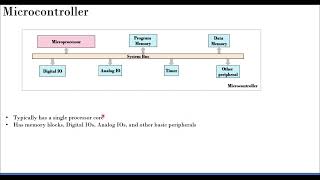
Great question! While microcontrollers are designed for specific control tasks and have limited programmability, FPGAs offer more flexibility in creating custom circuits. Think of them as a blank canvas for digital designers.

Can you give us an example of where FPGAs are used?
Certainly! They're used in applications like telecommunications for signal processing, allowing rapid updates as protocols evolve. This ability to adapt makes them highly valuable in fast-changing tech environments.
To recap, FPGAs are reconfigurable circuits that enhance flexibility and performance in digital designs. Any final thoughts?

I think it's interesting that we can change what they do even after they're made!
Advantages of FPGAs
🔒 Unlock Audio Lesson
Sign up and enroll to listen to this audio lesson

Let’s discuss some advantages of FPGAs. What do you recall about their benefits?
They can be customized for specific tasks.
Yes, that’s correct! This customizability allows for optimized performance in tasks. Additionally, FPGAs can handle multiple tasks in parallel, which gives them an edge in speed.
Are they more expensive than regular chips?
FPGAs can be more expensive per unit due to their flexibility. However, considering the cost of development and deployment times, they can often be more cost-effective in quickly evolving fields.
So they are great for prototyping, as you can iterate quickly?
Absolutely! FPGAs allow for rapid prototyping, and designers can incorporate changes without waiting for new silicon to arrive. This is vital in markets where speed is critical.
In summary, the advantages of FPGAs shine in their reconfigurability, parallel processing, and development flexibility. Can anyone think of a situation where these characteristics would be crucial?
In designing aerospace systems where reliability and adaptability are essential!
Applications of FPGAs
🔒 Unlock Audio Lesson
Sign up and enroll to listen to this audio lesson
Now that we know the advantages, let’s talk about applications of FPGAs. Can someone name an industry that benefits from FPGAs?
I think telecommunications!
Correct! FPGAs are widely used in telecommunications for tasks like signal processing and protocol transformation. They allow companies to adapt quickly to new standards.
Are there other areas as well?
Definitely! FPGAs also play critical roles in medical devices, automotive systems, and even data centers where high-speed computation is required.
What about IoT devices? Can they be included too?
Yes, great observation! In IoT, FPGAs can be used for edge processing, enabling quick data analysis and decision-making, which is essential for efficiency.
To summarize, FPGAs are applicable in wide-ranging fields including telecommunications, automotive, medical devices, and IoT. Any last thoughts?
It seems like FPGAs are really versatile and crucial for many modern technologies!
Introduction & Overview
Read summaries of the section's main ideas at different levels of detail.
Quick Overview
Standard
FPGAs are reconfigurable integrated circuits that allow users to design and customize digital circuits for specific applications. They bridge the gap between fixed-function ASICs and general-purpose processors, offering both flexibility and performance for a variety of tasks, including high-speed computations and parallel processing.
Detailed
Field-Programmable Gate Arrays (FPGAs)
FPGAs are powerful integrated circuits that are programmable by the end-user after manufacturing, enabling the implementation of various digital circuits and systems. Unlike Application-Specific Integrated Circuits (ASICs), which have fixed functionality, FPGAs offer a unique combination of flexibility and performance. They consist of an array of configurable logic blocks (CLBs), programmable interconnects, and input/output blocks, allowing engineers to create custom hardware tailored for specific applications.
Key Characteristics:
- Reconfigurability: Users can program FPGAs to realize different functionalities, making them suitable for rapid prototyping and updates.
- Parallel Processing Capability: FPGAs excel in handling multiple operations simultaneously, ideal for applications requiring high-speed computations, such as signal processing or image processing.
- Customizability: Users can optimize hardware for specific tasks, minimizing resource use and maximizing performance.
- Development Flexibility: They can be reprogrammed as needs change, providing a safeguard against obsolescence.
Applications:
FPGAs find use in various fields such as telecommunications, automotive applications, medical devices, and data center acceleration, among others. They are particularly favored in areas where the final specifications might evolve or where rapid deployment is crucial. Their role in developing complex digital systems continues to grow, especially with the rise of IoT and AI applications.
Understanding the fundamentals of FPGAs is crucial for engineers and designers in the realm of modern embedded systems.
Youtube Videos


Audio Book
Dive deep into the subject with an immersive audiobook experience.
Introduction to FPGAs
Chapter 1 of 3
🔒 Unlock Audio Chapter
Sign up and enroll to access the full audio experience
Chapter Content
Field-Programmable Gate Arrays (FPGAs) are reconfigurable integrated circuits. Unlike fixed-function ASICs or microcontrollers, an FPGA's internal logic blocks and interconnections can be programmed by the user to implement almost any digital circuit.
Detailed Explanation
FPGAs are special types of chips that can be configured by a user after manufacturing. This means that when you buy an FPGA, it doesn't have a set function—it's like a blank slate that can be programmed to perform many different tasks. This flexibility allows engineers to design custom hardware for specific applications, which is particularly useful for rapid prototyping or applications that may need to change over time.
Examples & Analogies
Think of an FPGA like a LEGO set. Just as you can build different structures with the same LEGO pieces depending on your needs (like a car, a house, or a spaceship), an FPGA can be programmed to perform different functions based on the design created by the engineer.
Applications of FPGAs
Chapter 2 of 3
🔒 Unlock Audio Chapter
Sign up and enroll to access the full audio experience
Chapter Content
They are used for applications requiring extreme parallelism, very high-speed I/O, custom hardware acceleration, or when the final design might evolve. They offer hardware flexibility.
Detailed Explanation
FPGAs are particularly valuable in scenarios where high performance and flexibility are necessary. For example, in telecommunications, FPGAs can manage several data streams simultaneously, processing them in parallel to meet the demands of high-speed networks. This is possible because FPGAs allow for custom configurations that can run multiple tasks at once, which traditional processors may struggle to do effectively.
Examples & Analogies
Imagine a chef in a kitchen who can change recipes on the fly based on the ingredients available. With an FPGA, engineers can adjust their designs as project needs evolve, just like the chef might modify a dish based on what ingredients they have.
Benefits of Using FPGAs
Chapter 3 of 3
🔒 Unlock Audio Chapter
Sign up and enroll to access the full audio experience
Chapter Content
FPGAs provide significant advantages such as faster development times, reduced time-to-market, and less fabrication lead time compared to traditional ASICs.
Detailed Explanation
Using FPGAs can save a lot of time during the design and production process. When engineers need to develop a product quickly, they can use FPGAs to prototype and test their ideas without waiting for custom chips to be manufactured. This immediacy is crucial when businesses are racing to introduce new technology to the market. Additionally, minor changes can be implemented in software rather than designing a whole new chip, which is a longer process.
Examples & Analogies
Think of using FPGAs like renting a recording studio with all the gear you need to try out different sound settings. If you find something that works better, you can adjust the settings on the fly without needing to buy new equipment. This flexibility allows quick experimentation and innovation.
Key Concepts
-
FPGAs are reconfigurable, allowing users to program the hardware after manufacturing.
-
They excel in parallel processing capabilities, making them suitable for high-speed operations.
-
FPGAs provide customizability for specific applications, optimizing resource use and performance.
Examples & Applications
In telecommunications, FPGAs can be programmed to quickly adapt to new communication protocols as they arise.
FPGAs in automotive systems enable the implementation of complex safety features that may need updates over a vehicle's lifespan.
Memory Aids
Interactive tools to help you remember key concepts
Rhymes
FPGAs can change their ways,
Stories
Once, in the world of chips, there lived an FPGA that could change its form at will. Every time a new job came, it swiftly reshaped itself, becoming whatever the task required, ensuring it was always ready for action.
Memory Tools
Remember FPGA with the mnemonic: 'Flexible Programmable Gate Array' to recall their reconfigurability.
Acronyms
FPGA - Flexible Performance, General Application.
Flash Cards
Glossary
- FieldProgrammable Gate Arrays (FPGAs)
Reconfigurable integrated circuits that can be programmed by the user to implement various digital circuits and systems.
- Reconfigurable
The ability to change the configuration of a digital circuit after manufacturing.
- Configurable Logic Blocks (CLBs)
The building blocks within an FPGA that can be programmed to perform specific logic functions.
- Parallel Processing
The ability to perform multiple operations simultaneously, which FPGAs excel at.
- Customizability
The capacity of FPGAs to be tailored for specific applications and performance needs.
Reference links
Supplementary resources to enhance your learning experience.