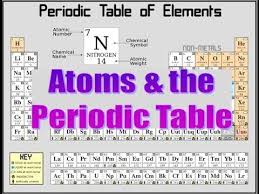
Atoms and The Periodic Table - IB 10 Sciences (Group 4)- Physics
Students

Academic Programs

AI-powered learning for grades 8-12, aligned with major curricula

Professional

Professional Courses

Industry-relevant training in Business, Technology, and Design

Games

Interactive Games

Fun games to boost memory, math, typing, and English skills

Atoms and The Periodic Table

Atoms and The Periodic Table

22 sections

Enroll to start learning

You've not yet enrolled in this course. Please enroll for free to listen to audio lessons, classroom podcasts and take practice test.

Sections

Navigate through the learning materials and practice exercises.

  1. 1
    The Structure Of The Atom

    This section discusses the fundamental components of atoms, including...

  2. 1.1
    Atomic Number And Mass Number

    This section discusses the atomic number, mass number, and isotopes,...

  3. 1.2

    Isotopes are variants of elements that share the same atomic number but...

  4. 1.3
    Electron Configuration

    Electron configuration describes how electrons are arranged in an atom's...

  5. 2
    The Development Of The Periodic Table

    The development of the periodic table includes significant milestones,...

  6. 2.1
    Dmitri Mendeleev (1869)

    Dmitri Mendeleev is known for creating the first periodic table by arranging...

  7. 2.2
    Henry Moseley (1913)

    Henry Moseley's work in 1913 led to the modern arrangement of the periodic...

  8. 2.3
    Modern Periodic Table

    The Modern Periodic Table organizes elements based on atomic number and...

  9. 3
    The Organization Of The Periodic Table

    The periodic table organizes 118 elements into periods and groups based on...

  10. 3.1

    This section explains the concept of periods in the periodic table,...

  11. 3.2

    Groups in the periodic table refer to vertical columns where elements share...

  12. 3.2.1
    Group 1: Alkali Metals

    Group 1, known as alkali metals, includes highly reactive elements with one...

  13. 3.2.2
    Group 2: Alkaline Earth Metals

    Group 2 comprises alkaline earth metals, which have two electrons in their...

  14. 3.2.3
    Group 17: Halogens

    Group 17, known as halogens, consists of highly reactive non-metals with...

  15. 3.2.4
    Group 18: Noble Gases

    Noble gases, found in Group 18 of the periodic table, are known for their...

  16. 3.3
    Transition Elements

    Transition elements are the metals located in Groups 3-12 of the periodic...

  17. 4
    Trends In The Periodic Table

    This section outlines the significant trends observed in the periodic table,...

  18. 4.1
    Atomic Radius

    The atomic radius refers to the size of an atom, which varies with its...

  19. 4.2
    Ionization Energy

    Ionization energy refers to the energy required to remove an electron from...

  20. 4.3
    Electronegativity

    Electronegativity refers to the ability of an atom to attract electrons in a...

  21. 4.4

    Reactivity describes how readily an element undergoes chemical reactions,...

  22. 5
    The Significance Of The Periodic Table

    The periodic table is a predictive model that organizes elements and reveals...

Additional Learning Materials

Supplementary resources to enhance your learning experience.