
Revisiting Nouns & Pronouns: Types, Cases, and Agreement
Interactive Audio Lesson
Listen to a student-teacher conversation explaining the topic in a relatable way.
Types of Nouns
🔒 Unlock Audio Lesson
Sign up and enroll to listen to this audio lesson

Today we are learning about the types of nouns. Can anyone tell me what a noun is?

A noun is a word that names a person, place, thing, or idea!
Exactly! There are different types of nouns. Let's start with **proper nouns**. Who can give me an example?

Like 'India' or 'Rahul'?
Perfect! Proper nouns are always capitalized. Now, what about **common nouns**?

Common nouns are not specific, like 'country' or 'boy'.
Great! Next, we have **collective nouns**. Can anyone think of a collective noun?

How about 'team'?
Yes, 'team' refers to a group as a single unit. Let’s remember: Proper nouns are specific, common nouns are general, and collective nouns represent groups.
Cases of Nouns
🔒 Unlock Audio Lesson
Sign up and enroll to listen to this audio lesson

Now let’s talk about the cases of nouns. What happens when we use a noun as a subject?
It’s in the nominative case!
Correct! The nominative case is where the noun performs the action. Who can give an example?
The dog barks! 'Dog' is the subject.
Excellent! What about when a noun is the recipient of an action?
That's the objective case!
Exactly! Can anyone provide an example of the objective case?
She fed the dog. 'Dog' is receiving the action.
Fantastic! Remember, nouns indicate their role through cases. Nominative for subjects, objective for objects.
Understanding Pronouns
🔒 Unlock Audio Lesson
Sign up and enroll to listen to this audio lesson
Next, we will discuss pronouns. What is the main purpose of a pronoun?
To replace nouns and avoid repetition!
Exactly! Now, let’s categorize them. Who knows what **personal pronouns** are?
They refer to specific people, like 'I' or 'you.'
Correct! And what are **reflexive pronouns**?
Those are words that refer back to the subject, like 'myself' or 'herself.'
Perfect! Let’s remember: personal pronouns stand in place of nouns, while reflexive pronouns point back to the subject.
Pronoun-Antecedent Agreement
🔒 Unlock Audio Lesson
Sign up and enroll to listen to this audio lesson
A key point in our learning is pronoun-antcedent agreement. What does this mean?
It means that pronouns must match the nouns they replace in number and gender!
Exactly! Here’s an example: ‘Every student must bring his or her pencil.’ Why is this correct?
Because 'student' is singular, so the pronoun 'his or her' also matches.
Very good! And what happens if we say, 'Every student submitted their work?'
That’s incorrect because 'every student' is singular!
Great job! Remember, always ensure pronouns agree with their antecedents.
Introduction & Overview
Read summaries of the section's main ideas at different levels of detail.
Quick Overview
Standard
This section revisits the foundational aspects of nouns and pronouns in the English language, categorizing nouns into proper, common, collective, material, and abstract types. It also discusses the cases of nouns—nominative, objective, and possessive—along with the various types of pronouns and their agreement with antecedents in terms of number and gender.
Detailed
Revisiting Nouns & Pronouns: Types, Cases, and Agreement
In this section, we dive into the core components of grammar: nouns and pronouns. Nouns are classified into different types: proper nouns which denote specific entities, common nouns for general ones, collective nouns that represent groups, material nouns indicating substances, and abstract nouns pointing to concepts or qualities. Understanding the distinction between countable and uncountable nouns is also covered, emphasizing how countable nouns can be quantified while uncountable nouns cannot.
Nouns serve various roles in sentences, categorized as follows:
- Nominative Case: Acts as the subject of a verb.
- Objective Case: Functions as an object in the sentence.
- Possessive Case: Indicates ownership or possession.
Moving forward, the section introduces pronouns, which replace nouns to improve sentence clarity and prevent redundancy. Various pronouns are detailed, including personal, reflexive, emphatic, demonstrative, indefinite, interrogative, and relative pronouns. Importantly, pronouns must agree with their antecedents, meaning they should match in number (singular/plural) and gender. The section ends with examples illustrating correct pronoun usage to ensure clarity in communication.
Youtube Videos





Audio Book
Dive deep into the subject with an immersive audiobook experience.
What are Nouns?
Chapter 1 of 8
🔒 Unlock Audio Chapter
Sign up and enroll to access the full audio experience
Chapter Content
Nouns are words that name people, places, animals, things, ideas, or qualities. They are fundamental to forming sentences. Let's explore their different types:
Detailed Explanation
Nouns play a crucial role in English grammar as they provide names to everything around us. They can refer to various entities, including people (like 'teacher'), places (like 'city'), animals (like 'dog'), things (like 'book'), ideas (like 'freedom'), or qualities (like 'beauty'). Understanding nouns is essential since they serve as the building blocks of sentences.
Examples & Analogies
Think of nouns like the labels on jars in a pantry. Each label tells you what’s inside. Without these labels, you wouldn't know whether you're reaching for sugar, flour, or oats, just like sentences would be confusing without nouns.
Types of Nouns
Chapter 2 of 8
🔒 Unlock Audio Chapter
Sign up and enroll to access the full audio experience
Chapter Content
-
Proper Nouns: These name specific people, places, or things. They always begin with a capital letter.
Examples: India, Rahul, Taj Mahal, Monday, January -
Common Nouns: These name general people, places, animals, or things. They do not refer to a specific one and are not capitalized unless they start a sentence.
Examples: country, boy, building, day, month -
Collective Nouns: These refer to a group of people, animals, or things as a single unit.
Examples: team, flock, army, bundle, committee -
Material Nouns: These refer to the raw materials or substances from which things are made. They are typically uncountable.
Examples: gold, wood, water, cotton, iron -
Abstract Nouns: These refer to ideas, qualities, states, or feelings that cannot be perceived by the five senses.
Examples: happiness, bravery, freedom, knowledge, peace
Detailed Explanation
Nouns can be classified into several categories:
- Proper Nouns are unique names and always start with a capital letter, such as 'India'.
- Common Nouns denote general items or categories and are not capitalized, like 'country'.
- Collective Nouns describe groups, for instance, a 'team'.
- Material Nouns represent substances, for instance, 'gold', which refers to the material itself.
- Abstract Nouns indicate concepts or feelings, like 'happiness', which cannot be physically touched. Recognizing these types helps us understand and categorize language effectively.
Examples & Analogies
Imagine you’re in a school. Your teacher (a proper noun) is explaining concepts. When she says 'the classroom is big' (a common noun), she is generalizing about where you are. If she mentions 'the class is working together' (collective noun), she's referring to everyone as a single group. When talking about 'the wood' (material noun) she picks up, she demonstrates something that cannot be counted individually. Finally, when she discusses 'knowledge' (abstract noun), it represents something you gain in learning.
Countable and Uncountable Nouns
Chapter 3 of 8
🔒 Unlock Audio Chapter
Sign up and enroll to access the full audio experience
Chapter Content
Countable and Uncountable Nouns:
- Countable Nouns: Nouns that can be counted and have both singular and plural forms.
Examples: book (books), chair (chairs), apple (apples)
- Uncountable Nouns: Nouns that cannot be counted individually and usually do not have a plural form.
Examples: water, information, advice, furniture (We use "some water," "a piece of information," etc.)
Detailed Explanation
Nouns can be divided into countable and uncountable categories. Countable nouns are those you can count individually, like 'books', which can be one book or multiple books. These nouns have both singular (one) and plural (more than one) forms. In contrast, uncountable nouns, like 'water', cannot be counted individually, and you wouldn't say 'waters'. Instead, quantities are expressed in terms like 'some water' or 'a little advice.'
Examples & Analogies
Think about fruit in a basket. You can count apples (3 apples), which makes them countable nouns. However, if you think about juice, you refer to it in a way that is not counted (you wouldn't say 'three juices' unless it's different types in this context), making it uncountable.
Nouns in Sentences: Cases
Chapter 4 of 8
🔒 Unlock Audio Chapter
Sign up and enroll to access the full audio experience
Chapter Content
Nouns can function in different "cases" depending on their role in a sentence.
1. Nominative Case (Subjective Case): The noun acts as the subject of the verb, performing the action.
Example: The dog barked loudly. (The dog is performing the action of barking.)
-
Objective Case: The noun acts as the object of the verb or a preposition, receiving the action.
Example: She fed the dog. (The dog is receiving the action of being fed.)
Example: He went to the park with his friend. (Friend is the object of the preposition 'with'.) -
Possessive Case: The noun shows ownership or possession, usually indicated by an apostrophe ('s) or just an apostrophe for plural nouns ending in 's'.
Example: Ria's book is new.
Example: The boys' school is nearby.
Detailed Explanation
In grammar, the case of a noun indicates its function in a sentence.
- The Nominative Case is used when a noun is the subject, as in 'The dog barked loudly,' where 'dog' is the doer of the action.
- The Objective Case comes into play when the noun is the object, as in 'She fed the dog,' where 'dog' receives the action of the verb.
- The Possessive Case shows ownership, like in 'Ria's book,' indicating that the book belongs to Ria. Each case helps clarify how nouns operate within sentences.
Examples & Analogies
Imagine in a class play, the students take on different roles: the main character (nominative case) who drives the story by acting, the friend who supports the main character (objective case), and the student who owns the script (possessive case). All three play crucial roles in telling the story effectively.
Understanding Pronouns
Chapter 5 of 8
🔒 Unlock Audio Chapter
Sign up and enroll to access the full audio experience
Chapter Content
Pronouns are words used in place of nouns to avoid repetition. They must agree with the noun they replace in number, gender, and person.
Detailed Explanation
Pronouns serve as substitutes for nouns, making sentences smoother and less repetitive. For example, instead of saying 'Rahul went to Rahul's house', you would say 'Rahul went to his house'. It's essential for pronouns to agree with the nouns they replace in terms of number (singular vs. plural), gender (male, female, or neutral), and person (first, second, or third). This agreement ensures clarity in communication.
Examples & Analogies
If you have a favorite story about a cat named Whiskers, rather than constantly repeating 'Whiskers', you can say 'he' or 'it' while telling the story: 'Whiskers loves to play. He always chases the toy.' Using pronouns makes your narrative much easier to follow.
Types of Pronouns
Chapter 6 of 8
🔒 Unlock Audio Chapter
Sign up and enroll to access the full audio experience
Chapter Content
Types of Pronouns:
1. Personal Pronouns: Refer to specific people or things and change form based on person, number, gender, and case.
- First Person (speaker): I, me, my, mine, we, us, our, ours
- Second Person (listener): you, your, yours
- Third Person (person/thing spoken about): he, him, his, she, her, hers, it, its, they, them, their, theirs
- Cases of Personal Pronouns:
- Nominative/Subjective: I, we, you, he, she, it, they (used as the subject of a verb)
- Example: He ran fast.
- Objective: me, us, you, him, her, it, them (used as the object of a verb or preposition)
- Example: She saw him.
- Possessive: my, mine, our, ours, your, yours, his, her, hers, its, their, theirs (show ownership)
- Example: That is my book. That book is mine.
Detailed Explanation
There are several types of pronouns, with personal pronouns being the most common. They represent specific people or things, divided into three categories:
- First person includes pronouns like 'I' (singular) and 'we' (plural).
- Second person involves 'you' which can refer to individuals or groups.
- Third person denotes entities that are not the speaker or listener, using pronouns like 'he', 'she', 'it', or 'they'.
Each type changes form depending on its role in a sentence, such as subject (nominative), object (objective), or possessive.
Examples & Analogies
If you're talking about a basketball game, you might say: 'I scored a basket; you cheered; he made a fantastic play.' Here, each pronoun replaces a specific player, allowing for a smoother storytelling experience without unnecessary repetition.
Pronoun Cases Explained
Chapter 7 of 8
🔒 Unlock Audio Chapter
Sign up and enroll to access the full audio experience
Chapter Content
-
Reflexive Pronouns: End in -self or -selves and refer back to the subject of the sentence. They indicate that the action is performed by the subject upon itself.
Examples: myself, yourself, himself, herself, itself, ourselves, yourselves, themselves
Example: She accidentally cut herself. -
Emphatic Pronouns: Look identical to reflexive pronouns but are used to emphasize the noun or pronoun. They are not essential to the sentence's meaning.
Example: He built the house himself. (Meaning: He built it without help.) -
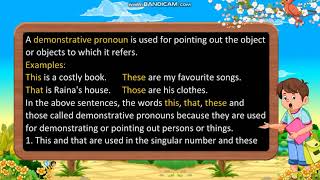
Demonstrative Pronouns: Point out specific nouns.
Examples: this, that, these, those
Example: This is my favourite colour. Those are beautiful flowers. -
Indefinite Pronouns: Refer to an unspecified person or thing. They do not refer to a particular noun.
Examples: everyone, someone, nobody, anything, all, few, many, several
Example: Everyone agreed with the decision. -
Interrogative Pronouns: Used to ask questions.
Examples: who, whom, whose, which, what
Example: Who is at the door? -
Relative Pronouns: Connect a dependent clause to an independent clause, referring back to a noun or pronoun (the antecedent).
Examples: who, whom, whose, which, that
Example: This is the book that I borrowed.
Detailed Explanation
Pronouns can be further categorized into distinct types, enhancing their usage:
- Reflexive Pronouns refer back to the subject, like 'myself'; they indicate that the action is performed on the subject itself, e.g., 'She cut herself.'
- Emphatic Pronouns emphasize the subject and, although similar to reflexive ones, aren’t necessary in the sentence, e.g., 'He himself did it.'
- Demonstrative Pronouns point to specific items, e.g., 'this' and 'those'.
- Indefinite Pronouns refer to unspecific entities like 'everyone' or 'somebody'.
- Interrogative Pronouns are used for questioning, e.g., 'who?' and 'what?'.
- Relative Pronouns connect clauses, e.g., 'that' in 'the book that you gave me.' Understanding these types allows for precise communication.
Examples & Analogies
Imagine planning a group trip. You might say: 'Everyone should bring their own lunch.' Here, 'everyone' is an indefinite pronoun. If someone asks, 'Who is in charge of snacks?', 'who' is an interrogative pronoun. When you mention, 'The students that participated won a prize', 'that' acts as a relative pronoun, linking the students to their achievement.
Pronoun-Antecedent Agreement
Chapter 8 of 8
🔒 Unlock Audio Chapter
Sign up and enroll to access the full audio experience
Chapter Content
Pronoun-Antecedent Agreement:
A pronoun must agree with its antecedent (the noun it replaces) in number (singular/plural) and gender (masculine/feminine/neuter).
- Incorrect: Every student submitted their assignment.
- Correct: Every student submitted his or her assignment. (Or, rephrase for plural: All students submitted their assignments.)
Detailed Explanation
The principle of Pronoun-Antecedent Agreement ensures clarity in sentences. A pronoun (like 'he' or 'it') must match its antecedent (the noun it replaces) in both number and gender. For instance, if the antecedent is 'student' (singular and masculine/feminine), the pronoun must reflect that: 'Every student submitted his or her assignment.' Using 'their' in this context is incorrect because 'every student' is singular, not plural. This agreement helps avoid confusion.
Examples & Analogies
Consider a teacher discussing assignments. If they say 'Every student must bring their book,' it becomes unclear whether each student is singular. It's like watching a show with multiple characters—if their names change or mix, it becomes confusion. To clarify, the teacher should say 'Every student must bring his or her book,' ensuring we know exactly whose book we're discussing.
Key Concepts
-
Nouns are categorized into proper, common, collective, material, and abstract types.
-
Nouns can function in different cases: nominative, objective, and possessive.
-
Pronouns replace nouns and must agree in number and gender with their antecedents.
-
Different types of pronouns include personal, reflexive, demonstrative, and relative pronouns.
Examples & Applications
Proper noun example: 'Rahul' and 'India'.
Collective noun example: 'team' and 'flock'.
Abstract noun example: 'freedom' and 'happiness'.
Personal pronoun example: 'she', 'he', and 'they'.
Reflexive pronoun example: 'herself' and 'ourselves'.
Memory Aids
Interactive tools to help you remember key concepts
Rhymes
To remember nouns, it’s quite a sight, Proper names gleam, in capital light.
Stories
Once there was a team called 'The Eagles'. They worked together, like a flock of birds, each contributing their unique talents, highlighting the essence of collective nouns.
Memory Tools
For noun types, think: P, C, M, A: Proper, Common, Material, Abstract.
Acronyms
NOM for understanding nouns
Nouns Organize Meaning!
Flash Cards
Glossary
- Noun
A word that names a person, place, thing, or idea.
- Proper Noun
A specific name of an individual or entity, always capitalized.
- Common Noun
A general name for a person, place, or thing that is not specific.
- Collective Noun
A noun that refers to a group of individuals or things.
- Material Noun
A noun representing substances or materials.
- Abstract Noun
A noun that denotes an idea, quality, or state.
- Pronoun
A word that replaces a noun.
- Personal Pronoun
Pronouns that refer to specific persons or things.
- Reflexive Pronoun
A pronoun that indicates the subject and object are the same.
- Antecedent
A noun that a pronoun refers back to.
Reference links
Supplementary resources to enhance your learning experience.