
Active & Passive Voice: Shifting Focus in Sentences
Interactive Audio Lesson
Listen to a student-teacher conversation explaining the topic in a relatable way.
Introduction to Active Voice
🔒 Unlock Audio Lesson
Sign up and enroll to listen to this audio lesson

Today we're going to discuss the active voice. Can anyone tell me what the active voice is?

Isn't it where the subject does the action?
Exactly! In active voice, the subject performs the action, following the structure of Subject + Verb + Object. For example, 'The cat chased the mouse.' What do you notice about who does the action?

The cat is the one that does the chasing.
Right! And it makes the sentence clear and direct. Can anyone give me another example of an active voice sentence?

The chef cooked a delicious meal.
Great example! Active voice sentences usually help keep our writing lively and engaging.
Let's summarize: Active voice is clear, direct, and emphasizes the doer of the action.
Understanding Passive Voice
🔒 Unlock Audio Lesson
Sign up and enroll to listen to this audio lesson

Now, let’s explore the passive voice. What do you think is the main difference compared to the active voice?
Is it when the subject receives the action instead of doing it?
Exactly! In passive voice, the focus shifts from the doer to the receiver. The structure is typically Object + form of 'to be' + past participle. For example, 'The cake was eaten by the children.' What does this tell us?

The cake is what was acted upon, not the children.
Correct! When the doer is unimportant, or we want to emphasize the action itself, passive constructions are useful. Can someone share another example?
The book was read by many students.
Great job! Remember, passive voice is useful in formal writing and when the action is more important than the actor.
When to Use Active vs. Passive Voice
🔒 Unlock Audio Lesson
Sign up and enroll to listen to this audio lesson
Let's discuss when to use each voice. Why might we choose passive voice?
If we don't know who did the action or it's not important?
Exactly! For instance, saying 'The car was stolen' keeps the focus on the theft, not the thief. When else might we use passive voice?
In scientific writing, it's common because the results or processes matter more than who did them.
Correct! Now, can anyone think of a situation where active voice might be more appropriate?
In narratives, where we want to build excitement, like 'The pirate discovered the treasure!'?
Exactly! Using active voice brings energy and immediacy to the sentence. Let’s review: Use passive voice when the doer is unknown or trivial, and active voice for clarity and dynamism.
Introduction & Overview
Read summaries of the section's main ideas at different levels of detail.
Quick Overview
Standard
Active voice emphasizes the subject performing the action, while passive voice highlights the subject receiving the action. The section explains the grammatical structures of both voices, provides examples, and discusses appropriate contexts for their use. Understanding these differences is essential for effective communication.
Detailed
Active & Passive Voice: Shifting Focus in Sentences
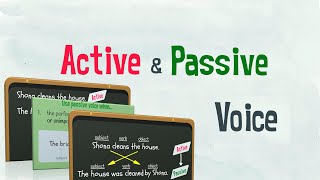
The voice of a verb indicates whether the subject performs the action or receives it. Active voice places the subject firmly in the role of the doer, typically following the Subject + Verb + Object structure, making sentences straightforward and vigorous. For example, in the active sentence "The student wrote the essay," the student (subject) performs the action of writing.
In contrast, the passive voice situates the subject as the receiver of the action, often making the doer either unknown or less important. The common structure for passive sentences involves a form of the verb 'to be' followed by the past participle, such as in "The essay was written by the student." The passive voice is often used when the action's importance surpasses that of the doer, in formal writing (e.g., scientific contexts), or to emphasize politeness (e.g., "A mistake was made").
This section ultimately guides learners in selecting the appropriate voice based on the context and intent of their communication.
Youtube Videos





Audio Book
Dive deep into the subject with an immersive audiobook experience.
Understanding Active Voice
Chapter 1 of 3
🔒 Unlock Audio Chapter
Sign up and enroll to access the full audio experience
Chapter Content
In the active voice, the subject of the sentence performs the action expressed by the verb. It follows a clear Subject + Verb + Object structure. This voice is generally more direct, clear, and concise. It is preferred in most types of writing because it makes the doer of the action obvious.
Examples:
- The student wrote the essay.
- The dog chased the cat.
- My mother bakes delicious cakes.
- Scientists discovered a new planet.
Detailed Explanation
Active voice is a grammatical construction where the subject of the sentence acts upon the verb. In simple terms, if the subject performs the action, the sentence is in active voice. The structure is straightforward: Subject + Verb + Object. This clarity makes sentences easy to understand and often more engaging. For example, in "The dog chased the cat," 'the dog' is the subject who is doing the chasing, making this structure clear and direct.
Examples & Analogies
Think of active voice like a sports team where the players are actively participating. For instance, during a basketball game, if John scores the winning point, you would say, "John scored." This emphasizes John's action, making it clear who made the key move.
Understanding Passive Voice
Chapter 2 of 3
🔒 Unlock Audio Chapter
Sign up and enroll to access the full audio experience
Chapter Content
In the passive voice, the subject of the sentence receives the action or is acted upon. The doer of the action is often either unknown, unimportant, or intentionally deemphasized. The structure typically involves a form of the verb "to be" followed by the past participle of the main verb. The doer of the action, if mentioned, is introduced by "by."
Structure: Object (becomes new Subject) + form of 'to be' + Past Participle + (by doer)
Examples:
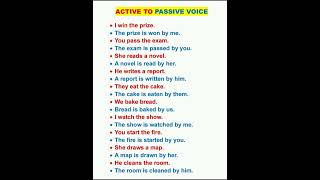
- The essay was written by the student.
- The cat was chased by the dog.
- Delicious cakes are baked by my mother.
- A new planet was discovered.
Detailed Explanation
Passive voice emphasizes the action or the recipient of the action rather than the doer. When you use passive voice, the subject is acted upon, making it less clear who is performing the action. The sentence structure typically follows: the object becomes the new subject, followed by a 'to be' verb and the past participle of the main verb. For instance, in "The essay was written by the student," the essay is the focus, and the student (the doer) is mentioned later, which shifts attention away from the doer.
Examples & Analogies
Imagine a scene in a play where the spotlight is on a stage. If the spotlight highlights the action instead of the actors, it’s similar to passive voice. For instance, if we say, "A mistake was made," the emphasis is on the mistake, not on who made it, just like in a play where the story unfolds but the characters remain in the shadows.
When to Use Passive Voice
Chapter 3 of 3
🔒 Unlock Audio Chapter
Sign up and enroll to access the full audio experience
Chapter Content
- When the doer of the action is unknown or unimportant:
- Example: My car was stolen last night. (We don't know who stole it.)
- Example: The road is being repaired. (It's not important who is doing the repair, only that it's happening.)
- When you want to emphasize the action or the receiver of the action, rather than the doer:
- Example: The patient was carefully examined by the doctor. (Focus is on the patient and the examination.)
- In scientific or technical writing: This is common because the focus is often on processes, results, or discoveries, rather than the individuals who performed them.
- Example: The experiment was conducted under controlled conditions.
- To avoid blaming someone or to be more polite:
- Instead of: "You made a mistake."
- Consider: "A mistake was made."
Detailed Explanation
Passive voice is particularly useful in situations where the focus should be on the action rather than the performer, or when the doer is not known. For example, in scientific writing, researchers might say, "The experiment was conducted..." rather than naming the researchers. This helps maintain an objective tone. Other situations might create a softer statement to reduce blame or emphasize the affected party, as in avoiding direct blame in saying, "A mistake was made" instead of naming the person who made it.
Examples & Analogies
Consider a classroom where a student accidentally breaks a window. Instead of saying, "Mark broke the window," a teacher might say, "The window was broken" to focus on the problem rather than who caused it. This approach can help take the weight off the student and steer towards fixing the issue at hand.
Key Concepts
-
Active Voice: Where the subject performs the action.
-
Passive Voice: Where the subject receives the action.
-
Subject + Verb + Object: Structure of active voice sentences.
-
Object + form of 'to be' + Past Participle: Structure of passive voice sentences.
Examples & Applications
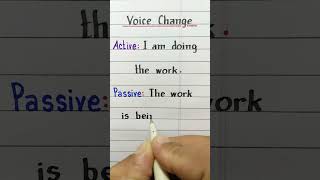
Active: The teacher explains the lesson. Passive: The lesson is explained by the teacher.
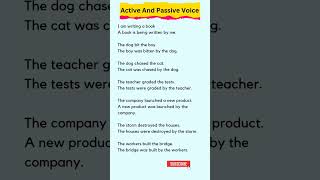
Active: The company launched a new product. Passive: A new product was launched by the company.
Memory Aids
Interactive tools to help you remember key concepts
Rhymes
Active action, do it fast, passive's where receiving's cast.
Stories
Once a cat chased a mouse, active and quick, but when the mouse was caught, the tale turned to passive flick.
Memory Tools
Remember 'A' for Active (Action doer) and 'P' for Passive (Patient receiver).
Acronyms
A=Doer, P=Receiver - AP for Active and Passive!
Flash Cards
Glossary
- Active Voice
A grammatical voice where the subject of the sentence performs the action expressed by the verb.
- Passive Voice
A grammatical voice where the subject of the sentence receives the action expressed by the verb.
- Subject
The doer of the action in a sentence.
- Object
The recipient of the action in a sentence, usually following the verb.
- Verb 'to be'
A verb used to form passive constructions, such as 'is', 'are', 'was', and 'were.'
Reference links
Supplementary resources to enhance your learning experience.