
Antibody Production
Interactive Audio Lesson
Listen to a student-teacher conversation explaining the topic in a relatable way.
Introduction to Antibodies
🔒 Unlock Audio Lesson
Sign up and enroll to listen to this audio lesson

Today, we're going to talk about antibodies. Can anyone tell me what an antibody is?

Are antibodies proteins that help fight germs?
Exactly! Antibodies are specialized proteins produced by B cells that help neutralize pathogens. Who can tell me how they are produced?

They are produced when B cells are activated by an antigen.
Correct! When B cells encounter an antigen, they differentiate into plasma cells which then secrete antibodies specific to that antigen. A way to remember this is that B cells Make All the Antibodies—M.A.A.
Differentiation of B cells
🔒 Unlock Audio Lesson
Sign up and enroll to listen to this audio lesson

Now let’s focus on the process of B cell activation. What happens to a B cell when it encounters an antigen?

It activates and then turns into a plasma cell, right?
That's right! This differentiation is crucial for forming effective immune responses. How do plasma cells contribute to immunity?

They produce antibodies that attach to pathogens.
Exactly! These antibodies mark pathogens for destruction. You can remember the role of antibodies with the phrase: Antibodies Aim to Attack pathogens - A.A.A.
Vaccination and Immunity
🔒 Unlock Audio Lesson
Sign up and enroll to listen to this audio lesson
Now, let's discuss vaccinations. How do vaccines relate to antibody production?
Vaccines introduce antigens so that our immune system can produce memory B cells without getting sick.
Absolutely! This creates long-term immunity. What’s the significance of memory B cells in this process?
They help us fight off infections faster if we encounter the real pathogen.
Great answer! Memory B cells are key to rapid responses in future infections. Just remember: Vaccine = Victory Against infections - V.A.V.
Introduction & Overview
Read summaries of the section's main ideas at different levels of detail.
Quick Overview
Standard
Upon encountering specific antigens, B cells differentiate into plasma cells that secrete antibodies. These antibodies neutralize pathogens and mark them for destruction. This process is essential for the adaptive immune response and is the basis for vaccination.
Detailed
Antibody Production
Antibody production is a key aspect of the immune system's response to pathogens. It occurs mainly through the activation of B cells, a type of lymphocyte responsible for humoral immunity. When a B cell encounters an antigen, it undergoes differentiation into plasma cells, which are the cells that produce and secrete antibodies specific to the detected antigen. These antibodies bind to the antigen, neutralizing pathogens and signaling for their destruction by other immune cells.
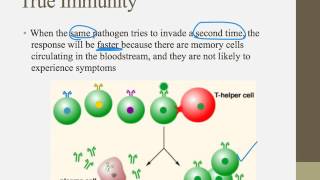
This process is pivotal not only in combatting infections but also in building immunological memory. When an individual is vaccinated, antigens related to a specific pathogen are introduced to stimulate the production of memory B cells without causing a disease, therefore providing long-term immunity. This forms the foundation of how vaccinations work to protect populations from infectious diseases.
Youtube Videos

Audio Book
Dive deep into the subject with an immersive audiobook experience.
B Cells and Antigens
Chapter 1 of 2
🔒 Unlock Audio Chapter
Sign up and enroll to access the full audio experience
Chapter Content
Upon antigen exposure, B cells differentiate into plasma cells, secreting antibodies that neutralize pathogens.
Detailed Explanation
This chunk explains the process that occurs when the body encounters an antigen, which is a substance that the immune system recognizes as foreign, such as parts of bacteria or viruses. In response to this exposure, a type of white blood cell called a B cell undergoes differentiation. Differentiation is the process where a cell changes to acquire specific features that enable it to perform its role. B cells transform into plasma cells, which are specialized cells that produce antibodies. Antibodies are proteins specifically designed to recognize and bind to the antigens, effectively neutralizing the invading pathogens and rendering them harmless.
Examples & Analogies
Think of B cells as soldiers in an army. When an enemy (antigen) enters the country (body), the soldiers (B cells) receive orders to adapt and become specialized fighters (plasma cells) that can create weaponry (antibodies) to tackle that specific enemy. Just as soldiers use weapons to defend their territory, plasma cells use antibodies to neutralize and defend against pathogens.
Role of Antibodies
Chapter 2 of 2
🔒 Unlock Audio Chapter
Sign up and enroll to access the full audio experience
Chapter Content
Antibodies that neutralize pathogens.
Detailed Explanation
Antibodies play a crucial role in the immune response. Once produced by plasma cells, they work by specifically targeting pathogens. Antibodies can neutralize pathogens directly by binding to them, blocking their ability to infect cells. Additionally, they can mark these pathogens for destruction by other immune cells, a process known as opsonization. The antibodies are highly specific, meaning that each type of antibody is capable of recognizing a unique antigen, which enhances the immune system's ability to target and eliminate invaders.
Examples & Analogies
Imagine antibodies as keys designed to fit perfectly into special locks (the antigens on pathogens). When the key (antibody) fits into the lock (antigen), the door (pathogen) gets locked or dismantled, preventing it from causing harm. Furthermore, the presence of these keys signals security forces (other immune cells) to come and deal with any remaining threats.
Key Concepts
-
B Cell Activation: B cells are activated by antigens and differentiate into plasma cells.
-
Antibody Production: Plasma cells produce antibodies that bind to specific antigens.
-
Vaccination and Immunity: Vaccines stimulate the immune system to create memory B cells for future protection.
Examples & Applications
When exposed to the flu virus, specific B cells produce antibodies against the virus, helping to clear the infection.
Vaccination against measles introduces a harmless piece of the virus, prompting the immune system to prepare for future exposure.
Memory Aids
Interactive tools to help you remember key concepts
Rhymes
When B cells see the germs anew, they make antibodies just for you!
Stories
Once in a land of pathogens, B cell knights defended the realm. When they saw a new enemy, they transformed into plasma cell warriors, creating antibodies to protect their kingdom.
Memory Tools
To remember the importance of vaccination, think: 'Antibodies Activated via Vaccination - A.A.V.'
Acronyms
M.A.A - B cells Make All the Antibodies.
Flash Cards
Glossary
- Antibody
A protein produced by plasma cells that binds to specific antigens to neutralize pathogens.
- B Cells
A type of lymphocyte responsible for producing antibodies.
- Plasma Cells
B cells that have differentiated to secrete antibodies.
- Antigen
A substance that triggers an immune response, often a component of pathogens.
- Memory B Cells
Long-lived B cells that provide the body with immunological memory for future infections.
Reference links
Supplementary resources to enhance your learning experience.