
Gas Transport
Interactive Audio Lesson
Listen to a student-teacher conversation explaining the topic in a relatable way.
Oxygen Transport
🔒 Unlock Audio Lesson
Sign up and enroll to listen to this audio lesson

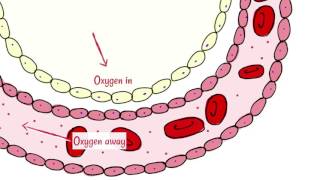
Today, we're looking at how oxygen is transported in our bodies. Oxygen binds to hemoglobin, a protein found in red blood cells. This binding allows for the efficient transport of oxygen from the lungs to the tissues. Can anyone tell me what the bond between oxygen and hemoglobin is called?

Is it called oxyhemoglobin?
Correct! Oxyhemoglobin is formed when oxygen binds to hemoglobin. This specialized transport saves space since many oxygen molecules can be carried by just a few hemoglobin molecules. Can anyone recall why this process is important?

So our cells can perform respiration and produce energy?
Exactly! Efficient oxygen transport ensures all body cells can obtain the oxygen they need for cellular respiration.
Remember: Oxygen = 'O' for Oxyhemoglobin. Let's keep this letter association going.
Carbon Dioxide Transport
🔒 Unlock Audio Lesson
Sign up and enroll to listen to this audio lesson

Now, let's shift our focus to carbon dioxide. Does anyone know the major ways carbon dioxide is transported in our blood?

Isn't some of it turned into bicarbonate?
Yes, well done! Approximately 70% is converted to bicarbonate ions in the blood. This conversion helps ensure carbon dioxide is transported efficiently. What about the other forms?
Some of it binds to hemoglobin, too, right?
Exactly! About 20-23% binds to hemoglobin as carbaminohemoglobin. And finally, what about the remaining percentage?

A little is just dissolved in the plasma?
Correct! That's right! Summary time: Carbon dioxide transport mechanisms include bicarbonate ions, carbaminohemoglobin, and dissolved in plasma.
Importance of Gas Transport
🔒 Unlock Audio Lesson
Sign up and enroll to listen to this audio lesson
So now that we understand how gases are transported, why is this process crucial for our survival?
If oxygen doesn't get to our cells, they can't make energy and might die.
Precisely! Without oxygen, our cells can't perform respiration. What about carbon dioxide?
If we can't remove carbon dioxide, it builds up and can be toxic!
Exactly! Effective gas transport not only delivers essential oxygen but also helps rid the body of harmful carbon dioxide. Remember: Think of gas transport as a delivery and waste disposal system working in tandem!
Introduction & Overview
Read summaries of the section's main ideas at different levels of detail.
Quick Overview
Standard
The section on gas transport discusses the binding of oxygen to hemoglobin in red blood cells, while carbon dioxide is transported in various forms, including bicarbonate ions and dissolved gas in plasma. These processes are critical for maintaining efficient gas exchange during respiration.
Detailed
Gas Transport
Gas transport is a crucial aspect of the respiratory system, ensuring that oxygen is delivered to tissues and carbon dioxide is removed effectively.
Key Points:
- Oxygen Transport: Oxygen molecules bind to hemoglobin, a protein in red blood cells, forming oxyhemoglobin. This process is vital for transporting oxygen from the lungs to the body tissues where it is needed for cellular respiration.
- Carbon Dioxide Transport: Carbon dioxide is transported in three primary ways:
- Bicarbonate Ions: The majority of carbon dioxide (around 70%) is converted into bicarbonate ions (HCO3-) in the blood plasma, facilitating its transport.
- Bound to Hemoglobin: About 20-23% of carbon dioxide binds to hemoglobin, forming carbaminohemoglobin.
- Dissolved in Plasma: A small amount (around 7-10%) of carbon dioxide is transported dissolved directly in the plasma.
These transport mechanisms ensure efficient gas exchange occurs between the lungs and tissues, contributing to vital physiological processes.
Youtube Videos
![B3.1 HL Transport of Respiratory Gasses [IB Biology HL]](https://img.youtube.com/vi/F66K2WUlGdA/mqdefault.jpg)
Audio Book
Dive deep into the subject with an immersive audiobook experience.
Oxygen Transport
Chapter 1 of 2
🔒 Unlock Audio Chapter
Sign up and enroll to access the full audio experience
Chapter Content
● Oxygen: Binds to hemoglobin in red blood cells.
Detailed Explanation
Oxygen transport begins in the lungs, where oxygen enters the bloodstream via the alveoli. Once in the blood, oxygen binds to a protein called hemoglobin, which is found in red blood cells. Hemoglobin acts like a sponge, picking up oxygen when the blood is exposed to high oxygen levels in the lungs and releasing it where it is needed in the body, such as for the cells that help us breathe and move.
Examples & Analogies
Imagine hemoglobin as a bus service in a city. The buses (hemoglobin) pick up passengers (oxygen) from oxygen-rich areas (the lungs) and transport them to various neighborhoods (body tissues) where they are needed. Just like buses drop off passengers at specific stops, hemoglobin releases oxygen where it’s required most, like muscles during physical activity.
Carbon Dioxide Transport
Chapter 2 of 2
🔒 Unlock Audio Chapter
Sign up and enroll to access the full audio experience
Chapter Content
● Carbon Dioxide: Transported as bicarbonate ions, bound to hemoglobin, or dissolved in plasma.
Detailed Explanation
Carbon dioxide (CO2) is produced as a waste product during cellular respiration when cells use oxygen for energy. It is transported back to the lungs in three main ways: 1) Most of it is converted into bicarbonate ions (HCO3-) through a chemical reaction in red blood cells, which makes it easier for the blood to carry CO2. 2) A portion of CO2 binds directly to hemoglobin to form carbaminohemoglobin, and 3) A small amount is dissolved directly in the blood plasma. Once the blood arrives in the lungs, the bicarbonate can be converted back to CO2, which is then exhaled.
Examples & Analogies
Think of carbon dioxide as trash generated by factories (body cells) during production (energy use). The blood acts like a garbage truck: it collects the trash (CO2) in different forms—some of it stays in bags (bicarbonate ions), some is stored in bins (bound to hemoglobin), and some is loose (dissolved in plasma). This 'garbage truck' then delivers the trash back to the recycling center (lungs), where it can be expelled from the body (exhaled) just like emptying out the garbage.
Key Concepts
-
Oxygen Binding: Oxygen binds to hemoglobin, forming oxyhemoglobin for transport.
-
Carbon Dioxide Transport: Carbon dioxide is primarily transported as bicarbonate ions, with additional transport via hemoglobin and dissolved in plasma.
Examples & Applications
When you breathe in oxygen, it enters the lungs where it diffuses into the blood and binds to hemoglobin in red blood cells.
As cells utilize oxygen for energy, they produce carbon dioxide, which is transported back to the lungs mainly as bicarbonate ions.
Memory Aids
Interactive tools to help you remember key concepts
Rhymes
When oxygen's found, don’t feel alone, / It binds to hemoglobin, making it’s home.
Stories
Imagine a busy city where hemoglobin is a delivery truck, traveling to pick up oxygen from the lungs and drop it off at the body’s cells.
Memory Tools
Oxygen's O for Oxyhemoglobin, while Carbon Dioxide is B for Bicarbonate – remember 'O' and 'B'.
Acronyms
O2 binds to H for Hemoglobin, while CO2 travels as HCO3- or Hgb!
Flash Cards
Glossary
- Oxyhemoglobin
Hemoglobin bound to oxygen, facilitating its transport in the blood.
- Bicarbonate Ion
A form of carbon dioxide transport in the blood, accounting for about 70% of carbon dioxide transport.
- Carbaminohemoglobin
Formed when carbon dioxide binds to hemoglobin, constituting about 20-23% of carbon dioxide transport.
Reference links
Supplementary resources to enhance your learning experience.