
Defense Against Infectious Disease
Interactive Audio Lesson
Listen to a student-teacher conversation explaining the topic in a relatable way.
First Line of Defense
🔒 Unlock Audio Lesson
Sign up and enroll to listen to this audio lesson

Today, we're learning about the first line of defense against infectious diseases. Can anyone tell me what that is?

It's the physical barriers like skin and mucous membranes!
Exactly! The skin is like a fortress. It protects us. What about chemical barriers?

Like stomach acid and lysozymes in saliva?
Yes! They work to neutralize pathogens. Remember, 'SKIN' is our first line: S for Skin, K for Kills (acid), I for Infection prevention, N for Nose (mucous membranes).

So, if pathogens get past these, what happens?
Great question! That's where our second line comes in. Let’s discuss that next.
Second Line of Defense
🔒 Unlock Audio Lesson
Sign up and enroll to listen to this audio lesson

What happens when pathogens cross our physical barriers?
The immune system has another response!
Exactly! This includes phagocytic leukocytes which can engulf pathogens. Can anyone tell me what phagocytosis is?

It’s when cells like macrophages eat the pathogens!
Correct! Remember this acronym: 'FIGHT' – F for Fight (pathogens), I for Inflammation, G for Gobbling (phagocytes), H for Healing, T for Tissues.
So inflammation increases blood flow to help fight off infections?
Exactly right! Now let's move to the third line of defense.
Third Line of Defense
🔒 Unlock Audio Lesson
Sign up and enroll to listen to this audio lesson
Now we reach our most advanced defense: the third line of defense. Who knows what this involves?
It's the specific response with B and T cells!
Right! B cells produce antibodies while T cells kill infected cells. Can you summarize the roles of each?
B cells produce antibodies to target pathogens, and T cells destroy infected cells!
Correct! Here’s a memory aid: 'BAT' - B for B cells, A for Antibodies, T for T cells. What happens when B cells encounter an antigen?
They turn into plasma cells to produce antibodies!
Perfect! Let's wrap this discussion up with vaccinations.
Vaccinations
🔒 Unlock Audio Lesson
Sign up and enroll to listen to this audio lesson
Vaccinations help prepare our immune system. How do you think they do that?
They expose the body to a harmless form of the pathogen!
Excellent! This helps our body to develop memory cells without causing the disease. Think of it like a practice run. What could be a good phrase to remember this?
I’d say 'Practice makes perfect immunity!'
That's a great one! So, let’s summarize: vaccines build immunity by introducing harmless antigens, leading to memory cell formation.
Introduction & Overview
Read summaries of the section's main ideas at different levels of detail.
Quick Overview
Standard
The immune system is organized into three lines of defense: the first line includes physical and chemical barriers, the second line involves innate immune responses such as phagocytosis and inflammation, and the third line is the adaptive immune response characterized by lymphocytes that target specific pathogens.
Detailed
Defense Against Infectious Disease
In this section, we explore the body's multifaceted defense mechanisms against infectious diseases. The immune system operates through three primary lines of defense:
First Line of Defense
- Physical Barriers: The skin acts as the first line of defense, providing a physical barrier to prevent pathogen entry, while mucous membranes trap pathogens in secretions.
- Chemical Barriers: These include stomach acid that kills pathogens and lysozymes present in saliva and tears that break down bacterial cell walls.
Second Line of Defense
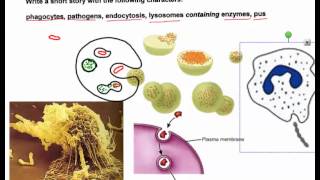
- Phagocytic Leukocytes: This includes cells such as macrophages and neutrophils that engulf and digest pathogens through a process called phagocytosis.
- Inflammatory Response: In response to pathogens, tissues release chemicals that increase blood flow and the permeability of blood vessels, allowing more immune cells to the affected area.
Third Line of Defense
- Specific Immune Response: Lymphocytes (B and T cells) recognize specific antigens. B cells produce antibodies that neutralize pathogens, while T cells orchestrate the immune response and destroy infected cells.
Antibody Production
- Upon encountering an antigen, B cells differentiate into plasma cells, which secrete antibodies tailored to neutralize the pathogens.
Vaccination
- Vaccines work by introducing inactivated or weakened antigens into the body, pre-stimulating memory cell production without causing disease, thus providing long-term immunity.
Youtube Videos
Audio Book
Dive deep into the subject with an immersive audiobook experience.
First Line of Defense
Chapter 1 of 5
🔒 Unlock Audio Chapter
Sign up and enroll to access the full audio experience
Chapter Content
First Line of Defense:
● Physical Barriers: Skin and mucous membranes prevent pathogen entry.
● Chemical Barriers: Stomach acid, lysozymes in saliva and tears.
Detailed Explanation
The first line of defense against infectious diseases includes physical and chemical barriers. Physical barriers, such as skin and mucous membranes, act as shields that prevent pathogens (like bacteria and viruses) from entering the body. Imagine your skin as a protective wall that keeps out intruders. On the other hand, chemical barriers, such as stomach acid, work to destroy harmful microorganisms that enter the digestive system. For instance, lysozymes found in saliva and tears help break down the cell walls of bacteria, further preventing infection.
Examples & Analogies
Think of your body like a fortified castle. The skin is the castle wall—its primary function is to keep out invaders. Meanwhile, the stomach acid is like the boiling oil used in the olden days to deter attackers attempting to breach the castle gates.
Second Line of Defense
Chapter 2 of 5
🔒 Unlock Audio Chapter
Sign up and enroll to access the full audio experience
Chapter Content
Second Line of Defense:
● Phagocytic Leukocytes: Engulf and digest pathogens.
● Inflammatory Response: Increases blood flow and permeability to affected areas.
Detailed Explanation
If pathogens breach the first line of defense, the second line kicks in. Phagocytic leukocytes, or 'big eaters,' are white blood cells that detect and engulf any harmful invaders. Once they identify pathogens, they consume and digest them, helping to clear the infection. Additionally, the inflammatory response occurs, which is a process that increases blood flow to the affected area. This increased blood flow brings more immune cells to the site of infection and causes swelling, redness, and warmth, alerting the body that there's an issue.
Examples & Analogies
Imagine having a security team in your castle actively looking for any intruders. When they find one, they not only tackle the intruder directly but also raise an alarm that brings more reinforcements (blood) to help deal with the threat.
Third Line of Defense
Chapter 3 of 5
🔒 Unlock Audio Chapter
Sign up and enroll to access the full audio experience
Chapter Content
Third Line of Defense:
● Specific Immune Response: Involves lymphocytes recognizing specific antigens.
○ B Cells: Produce antibodies targeting specific pathogens.
○ T Cells: Destroy infected cells and coordinate immune response.
Detailed Explanation
The third line of defense is a highly specialized response involving lymphocytes (a type of white blood cell) that recognize specific antigens (substances that trigger an immune response). B cells are responsible for producing antibodies, which are proteins that specifically target and neutralize pathogens. T cells, on the other hand, directly destroy infected cells and help organize the overall immune response by signaling other cells to respond. This line is slower to activate but provides a long-lasting immunity against specific pathogens.
Examples & Analogies
Think of this line of defense like a custom-made security system tailored specifically for your castle. Once an invader is identified, your security team designs a specific strategy (antibodies and T cells) to eliminate that particular threat and remembers it for future encounters.
Antibody Production
Chapter 4 of 5
🔒 Unlock Audio Chapter
Sign up and enroll to access the full audio experience
Chapter Content
Antibody Production:
Upon antigen exposure, B cells differentiate into plasma cells, secreting antibodies that neutralize pathogens.
Detailed Explanation
When B cells encounter an antigen, they transform into plasma cells. These plasma cells then produce antibodies—specific proteins that bind to the antigens on pathogens. The binding process neutralizes the pathogens, making them ineffective. This tailored response is crucial for eliminating infections and preparing the immune system for future encounters with the same pathogen.
Examples & Analogies
Imagine a factory that, upon recognizing a particular widget (pathogen), begins producing a unique tool (antibodies) that fits perfectly with that widget, rendering it useless and protecting your castle from that specific threat again.
Vaccination
Chapter 5 of 5
🔒 Unlock Audio Chapter
Sign up and enroll to access the full audio experience
Chapter Content
Vaccination:
Introduces antigens to stimulate memory cell production without causing disease, providing long-term immunity.
Detailed Explanation
Vaccination involves introducing a harmless form of a pathogen (antigen) into the body. This exposure stimulates the immune system to produce memory cells without causing the actual disease. These memory cells enable the immune system to respond more rapidly and effectively if the body encounters the real pathogen in the future, resulting in long-term immunity.
Examples & Analogies
Think of vaccination like a training seminar for your castle’s security team. They learn about potential threats without facing real danger, so when an actual breach occurs in the future, they can respond instantly and effectively because they’ve already prepared.
Key Concepts
-
First Line of Defense: Physical and chemical barriers that prevent pathogen entry.
-
Second Line of Defense: Innate immune cells like phagocytes and the inflammatory response that occur when pathogens breach other defenses.
-
Third Line of Defense: Adaptive immune response involving B and T cells specific to antigens.
-
Antibody Production: B cells creating antibodies upon recognizing an antigen.
-
Vaccination: Introducing antigens for long-term immunity without disease.
Examples & Applications
The skin acts as a barrier against pathogens, while mucous membranes trap invaders.
In an inflammatory response, red and white blood cells rush to a site of injury or infection, causing swelling.
When a person receives a vaccine, their body generates memory cells that will recognize the pathogen in future encounters.
Memory Aids
Interactive tools to help you remember key concepts
Rhymes
When germs are near, don't fear; it's the immune system that's here! With skin and tears, it engages for years.
Stories
Once upon a time, a kingdom called the Body was constantly under threat from evil germs. The first castle walls were made of skin and mucous layers which blocked many invaders. But those that made it in faced the mighty phagocytes who gobbled them up! The B and T cells were the knights who would recognize the enemies and prepare the kingdom for future battles.
Memory Tools
Remember 'BAT' for the B cells (Antibodies) and T cells (targeting infected cells) in the immune response!
Acronyms
The acronym 'FIGHT' helps remember
for Fight (pathogens)
for Inflammation
for Gobbling (phagocytes)
for Healing
for Tissues.
Flash Cards
Glossary
- Phagocytosis
The process by which certain cells engulf and digest pathogens or other particles.
- Lymphocytes
A type of white blood cell that plays a significant role in the immune system by identifying and responding to specific pathogens.
- Antibodies
Proteins produced by B cells that specifically bind to antigens to neutralize or mark them for destruction.
- Inflammatory Response
A reaction triggered by damage to living tissues, increasing blood flow and immune cell delivery to affected areas.
- Vaccination
The administration of an antigen or a vaccine to stimulate an immune response without causing disease.
Reference links
Supplementary resources to enhance your learning experience.