
AllRounder.ai

Enrol to start learning

Reading is open to everyone. Enrolling is free, and it is what unlocks the audio lessons, practice tests and progress tracking.
Enrol free
Energy Changes in Reactions

Energy Changes in Reactions

Learn about Energy Changes in Reactions and discover its key concepts through interactive lessons and practical exercises.

Sections

Energy in Reactions

This section examines energy changes that occur during chemical reactions, highlighting exothermic and endothermic processes.

1 Section Overview

Start current section content and materials

1.1 What is Energy?

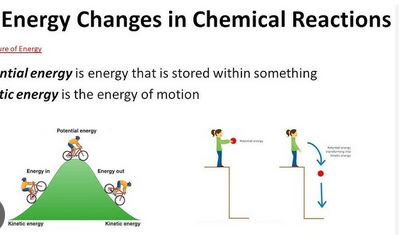
Energy is the capacity to perform work, and it exists in various forms that influence chemical reactions.

1.2 Types of Energy Changes

This section categorizes energy changes in chemical reactions as either exothermic or endothermic, explaining their characteristics and significance.

Exothermic Reactions

Exothermic reactions are chemical processes that release energy, usually in the form of heat, light, or sound while transforming reactants into products.

2 Section Overview

Start current section content and materials

2.1 Definition and Characteristics

Exothermic reactions release energy to their surroundings, while endothermic reactions absorb energy.

2.2 Energy Profile of an Exothermic Reaction

Exothermic reactions release energy, and their energy profiles indicate that the energy of products is lower than that of reactants.

Endothermic Reactions

Endothermic reactions are chemical processes that absorb energy from their surroundings, resulting in a decrease in temperature and requiring an input of energy to proceed.

3 Section Overview

Start current section content and materials

3.1 Definition and Characteristics

This section defines exothermic and endothermic reactions and outlines their characteristics, including examples and energy profiles.

3.2 Energy Profile of an Endothermic Reaction

Endothermic reactions absorb energy from the surroundings, leading to a higher energy state in the products compared to the reactants.

Activation Energy

Activation energy is the minimum energy needed for a chemical reaction to occur, which can be influenced by catalysts.

4 Section Overview

Start current section content and materials

4.1 What is Activation Energy?

Activation energy is the minimum energy needed for a chemical reaction to occur.

4.2 Activation Energy and Catalysts

This section discusses activation energy and how catalysts influence chemical reactions by lowering activation energy.

Enthalpy (ΔH)

Enthalpy (ΔH) measures energy changes in chemical reactions, indicating whether a reaction is exothermic or endothermic.

5 Section Overview

Start current section content and materials

5.1 What is Enthalpy?

Enthalpy measures the total energy content of a system, serving as a key indicator of energy changes in chemical reactions.

5.2 Calculating Enthalpy Change

This section explains how to calculate the enthalpy change (ΔH) of chemical reactions.

Practical Applications of Energy Changes

Understanding energy changes in reactions is vital for applications in industrial chemistry, environmental science, and biology.

6 Section Overview

Start current section content and materials

Summary

This section explains the critical role of energy changes in chemical reactions, highlighting exothermic and endothermic processes.

7 Section Overview

Start current section content and materials

Key Terms to Remember

This section highlights essential terms related to energy changes in chemical reactions, including exothermic and endothermic reactions, activation energy, catalysts, and enthalpy.

8 Section Overview

Start current section content and materials

Learning Objectives

  • Master the fundamentals of Energy Changes in Reactions

  • Apply learned concepts in practical scenarios

  • Successfully complete all chapter exercises

Practice Exercises

Total Questions

4

Estimated Time

8 min

Passing Score

70%

Instructions

  • Read each question carefully
  • You can use hints if you need help
  • Complete all questions before submitting