
AllRounder.ai

Enrol to start learning

Reading is open to everyone. Enrolling is free, and it is what unlocks the audio lessons, practice tests and progress tracking.
Enrol free
Atomic Structure

Atomic Structure

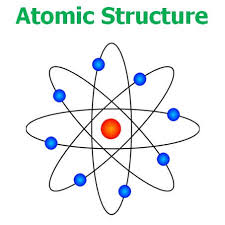
Learn about Atomic Structure and discover its key concepts through interactive lessons and practical exercises.

Sections

The Nature of Matter and Atomic Theory

This section covers the fundamental concepts of atomic structure, including the types of subatomic particles and their discoveries.

1 Section Overview

Start current section content and materials

1.1 What is an Atom?

An atom is the basic building block of matter, composed of protons, neutrons, and electrons, which define the properties of elements.

1.2 Early Models of the Atom

This section discusses the early concepts of atomic theory, including the foundational ideas introduced by Democritus and Dalton, as well as the discovery of subatomic particles.

1.3 Discovery of Subatomic Particles

This section highlights the historical discoveries leading to the identification of subatomic particles: protons, neutrons, and electrons.

The Structure of the Atom

The structure of the atom is defined by its subatomic particles: protons, neutrons, and electrons, which play a critical role in determining the properties of elements.

2 Section Overview

Start current section content and materials

2.1 The Nucleus

This section discusses the nucleus of the atom, describing its components, including protons and neutrons, and their roles in determining an atom's mass and identity.

2.2 The Electron Cloud

This section explores the concept of the electron cloud, detailing where electrons are located relative to the atomic nucleus and how their positions are predicted.

Atomic Number, Mass Number, and Isotopes

The section discusses atomic and mass numbers, as well as isotopes, which are essential in identifying elements and their variations.

3 Section Overview

Start current section content and materials

3.1 Atomic Number (Z)

The atomic number, denoted by Z, represents the number of protons in an atom's nucleus, which defines the element's identity and properties.

3.2 Mass Number (A)

This section discusses the concept of mass number, differentiating it from atomic number and explaining its role in identifying isotopes.

3.3 Isotopes

Isotopes are variants of the same chemical element that have the same number of protons but different numbers of neutrons, resulting in varied mass numbers.

Electron Configuration

Electron configuration describes how electrons are arranged in an atom's energy levels and plays a crucial role in chemical behavior.

4 Section Overview

Start current section content and materials

4.1 Bohr’s Model of the Atom

Bohr's model describes electrons orbiting the nucleus in quantized energy levels, laying the groundwork for understanding atomic structure.

4.2 Bohr’s Postulates

Bohr's postulates describe the structure of the atom, highlighting the quantized energy levels of electrons and their behavior around the nucleus.

4.3 Electron Configuration and the Periodic Table

This section explores the arrangement of electrons in atoms and how this configuration relates to the periodic table and chemical properties of elements.

4.4 Aufbau Principle, Pauli Exclusion Principle, and Hund’s Rule

This section explains three fundamental principles of electron configuration: the Aufbau principle, the Pauli exclusion principle, and Hund's rule.

Quantum Model of the Atom

The Quantum Model of the Atom describes electrons in terms of probabilities rather than fixed orbits, addressing limitations of Bohr's model.

5 Section Overview

Start current section content and materials

5.1 Heisenberg Uncertainty Principle

The Heisenberg Uncertainty Principle states that one cannot simultaneously know the exact position and velocity of an electron.

5.2 Schrödinger’s Wave Equation

Schrödinger’s Wave Equation is fundamental to the quantum mechanical model of the atom, describing how electrons behave as wave functions and how to find their probability distributions within an atom.

The Periodic Table and Atomic Structure

The Periodic Table organizes elements based on atomic structure and electron configuration, revealing trends in chemical properties.

6 Section Overview

Start current section content and materials

6.1 Periodic Law

The periodic law states that the properties of elements are a periodic function of their atomic number, leading to the organization of the periodic table.

6.2 Valence Electrons and Chemical Behavior

Valence electrons play a crucial role in determining the chemical properties and reactivity of elements.

Summary

This section summarizes key concepts regarding atomic structure, highlighting the characteristics of atoms, subatomic particles, and the significance of the quantum model.

7 Section Overview

Start current section content and materials

Learning Objectives

  • Master the fundamentals of Atomic Structure

  • Apply learned concepts in practical scenarios

  • Successfully complete all chapter exercises

Practice Exercises

Total Questions

3

Estimated Time

6 min

Passing Score

70%

Instructions

  • Read each question carefully
  • You can use hints if you need help
  • Complete all questions before submitting