
AllRounder.ai

Enrol to start learning

Reading is open to everyone. Enrolling is free, and it is what unlocks the audio lessons, practice tests and progress tracking.
Enrol free
Rate of Reactions

Rate of Reactions

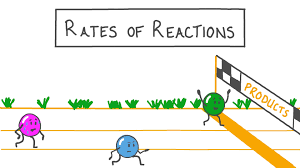
Learn about Rate of Reactions and discover its key concepts through interactive lessons and practical exercises.

Sections

Introduction

The section introduces the concept of the rate of reaction, emphasizing its significance in various fields such as industrial chemistry and environmental science.

0 Section Overview

Start current section content and materials

What is the Rate of Reaction?

The rate of reaction is a measure of how quickly reactants convert into products, influenced by various factors.

1 Section Overview

Start current section content and materials

Factors Affecting the Rate of Reaction

The rate of a chemical reaction is influenced by factors such as concentration, temperature, surface area, catalysts, and pressure.

2 Section Overview

Start current section content and materials

2.1 Concentration of Reactants

The concentration of reactants plays a crucial role in determining the rate of chemical reactions, with higher concentrations generally leading to increased reaction rates.

2.2 Temperature

Temperature significantly influences the rate of chemical reactions, with higher temperatures generally leading to increased reaction rates.

2.3 Surface Area of Reactants

The surface area of reactants plays a critical role in influencing the rate of chemical reactions, with increased surface area promoting faster reactions.

2.4 Presence of a Catalyst

A catalyst accelerates the rate of a reaction without being consumed by providing an alternative pathway with lower activation energy.

2.5 Pressure (For Gaseous Reactions)

This section discusses the role of pressure in gaseous reactions and how increasing pressure typically enhances the rate of reaction by increasing the concentration of gas molecules.

Measuring the Rate of Reaction

The section discusses how the rate of a chemical reaction is measured and the factors affecting it, including methods, collision theory, and activation energy.

3 Section Overview

Start current section content and materials

3.1 Monitoring Gas Volume

This section discusses how to monitor the volume of gases produced during chemical reactions to measure the rate of reaction.

3.2 Monitoring Mass Loss

Monitoring mass loss is a method used to measure the rate of a reaction that produces a gas, leading to a decrease in the mass of the reactants.

3.3 Monitoring Changes in Color or Temperature

This section discusses methods for monitoring the rate of reaction through observable changes in color or temperature.

3.4 Using a Conductivity Probe

This section discusses the use of conductivity probes as a method to measure the rate of reaction in ionic solutions.

The Collision Theory

The collision theory explains the conditions that must be met for chemical reactions to occur, focusing on particle collisions and energy requirements.

4 Section Overview

Start current section content and materials

Activation Energy (Ea)

Activation energy is the minimum energy required for a reaction to occur, serving as an energy barrier that reactants must overcome to form products.

5 Section Overview

Start current section content and materials

The Rate Equation and Order of Reaction

The rate equation expresses the relationship between the reaction rate and the concentrations of reactants, with the order of reaction indicating how concentration affects the rate.

6 Section Overview

Start current section content and materials

6.1 The Rate Law

The rate law expresses the relationship between the rate of a chemical reaction and the concentrations of its reactants.

6.2 Determining the Order of Reaction

This section explores the order of reaction, which describes how the rate of a chemical reaction depends on the concentration of reactants.

Integrated Rate Laws

Integrated rate laws provide mathematical expressions that describe how the concentration of reactants changes over time for different order reactions.

7 Section Overview

Start current section content and materials

Graphical Methods for Determining Reaction Order

Graphical methods can be employed to determine the order of a chemical reaction by analyzing plots of concentration versus time or rate versus concentration.

8 Section Overview

Start current section content and materials

The Effect of Temperature on Rate: The Arrhenius Equation

The Arrhenius equation illustrates how temperature affects reaction rates through the relationship between the rate constant and activation energy.

9 Section Overview

Start current section content and materials

Summary

The rate of a chemical reaction is determined by various factors and can be measured in different ways.

10 Section Overview

Start current section content and materials

Learning Objectives

  • Master the fundamentals of Rate of Reactions

  • Apply learned concepts in practical scenarios

  • Successfully complete all chapter exercises

Practice Exercises

Total Questions

3

Estimated Time

6 min

Passing Score

70%

Instructions

  • Read each question carefully
  • You can use hints if you need help
  • Complete all questions before submitting