
Homophones, Homonyms, & Homographs: Avoiding Common Errors
Interactive Audio Lesson
Listen to a student-teacher conversation explaining the topic in a relatable way.
Homophones
🔒 Unlock Audio Lesson
Sign up and enroll to listen to this audio lesson

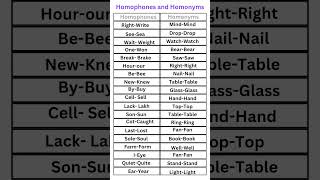
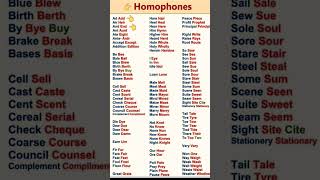
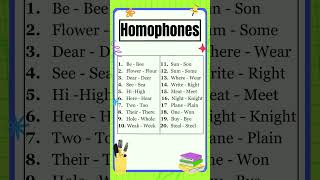
Today, we will explore homophones. They are words that sound alike but have different meanings and spellings. For example, 'to', 'too', and 'two' all sound the same.

Can you give us more examples, please?
Of course! 'There', 'their', and 'they're' illustrate this perfectly. Would anyone like to try using these words in sentences?

Sure! 'I want to go to the store too, but I left my bag over there.'
That's a great example! It shows the proper usage. To remember, think of 'ho-phones' as sounding the same.

Are there any tricks to remember their meanings?
Yes! For 'to', it indicates direction; 'too' means also or excessively; and 'two' is simply the number 2. You can use the mnemonic '3 T's: to travel, too much, two items'!

That's catchy!
Let's summarize what we learned: homophones sound the same but have various meanings and spellings. Using them correctly enhances our writing.
Homonyms
🔒 Unlock Audio Lesson
Sign up and enroll to listen to this audio lesson

Now, let's dive into homonyms. Can anyone tell me what they are?
Are they words that are spelled and sound the same but have different meanings?
Exactly! Examples include 'bat' as a flying mammal and as equipment for sports. How about using 'bank' in a sentence?
I can say, 'I deposited money in the bank' and 'We sat on the bank of the river.'
Great job! To remember, think 'same spelling = different meanings'. Keep an eye on the context!
How can we make sure not to confuse them when writing?
Excellent question! Pay close attention to the context and the adjacent words in your sentences, and you will avoid confusion. Let's summarize: homonyms share spelling and sound but vary in meaning.
Homographs
🔒 Unlock Audio Lesson
Sign up and enroll to listen to this audio lesson
Next up are homographs! Who can tell me about them?
They are spelled the same but pronounced differently and have different meanings?
That's it! For example, 'lead' can mean to guide or refer to the metal. Can anyone use 'wind' in sentences?
'The wind blew strongly' and 'I need to wind the clock.'
Perfect! To remember, think of 'same spelling but different sounds.' Let's recap: homographs have identical spelling, different sounds, and meanings based on pronunciation.
Introduction & Overview
Read summaries of the section's main ideas at different levels of detail.
Quick Overview
Standard
In this section, students learn about three categories of words that are often confused: homophones (sound the same but have different meanings), homonyms (same spelling and sound with different meanings), and homographs (same spelling but different pronunciations and meanings). Detailed examples help clarify the differences, enhancing writing accuracy.
Detailed
Homophones, Homonyms, & Homographs: Avoiding Common Errors
This section explores the distinctions between homophones, homonyms, and homographs, which frequently lead to common writing mistakes.
1. Homophones
- Definition: Homophones are words that sound alike but have different meanings and spellings. They can create confusion in writing as they often lead to spelling errors.
- Examples:
- to / too / two
- there / their / they're
- Memory Aid: Think of "ho" (sound) + "phones" (phone calls often get mixed up) to remember they sound the same.
2. Homonyms
- Definition: Homonyms are words that share the same spelling and pronunciation but have different meanings, relying on context for their interpretations.
- Examples:
- bat (the animal) vs. bat (sports equipment)
- bank (financial) vs. bank (river edge)
- Memory Aid: Remember
Youtube Videos



Audio Book
Dive deep into the subject with an immersive audiobook experience.
Understanding Homophones
Chapter 1 of 3
🔒 Unlock Audio Chapter
Sign up and enroll to access the full audio experience
Chapter Content
Homophones are words that sound exactly the same when spoken but have different spellings and different meanings. They are a frequent source of spelling mistakes.
Key Feature:
Same sound, different spelling, different meaning.
Common Examples:
- to / too / two
- To (preposition): I am going to the store.
- Too (also, excessively): It's too cold. I want to go too.
- Two (number): I have two brothers.
- there / their / they're
- There (place): The book is over there.
- Their (possessive): It is their house.
- They're (contraction of "they are"): They're going to the party.
Detailed Explanation
Homophones are words that sound identical when spoken but differ in their meanings and spellings. This can often lead to confusion when writing, as using the wrong homophone can alter the message entirely. For instance, the words 'to', 'too', and 'two' sound the same, yet they serve different grammatical functions. Understanding the meanings and contexts of these words is vital to using them correctly in writing.
Examples & Analogies
Imagine you are at a store and you tell the cashier, 'I want two apples.' If you accidentally say 'too apples,' the cashier might think you're saying you want an excessive amount. To avoid confusion, it's like the difference between saying 'I love the sea' and 'I love to see the ocean.' Both sentences sound similar at first, but each conveys a very different meaning.
Exploring Homonyms
Chapter 2 of 3
🔒 Unlock Audio Chapter
Sign up and enroll to access the full audio experience
Chapter Content
Homonyms are words that are spelled the same and sound the same, but have different meanings. The meaning depends entirely on the context of the sentence.
Key Feature:
Same spelling, same sound, different meaning.
Common Examples:
- Bat
- (a flying mammal): A bat flies at night.
- (a piece of sports equipment): He hit the ball with a bat.
- Bank
- (financial institution): I deposited money in the bank.
- (edge of a river): We sat on the river bank.
Detailed Explanation
Homonyms can cause confusion as they appear identical in spelling and pronunciation but hold different meanings based on context. For example, 'bat' can mean a mammal or a piece of sports equipment, making it important to note the surrounding words in a sentence to understand which definition applies. When writing or speaking, it's crucial to use contextual clues for proper interpretation.
Examples & Analogies
Think of homonyms like the word 'light.' It can refer to the brightness that comes from the sun or a description of something that isn’t heavy. If someone says, 'The box is light,' you have to consider the context to determine whether they mean it's not heavy or they mean something related to light sources.
Understanding Homographs
Chapter 3 of 3
🔒 Unlock Audio Chapter
Sign up and enroll to access the full audio experience
Chapter Content
Homographs are words that are spelled the same but have different pronunciations and different meanings.
Key Feature:
Same spelling, different sound, different meaning.
Common Examples:
- Bow (pronounced 'boh') - to bend forward as a greeting; (pronounced 'bou') - a knot, or an archery weapon)
- Lead (pronounced 'leed' - to guide; 'led' - a metal)
- Live (pronounced 'liv' - to reside; 'lyve' - happening in real-time).
Detailed Explanation
Homographs can create confusion because they are spelled the same but are pronounced differently and have different meanings. For instance, 'lead' can mean to guide someone and is pronounced 'leed', whereas when referring to the metal, it's pronounced 'led'. Knowing how to pronounce these words based on context is essential for clarity in both writing and speaking.
Examples & Analogies
Imagine reading a sentence about a 'wind' that 'blew.' In one situation, 'wind' (pronounced 'wind') represents moving air, but in another context, if you say 'to wind a clock,' it means to twist or coil, pronounced 'wynd.' Similarly, the way you pronounce these words differs based on their usage in a sentence, just like asking for a 'bow' to tie your shoes versus giving a 'bow' at a performance.
Key Concepts
-
Homophones: Same sound, different meanings.
-
Homonyms: Same spelling, same sound, different meanings.
-
Homographs: Same spelling, different sounds, different meanings.
Examples & Applications
To (going towards) / Too (also, excessively) / Two (the number).
Bat (the flying mammal) / Bat (sports equipment).
Lead (to guide) / Lead (the metal).
Memory Aids
Interactive tools to help you remember key concepts
Rhymes
Look at the 'bare bear' when they get a scare.
Stories
Once there were two friends who stumbled upon a fair (there) that was too (too) exciting, where they lost track of time, not knowing there were two (two) hours they spent.
Memory Tools
Use the first letters H for Homophones, S for Same sound, D for Different meanings.
Acronyms
Remember HD for Homophones and Definitions
Sounds = Same
Meanings = Different.
Flash Cards
Glossary
- Homophones
Words that sound alike but have different meanings and spellings.
- Homonyms
Words that are spelled and sound the same but have different meanings.
- Homographs
Words that are spelled the same but have different pronunciations and meanings.
Reference links
Supplementary resources to enhance your learning experience.