
Phrasal Verbs & Idioms: Understanding Figurative Language
Interactive Audio Lesson
Listen to a student-teacher conversation explaining the topic in a relatable way.
Introduction to Phrasal Verbs
🔒 Unlock Audio Lesson
Sign up and enroll to listen to this audio lesson

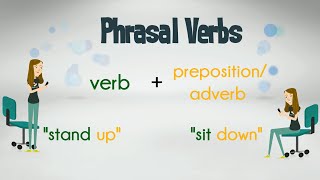
Today we'll start our exploration of phrasal verbs. A phrasal verb combines a verb with a preposition or adverb, creating a meaning that is often different from the original verb. For example, the phrasal verb 'give up' means to stop trying.

So, 'give up' isn't just about giving something away?
Exactly! It's important to learn these in context rather than as standalone words. Can anyone think of another example of a phrasal verb?

How about 'look up'?
Great example! When you 'look up' something, it means to search for information, not just physically looking upwards. Remember an easy way to learn these is by grouping them by the base verb.

Could you give us more examples?
Sure! 'Take off,' 'put on,' and 'call off' are all phrasal verbs. Let's quickly check if everyone remembers these. What does 'take off' mean?

It can mean to remove clothes or for a plane to leave the ground.
Excellent! So, wrapping up this session, remember that phrasal verbs can express different actions depending on their context. Keep practicing!
Diving into Idioms
🔒 Unlock Audio Lesson
Sign up and enroll to listen to this audio lesson

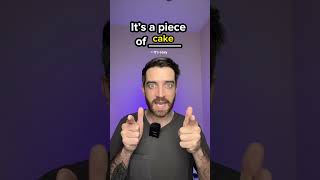
Now, let’s shift our focus to idioms. An idiom is a phrase where the meaning isn't obvious from the individual words. For instance, 'piece of cake' means something easy to do.
So, it doesn’t really have anything to do with actual cake?
Exactly! It’s all about the figurative meaning. Can anyone think of other idioms with similar quirky meanings?
How about 'spill the beans'?
Perfect! 'Spill the beans' means to reveal a secret. What can help in understanding idioms better?
Reading a lot and paying attention when they come up in conversations?
Absolutely! Try to guess their meanings from context first, and then look them up. In summary, idioms enrich our language, making it more colorful and engaging!
Using Phrasal Verbs and Idioms
🔒 Unlock Audio Lesson
Sign up and enroll to listen to this audio lesson
Let’s apply what we’ve learned. Can someone make a sentence using 'give up'?
I won’t give up no matter how hard it gets.
Great! Now let’s try an idiom. How about making a sentence with 'under the weather'?
I was feeling a bit under the weather yesterday.
Excellent sentence! Remember, using these figurative expressions can make your speech more dynamic. Can someone summarize the importance of using phrasal verbs in writing?
Phrasal verbs make writing less repetitive and more engaging.
Well said! To conclude our session, practicing with phrasal verbs and idioms allows for clearer and more effective communication.
Introduction & Overview
Read summaries of the section's main ideas at different levels of detail.
Quick Overview
Standard
In this section, students learn about phrasal verbs, which are verb and preposition/adverb combinations that create new meanings, as well as idioms, which are phrases whose meanings cannot be derived from the individual words. Understanding these figurative elements enriches language skills and enhances effective communication.
Detailed
Phrasal Verbs & Idioms: Understanding Figurative Language
In this section, we explore two key components of figurative language in English: phrasal verbs and idioms. Language is not always literal, and these elements often carry meanings that can't be deduced from their individual components.
1. Phrasal Verbs
- Definition: A phrasal verb is a verb that combines with a preposition or an adverb, creating a new meaning that is often different from that of the original verb.
- Structure: Verb + Particle (preposition/adverb)
- Examples range from common phrases like "look up" (to search for information) to more specialized uses like "break down" (to stop functioning).
- Tips for Learning: To master phrasal verbs, it is beneficial to learn them in context and group them by the main verbs involved.
2. Idioms
- Definition: An idiom consists of a set of words whose collective meaning is distinct from the meanings of the individual words. They often carry cultural significance and enhance expression.
- Examples include phrases like "raining cats and dogs" (indicating heavy rain) and "piece of cake" (referring to something easy).
- Learning Tips: Exposure to idioms through reading and conversation can help students grasp their meanings, alongside context clues.
Understanding phrasal verbs and idioms enriches vocabulary and allows for more nuanced communication, making these language features crucial for learners.
Youtube Videos








Audio Book
Dive deep into the subject with an immersive audiobook experience.
Understanding Phrasal Verbs
Chapter 1 of 4
🔒 Unlock Audio Chapter
Sign up and enroll to access the full audio experience
Chapter Content
Language is not always literal. Phrasal verbs and idioms are common in English and add richness, but they often have meanings that cannot be guessed from the individual words.
- Phrasal Verbs: Verb + Preposition/Adverb Combinations
A phrasal verb is a verb combined with a preposition or an adverb (or sometimes both) to create a new meaning that is often different from the original verb. These combinations act as a single unit.
● Structure: Verb + Particle (preposition/adverb)
● Examples:
○ look up
■ (literal): He looked up at the sky.
■ (figurative - to find information): Please look up the word in the dictionary.
○ give up
■ (to surrender, stop trying): Don't give up on your dreams.
○ take off
■ (to remove clothes): Please take off your shoes.
■ (for an aircraft to leave the ground): The plane will take off in ten minutes.
○ put on
■ (to wear clothes): She put on her jacket.
■ (to start an appliance): Please put on the light.
○ turn off/on
■ (to stop/start an appliance): Turn off the TV. Turn on the radio.*
○ break down
■ (to stop functioning): The car broke down on the highway.
■ (to lose emotional control): She broke down and cried.
○ call off (to cancel): They called off the meeting.
○ bring up (to raise a child; to mention a topic): She was brought up by her grandparents. Don't bring up that topic.
○ get up (to rise from bed/a seated position): I get up early every day.
○ run out of (to have no more of something): We've run out of milk.
Detailed Explanation
Phrasal verbs consist of a main verb combined with a particle, which can be a preposition or an adverb. The combination creates a meaning that is often quite different from the verb by itself. For example, 'look up' can mean both to literally look upwards or to search for information, depending on context. This means that the same phrase can have multiple meanings based on how it's used. To fully grasp these verbs, it's important to remember them in the context of sentences instead of trying to memorize their meanings in isolation.
Examples & Analogies
Think about the phrase 'give up.' Imagine you're running a race, and it's getting tough. You might feel like saying, 'I want to give up!' In this sense, it means to stop trying or surrender. However, if a friend says, 'Don't give up!' they are encouraging you to keep going. It’s like a coach telling an athlete not to throw in the towel when the game gets tough.
Learning Phrasal Verbs: Tips
Chapter 2 of 4
🔒 Unlock Audio Chapter
Sign up and enroll to access the full audio experience
Chapter Content
● Tips for learning Phrasal Verbs:
○ Learn them in context, not just as isolated words.
○ Group them by common verbs (e.g., all phrasal verbs with 'go', 'get', 'put').
○ Practice using them in sentences.
Detailed Explanation
To successfully learn phrasal verbs, it’s crucial to understand them within sentences to grasp their context better. Grouping them by common verbs helps identify patterns in use. By practicing them in your own sentences, you reinforce their meanings and usages, which aids memory retention.
Examples & Analogies
Imagine you’re trying to learn cooking techniques. Instead of memorizing the term 'mix' on its own, you might learn it within the phrase 'mix the ingredients together.' This way, you see how it's used and can remember it better. Similarly, grouping related phrasal verbs together helps create a mental picture for each.
Understanding Idioms
Chapter 3 of 4
🔒 Unlock Audio Chapter
Sign up and enroll to access the full audio experience
Chapter Content
- Idioms: Phrases with Non-Literal Meanings
An idiom is a group of words whose meaning cannot be understood from the literal meanings of its individual words. The meaning is figurative and often culturally specific.
● Key Feature: The whole phrase has a meaning distinct from its parts.
● Common Examples:
○ It's raining cats and dogs.
■ (Meaning: It's raining very heavily.)
■ Not literally animals falling from the sky!
○ Break a leg!
■ (Meaning: Good luck! Used especially before a performance.)
■ Not literally wishing someone harm!
○ Bite the bullet.
■ (Meaning: To endure a difficult or unpleasant situation.)
○ Hit the road.
■ (Meaning: To leave; to start a journey.)
○ Piece of cake.
■ (Meaning: Something that is very easy to do.)
■ The exam was a piece of cake.
○ Cost an arm and a leg.
■ (Meaning: To be very expensive.)
■ That new car cost an arm and a leg.
Detailed Explanation
Idioms are expressions that have a meaning not deducible from the individual words. For instance, 'It's raining cats and dogs' means it’s raining heavily, but you wouldn’t expect animals to literally fall from the sky. Understanding idioms is essential for grasping informal conversations and cultural nuances in English.
Examples & Analogies
Think of idioms like trying to figure out a puzzle. Each piece (word) doesn't directly tell you what the completed picture (meaning) is. For instance, 'break a leg' is a saying used in theater to wish performers luck. If taken literally, it sounds harmful, but within the context of performances, it carries a positive meaning, encouraging success.
Tips for Learning Idioms
Chapter 4 of 4
🔒 Unlock Audio Chapter
Sign up and enroll to access the full audio experience
Chapter Content
● Tips for learning Idioms:
○ Read widely to see them in context.
○ Pay attention when you encounter them in conversations or media.
○ Try to guess the meaning from the context before looking it up.
○ Don't try to translate them word-for-word.
Detailed Explanation
Learning idioms involves exposure and practice. Reading various materials helps see idioms in different contexts, while listening to conversations enhances comprehension. Rather than translating them directly, students should focus on the context to gauge meaning, which fosters a deeper understanding and application of the idioms.
Examples & Analogies
Consider how children learn language. They don't translate each word but pick up phrases through stories, songs, and conversations. When they hear 'hit the road,' they understand it means to leave, not that someone is literally hitting a path. By engaging with media and conversations, learners can similarly absorb idioms naturally.
Key Concepts
-
Phrasal Verbs: Definitions and examples show how combinations of verbs with particles create new meanings.
-
Idioms: Understanding idioms helps in recognizing non-literal phrases and enriches language comprehension.
Examples & Applications
Example of a phrasal verb: 'to look up' means to search for information, as in 'I will look up the definition in the dictionary.'
Example of an idiom: 'to break a leg' means to wish someone good luck, especially before a performance.
Memory Aids
Interactive tools to help you remember key concepts
Rhymes
'Phrasal verbs can be fun, they change the meaning when combined as one.'
Stories
Imagine a boy who never gives up, no matter what challenges he faces. He looks up information he doesn’t understand, uses idioms to express himself creatively, and never spills the beans about his secret dreams.
Memory Tools
To remember phrasal verbs, think 'GET CUB': Get up, Get off, Turn on, Call off, Look up, Bring up.
Acronyms
Idioms
Remember 'COLD PIE' - Cultural
Original Meaning
Live Language
Dynamic Phrases
Interpret Context
Everyone Uses.
Flash Cards
Glossary
- Phrasal Verb
A combination of a verb and a preposition or adverb that creates a new meaning.
- Idiom
A phrase whose meaning is not derived from the literal meanings of its individual words.
- Particle
A word, often a preposition or adverb, that combines with a verb to form a phrasal verb.
Reference links
Supplementary resources to enhance your learning experience.