
Prefixes, Suffixes, & Roots: Unlocking Word Meanings
Interactive Audio Lesson
Listen to a student-teacher conversation explaining the topic in a relatable way.
Understanding Root Words
🔒 Unlock Audio Lesson
Sign up and enroll to listen to this audio lesson

Today, we are going to explore root words and how they serve as the foundation for many other words. Does anyone know what a root word is?

Isn’t it the main part of a word that has its own meaning?
Exactly! For example, the root 'port' means to carry. Now, can anyone give examples of words that include this root?

How about ‘transport’ or ‘import’?
Perfect! We’ll remember that 'port' relates to carrying. So, if you see anything with 'port,' think of carrying! What root word can you think of that means 'to see'?

'Vis' is the root for that, right?
Yes! 'Vis' means to see, linking to words like 'vision' and 'television'. Remember, root words help us understand the central meaning of a word.
Exploring Prefixes
🔒 Unlock Audio Lesson
Sign up and enroll to listen to this audio lesson

Now let’s look at prefixes. Can anyone tell me what a prefix is?

It’s a group of letters you add to the beginning of a word, right?
Correct! For example, the prefix 'un-' means 'not.' If you add 'un-' to 'happy', you get 'unhappy,' which means 'not happy.' Can anyone think of a word with a different prefix?
How about 'rewrite'? 'Re-' means 'again'.
Exactly! 'Re-' modifies the word to indicate doing it again. Remember, prefixes alter the meaning of the root.
Understanding Suffixes
🔒 Unlock Audio Lesson
Sign up and enroll to listen to this audio lesson
Now, let’s talk about suffixes. Who can tell me what a suffix does?
It’s added at the end of a word to change its meaning or part of speech!
Right! For example, if we take 'kind' and add the suffix ‘-ness’ to it, we get 'kindness'. What does that mean?
It means the state of being kind!
Great! Suffixes can also change the part of speech. For instance, '-ly' turns an adjective into an adverb. If we say 'quick' and add '-ly', what do we get?
'Quickly', which means in a quick manner.
Exactly! Remember, suffixes help to build words while altering their role in sentences.
Combining Roots, Prefixes, and Suffixes
🔒 Unlock Audio Lesson
Sign up and enroll to listen to this audio lesson
Let’s put this all together. How can we create a word using the root 'cycle'?
We can add 'bi-' to make 'bicycle'!
Great job! That means a vehicle with two wheels. What if we use 'cycle' and add 're-'?
'Recycle' means to process something again!
Exactly! When we combine roots, prefixes, and suffixes, we expand our vocabulary immensely. What about we try creating one more word?
Introduction & Overview
Read summaries of the section's main ideas at different levels of detail.
Quick Overview
Standard
In this section, students learn how root words form the basis of meanings, and how prefixes and suffixes modify those meanings. By dissecting words into their components, students can decipher unfamiliar words and enhance their vocabulary effectively.
Detailed
Detailed Summary
Understanding prefixes, suffixes, and roots is essential for expanding vocabulary and mastering word meanings. This section explains the following key concepts:
- Root Words: These are the core components of words that carry their primary meanings. They cannot be broken down further into smaller units. Examples include:
- port (to carry): export, import, transport, portable
- vis (to see): vision, visible, television, revise
- rupt (to break): rupture, interrupt, bankrupt
- Prefixes: A prefix is added to the beginning of a root word to alter its meaning. Common prefixes include:
- un- (not): unhappy, undo
- re- (again): rewrite, return
- dis- (not): disagree, dishonest
- Suffixes: Suffixes are added to the end of root words, changing their grammatical function or meaning. Common suffixes include:
- -able (able to be): readable, comfortable
- -ful (full of): beautiful, helpful
- -ness (state of being): happiness, kindness
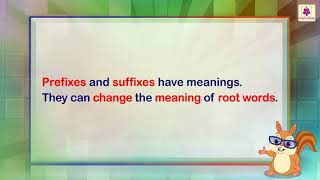
By understanding these components, students can deduce the meanings of various words and build new ones, significantly enhancing their vocabulary and comprehension skills.
Youtube Videos



Audio Book
Dive deep into the subject with an immersive audiobook experience.
Root Words: The Core Meaning
Chapter 1 of 4
🔒 Unlock Audio Chapter
Sign up and enroll to access the full audio experience
Chapter Content
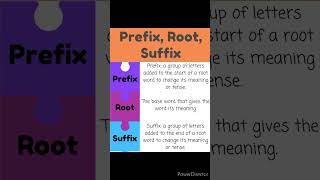
A root word is the basic part of a word that carries its primary meaning. It cannot be broken down further into meaningful units. By itself, a root word may or may not be a complete word.
Examples:
- port (to carry): export, import, transport, portable
- vis (to see): vision, visible, television, revise
- aqua (water): aquarium, aquatic, aqueduct
- rupt (to break): rupture, interrupt, bankrupt
- ject (to throw): project, reject, inject
Detailed Explanation
Root words are the fundamental elements from which other words are formed. They provide the essential meaning of a word. For instance, 'port' means 'to carry', and when we add various prefixes and suffixes, we can create different words like 'export' (carry out), 'import' (carry in), and 'transport' (carry across). Understanding root words helps us to decipher unfamiliar words by breaking them down into parts.
Examples & Analogies
Think of root words as the trunk of a tree. Just as branches grow out from the trunk to form leaves and flowers, root words expand to create new words that branch off from their core meaning. For example, 'vis' is the trunk, and words like 'vision' and 'visible' are the branches that help us see different aspects of sight.
Prefixes: Adding Meaning at the Beginning
Chapter 2 of 4
🔒 Unlock Audio Chapter
Sign up and enroll to access the full audio experience
Chapter Content
A prefix is a group of letters added to the beginning of a root word to change or modify its meaning.
Common Prefixes and their Meanings:
- un- (not, opposite of): unhappy, undo, unbelievable
- re- (again, back): rewrite, rebuild, return
- dis- (not, opposite of): disagree, dishonest, dislike
- mis- (wrongly): misunderstand, misspelled, mislead
- pre- (before): preview, pre-test, predict
- de- (down, away from, opposite): decrease, deconstruct, defrost
- ...
Detailed Explanation
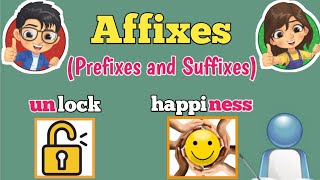
Prefixes are affixes placed at the start of root words to alter their meanings. For example, 'un-' transforms 'happy' into 'unhappy', indicating the opposite of happiness. Recognizing prefixes allows us to understand and create new words easily, as it provides clues about their meanings.
Examples & Analogies
Consider prefixes like tools in a toolbox. Each tool (prefix) can change the way a specific project (root word) is completed. If you add the 'un-' tool to 'happy', you are effectively modifying the original project to create a new one: 'unhappy'. Similarly, just like how different tools can yield different results, varying prefixes can significantly change a word's meaning.
Suffixes: Adding Meaning at the End
Chapter 3 of 4
🔒 Unlock Audio Chapter
Sign up and enroll to access the full audio experience
Chapter Content
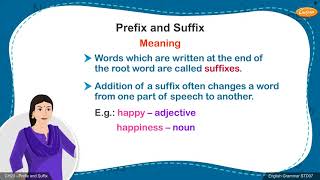
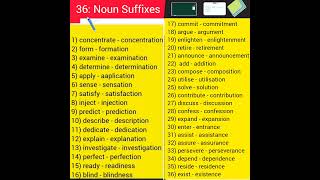
A suffix is a group of letters added to the end of a root word. Suffixes can change the word's part of speech (e.g., from a verb to a noun) or modify its meaning.
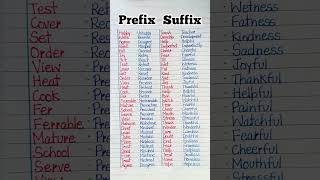
Common Suffixes and their Meanings/Functions:
- -able / -ible (can be done, able to be): readable, incredible, comfortable
- -ful (full of): beautiful, careful, helpful (forms adjectives)
- -less (without): careless, hopeless, fearless (forms adjectives)
- ...
Detailed Explanation
Suffixes are added to the end of root words to change their meaning or grammatical function. For instance, adding '-ful' to 'care' forms the adjective 'careful', meaning full of care. This process of modifying meaning through suffixes allows us to expand our vocabulary and articulate more complex ideas.
Examples & Analogies
Think of suffixes as the finishing touches in a painting. Just as an artist might add details or layers to enhance the artwork, suffixes embellish root words to complete their transformation into different parts of speech. For example, adding 'ful' to 'beauty' creates 'beautiful', which adds a descriptive quality that enhances how we express the idea of beauty.
Activity: Building Words
Chapter 4 of 4
🔒 Unlock Audio Chapter
Sign up and enroll to access the full audio experience
Chapter Content
Try to create new words by combining prefixes, roots, and suffixes.
Examples:
- Root: act (to do)
- Add re-: react (to do again/respond)
- Add -ion: action (the act of doing)
- Root: cycle (wheel, circle)
- Add bi-: bicycle (two wheels)
- Add uni-: unicycle (one wheel)
Detailed Explanation
This activity encourages you to practice creating new words by combining roots with prefixes and suffixes. For instance, taking the root 'act' and adding the prefix 're-' creates 'react'. This exercise not only enhances your vocabulary but also reinforces your understanding of how word formation works.
Examples & Analogies
Imagine you're a chef creating new recipes. Just as you combine various ingredients (roots) with spices and flavors (prefixes and suffixes) to make a unique dish, word formation allows you to combine different elements to create something new and exciting. For example, combining 'cycle' with 'bi-' leads you to the new word 'bicycle', much like crafting a delightful dish from basic ingredients.
Key Concepts
-
Root Words: They form the basis of the meanings of words.
-
Prefixes: These modify the meaning of root words.
-
Suffixes: These can change the part of speech and meaning of words.
Examples & Applications
port (to carry): export, import, transport, portable
vis (to see): vision, visible, television, revise
aqua (water): aquarium, aquatic, aqueduct
rupt (to break): rupture, interrupt, bankrupt
ject (to throw): project, reject, inject
Detailed Explanation: Root words are the fundamental elements from which other words are formed. They provide the essential meaning of a word. For instance, 'port' means 'to carry', and when we add various prefixes and suffixes, we can create different words like 'export' (carry out), 'import' (carry in), and 'transport' (carry across). Understanding root words helps us to decipher unfamiliar words by breaking them down into parts.
Real-Life Example or Analogy: Think of root words as the trunk of a tree. Just as branches grow out from the trunk to form leaves and flowers, root words expand to create new words that branch off from their core meaning. For example, 'vis' is the trunk, and words like 'vision' and 'visible' are the branches that help us see different aspects of sight.
--
Chunk Title: Prefixes: Adding Meaning at the Beginning
Chunk Text: A prefix is a group of letters added to the beginning of a root word to change or modify its meaning.
Common Prefixes and their Meanings:
un- (not, opposite of): unhappy, undo, unbelievable
re- (again, back): rewrite, rebuild, return
dis- (not, opposite of): disagree, dishonest, dislike
mis- (wrongly): misunderstand, misspelled, mislead
pre- (before): preview, pre-test, predict
de- (down, away from, opposite): decrease, deconstruct, defrost
...
Detailed Explanation: Prefixes are affixes placed at the start of root words to alter their meanings. For example, 'un-' transforms 'happy' into 'unhappy', indicating the opposite of happiness. Recognizing prefixes allows us to understand and create new words easily, as it provides clues about their meanings.
Real-Life Example or Analogy: Consider prefixes like tools in a toolbox. Each tool (prefix) can change the way a specific project (root word) is completed. If you add the 'un-' tool to 'happy', you are effectively modifying the original project to create a new one: 'unhappy'. Similarly, just like how different tools can yield different results, varying prefixes can significantly change a word's meaning.
--
Chunk Title: Suffixes: Adding Meaning at the End
Chunk Text: A suffix is a group of letters added to the end of a root word. Suffixes can change the word's part of speech (e.g., from a verb to a noun) or modify its meaning.
Common Suffixes and their Meanings/Functions:
-able / -ible (can be done, able to be): readable, incredible, comfortable
-ful (full of): beautiful, careful, helpful (forms adjectives)
-less (without): careless, hopeless, fearless (forms adjectives)
...
Detailed Explanation: Suffixes are added to the end of root words to change their meaning or grammatical function. For instance, adding '-ful' to 'care' forms the adjective 'careful', meaning full of care. This process of modifying meaning through suffixes allows us to expand our vocabulary and articulate more complex ideas.
Real-Life Example or Analogy: Think of suffixes as the finishing touches in a painting. Just as an artist might add details or layers to enhance the artwork, suffixes embellish root words to complete their transformation into different parts of speech. For example, adding 'ful' to 'beauty' creates 'beautiful', which adds a descriptive quality that enhances how we express the idea of beauty.
--
Chunk Title: Activity: Building Words
Chunk Text: Try to create new words by combining prefixes, roots, and suffixes.
Examples:
Root: act (to do)
Add re-: react (to do again/respond)
Add -ion: action (the act of doing)
Root: cycle (wheel, circle)
Add bi-: bicycle (two wheels)
Add uni-: unicycle (one wheel)
Detailed Explanation: This activity encourages you to practice creating new words by combining roots with prefixes and suffixes. For instance, taking the root 'act' and adding the prefix 're-' creates 'react'. This exercise not only enhances your vocabulary but also reinforces your understanding of how word formation works.
Real-Life Example or Analogy: Imagine you're a chef creating new recipes. Just as you combine various ingredients (roots) with spices and flavors (prefixes and suffixes) to make a unique dish, word formation allows you to combine different elements to create something new and exciting. For example, combining 'cycle' with 'bi-' leads you to the new word 'bicycle', much like crafting a delightful dish from basic ingredients.
--
Memory Aids
Interactive tools to help you remember key concepts
Rhymes
To make a word mean more fun, add a prefix; it’s just begun!
Stories
Imagine a little child named Port who loved to carry things. He learned to make new friends by modifying his name using prefixes and suffixes, becoming a happy child named ‘Unport’ when he felt sad.
Memory Tools
For suffixes, think of A-B-C: Able, Full, Less, -ly - each tells you how to see!
Acronyms
PRIME
Prefixes
Roots
Interactions
Modifiers
Expressions help us remember word building!
Flash Cards
Glossary
- Root Word
The core part of a word that carries its primary meaning.
- Prefix
A group of letters added at the beginning of a root word that modifies its meaning.
- Suffix
A group of letters added at the end of a root word that modifies its meaning and may change its grammatical function.
Reference links
Supplementary resources to enhance your learning experience.