Professional Courses
Industry-relevant training in Business, Technology, and Design
Categories
Interactive Games
Fun games to boost memory, math, typing, and English skills
Typing
Memory
Math
English Adventures
Knowledge

How CBSE Balances Academic Rigor and Accessibility

How CBSE Balances Academic Rigor and Accessibility
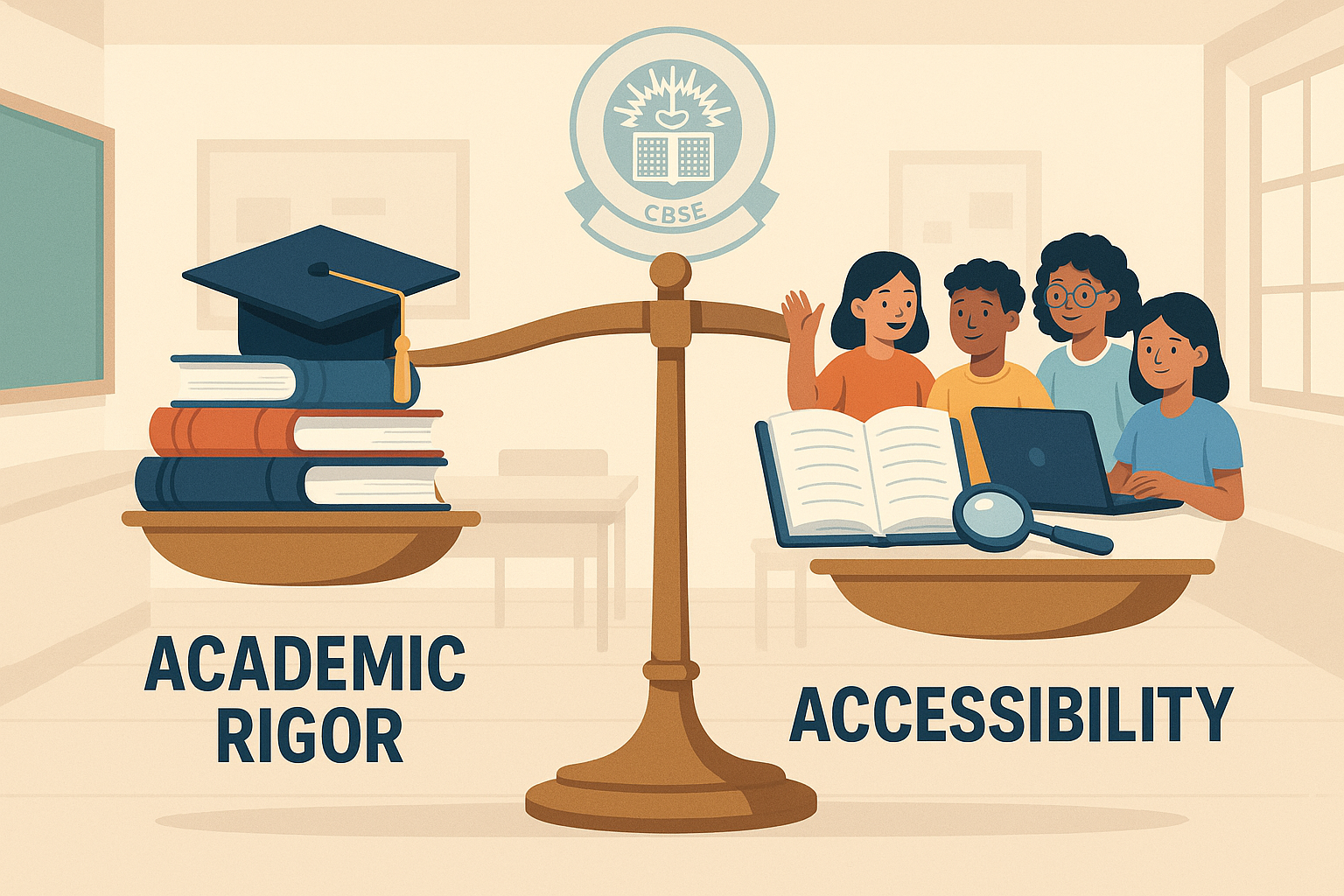
One of the most common questions parents ask while choosing a school board is whether it can challenge students academically without overwhelming them. The CBSE board has built its reputation on striking this balance carefully. It offers academic rigor that prepares students for higher education and competitive exams, while remaining accessible to learners with different abilities, learning speeds, and backgrounds.
Understanding how CBSE achieves this balance helps parents and students appreciate why it continues to be one of the most widely adopted education systems in India. From curriculum design to assessment methods, the CBSE syllabus is structured to challenge students intellectually while keeping learning realistic, inclusive, and manageable. This article explores how CBSE balances academic rigor and accessibility, and why this balance is one of the biggest advantages of the CBSE board.
What Academic Rigor Means in the CBSE Context
Academic rigor does not mean excessive difficulty or pressure. In the CBSE framework, rigor refers to depth of understanding, conceptual clarity, and the ability to apply knowledge meaningfully. The CBSE curriculum emphasizes understanding over memorization, especially in subjects like Mathematics and Science.
Students are encouraged to build strong foundations in early grades and gradually move toward analytical thinking in senior classes. This progression ensures that rigor increases naturally with age and readiness rather than being imposed suddenly. Parents can get a detailed view of subject expectations through the CBSE subject by subject study guide, which highlights how concepts develop across grades.
Accessibility as a Core Principle of CBSE
Accessibility in education means that learning is achievable for a wide range of students without lowering standards. CBSE prioritizes clear language, structured content, and logical progression to ensure students can engage with the syllabus effectively.
The CBSE syllabus avoids unnecessary complexity and focuses on essential concepts. This makes learning less intimidating and more inclusive, especially for students who may not have access to extensive external coaching. Accessibility ensures that effort and consistency are rewarded, not just speed or prior exposure.
How the CBSE Curriculum Supports Balanced Learning
The CBSE curriculum is designed to be uniform across the country, ensuring equal learning opportunities regardless of location. This consistency supports accessibility while maintaining academic standards.
Concepts are revisited and reinforced over time, allowing students to strengthen understanding gradually. This spiral approach prevents gaps and reduces academic anxiety. At the same time, the curriculum prepares students for higher-level thinking required in senior classes and competitive exams.
The Role of the CBSE Syllabus in Reducing Learning Pressure
The CBSE syllabus is structured to be comprehensive but not overwhelming. Topics are selected carefully to align with age-appropriate cognitive development. This helps students stay engaged without feeling overloaded.
Instead of introducing too many advanced concepts early, CBSE focuses on mastering fundamentals first. This approach allows students to handle complex topics later with confidence. For parents, this balance means children can progress steadily without burnout.
Competency Based Questions and Practical Rigor
One of the most significant changes in recent years has been the introduction of competency-based questions. These questions assess understanding, application, and reasoning rather than rote memorization.
This shift increases academic rigor by challenging students to think critically while remaining accessible because questions are rooted in familiar concepts. Parents and students can better understand this format through CBSE competency based questions and how to answer them. When students understand what is expected, rigor feels achievable rather than intimidating.
Fair and Transparent CBSE Exam Evaluation
Exams play a crucial role in maintaining academic standards. The CBSE exam system balances rigor and accessibility through transparent evaluation methods. Marks are awarded not only for final answers but also for method, reasoning, and clarity.
This approach ensures that students who understand concepts but make minor mistakes are not unfairly penalized. A detailed explanation of this evaluation system is available in the CBSE marking scheme and question paper pattern. Transparency reduces fear and builds trust in the assessment process.
CBSE Exam Design and Student Confidence
CBSE exams are designed to test understanding without creating unnecessary pressure. Question papers follow predictable patterns, allowing students to prepare strategically. This predictability supports accessibility while maintaining standards.
When students know what to expect, they can focus on learning rather than anxiety. This balance helps students perform closer to their true potential during CBSE exams.
Advantages of CBSE Board for Competitive Exam Preparation
One of the biggest advantages of the CBSE board is its alignment with national competitive exams like JEE and NEET. The CBSE curriculum closely matches the syllabus and conceptual demands of these exams, especially in Physics, Chemistry, and Mathematics.
This alignment adds academic rigor without requiring students to learn entirely different content for school and entrance exams. Parents interested in this comparison can explore CBSE vs ICSE for NEET and JEE preparation. This integration makes CBSE both challenging and practical.
Comparing CBSE With Other Education Boards
When comparing CBSE with ICSE or IB, parents often notice differences in depth, breadth, and teaching style. CBSE stands out for balancing national relevance with manageable academic load.
A broader comparison is discussed in CBSE vs other boards comparison. This perspective helps parents understand why CBSE works well for students seeking structured growth without excessive pressure.
How CBSE Supports Students Across Different Learning Levels
CBSE recognizes that students learn at different speeds. The curriculum allows teachers to adapt pacing while maintaining common standards. This flexibility supports accessibility without compromising rigor.
Digital learning platforms also play a role in bridging learning gaps. Students can strengthen concepts through guided practice and revision. Platforms like AllRounder.ai complement school education by offering structured learning aligned with the CBSE syllabus.
Grade Wise Progression in the CBSE System
CBSE’s academic rigor increases gradually across grades. Middle school focuses on concept-building, while senior classes emphasize application, analysis, and exam readiness.
Parents can support children with grade-specific resources such as Grade 8 courses, Grade 9 courses, Grade 10 courses, Grade 11 courses, and Grade 12 courses. These structured pathways align with CBSE’s progressive rigor.
Practice Tests as a Bridge Between Rigor and Confidence
Practice tests play a critical role in CBSE preparation. They expose students to exam patterns, time management challenges, and question types in a low-risk environment.
Using structured practice tests allows students to build confidence while meeting academic expectations. Practice transforms rigor into familiarity and reduces exam anxiety.
The Role of Textbooks in Accessible Learning
CBSE places strong emphasis on NCERT textbooks, which are written in clear language and follow a logical flow. These books are designed to be accessible while covering required depth.
Understanding how to use textbooks effectively is more important than using multiple reference books. Parents can gain insight into smart textbook usage through the CBSE board books topper guide.
Encouraging Balanced Development Beyond Academics
CBSE recognizes the importance of holistic development. Co-curricular activities, projects, and internal assessments support skills beyond textbooks.
Learning through exploration and play also contributes to accessibility. Interactive tools like educational games help students engage with concepts in a relaxed and enjoyable way, reinforcing learning without pressure.
Supporting Transitions Between Education Boards
Some students transition from CBSE to ICSE or IB, or vice versa. CBSE’s structured approach makes these transitions smoother by providing strong conceptual foundations.
Parents exploring different pathways can compare options through CBSE courses, ICSE courses, and IB courses. Understanding differences helps families choose what suits their child best.
The Role of Parents in Maintaining Balance
Parents play a crucial role in ensuring CBSE remains balanced for their children. Encouraging consistency, understanding effort, and focusing on learning rather than just marks supports healthy academic growth.
When parents understand how CBSE balances rigor and accessibility, they can set realistic expectations and reduce unnecessary pressure at home.
Preparing Students for Long Term Success
CBSE education prepares students not only for board exams but also for higher education and professional paths. Logical thinking, conceptual clarity, and disciplined study habits form the foundation of long-term success.
The balanced nature of CBSE ensures that students develop resilience, confidence, and adaptability alongside academic knowledge.
Final Thoughts on CBSE’s Balanced Approach
The CBSE board succeeds because it does not treat rigor and accessibility as opposites. Instead, it integrates them thoughtfully through curriculum design, assessment methods, and progressive learning.
By offering structured academic challenge without overwhelming students, CBSE creates an environment where consistent effort leads to success. For parents and students alike, this balance is one of the strongest reasons CBSE continues to be a trusted education system across India.
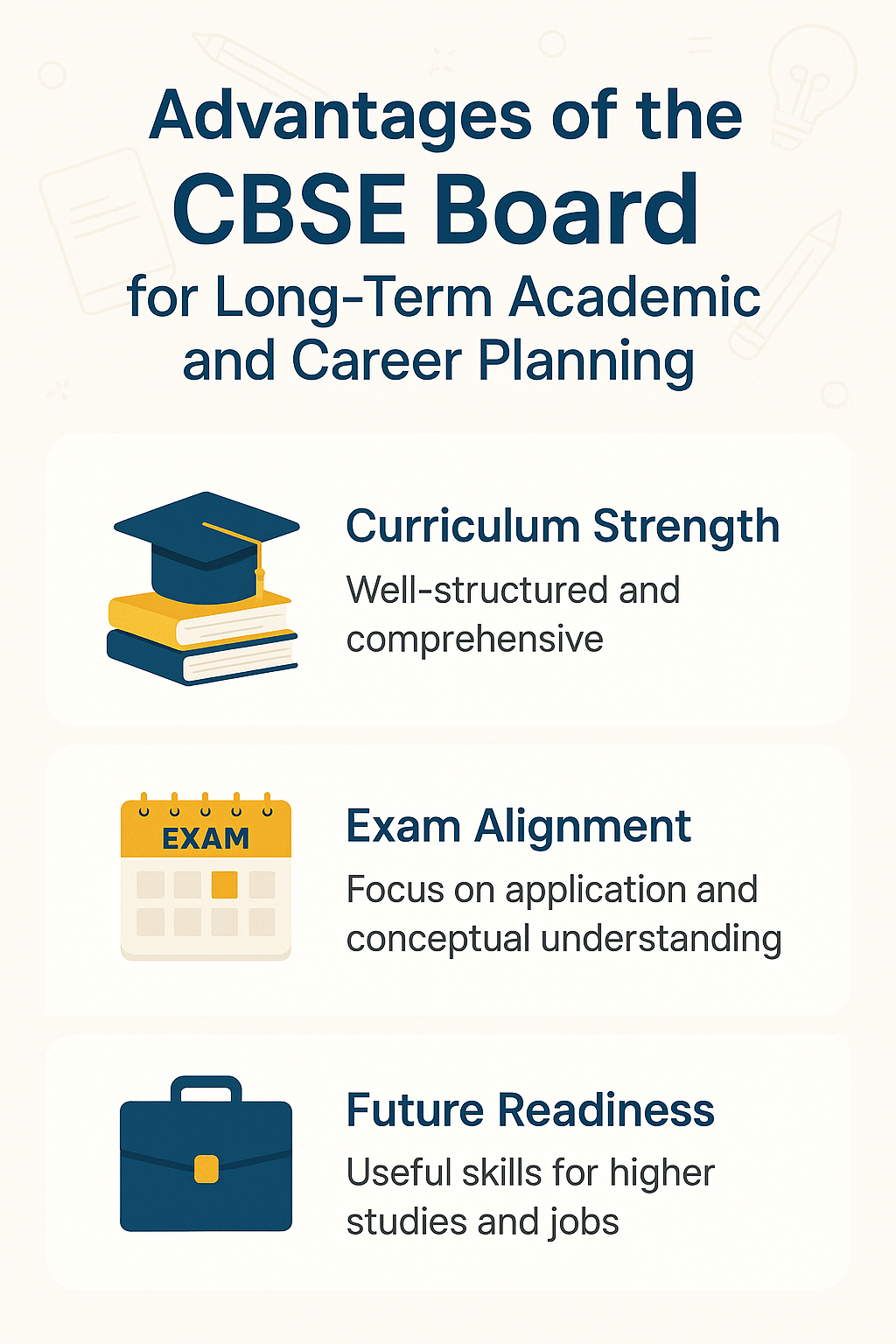
Discover the advantages of the CBSE board for long-term academic and career planning, including curriculum strength,...
Explore how the CBSE board balances academic rigor and accessibility through its curriculum, syllabus, exams, and...
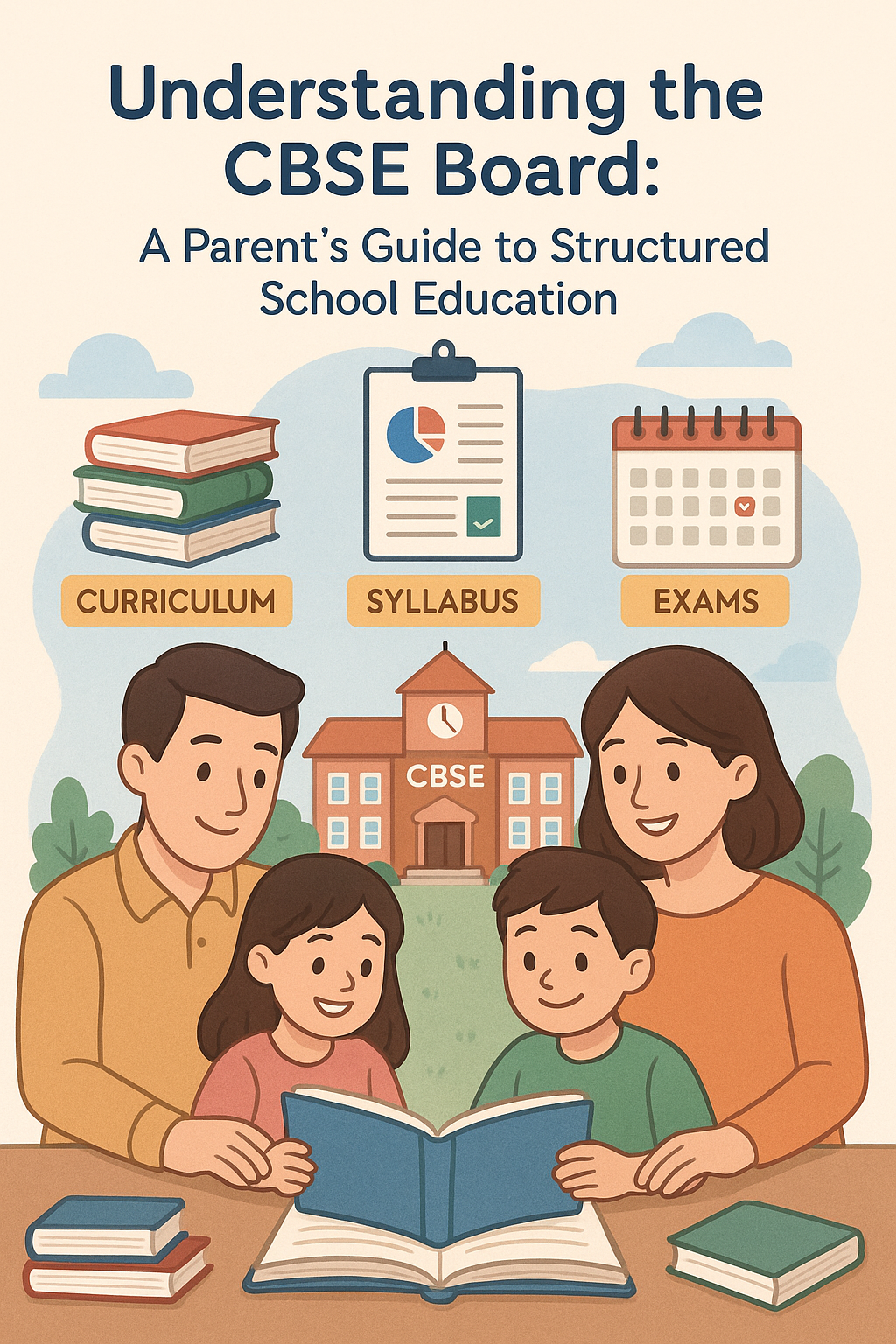
A complete parent’s guide to understanding the CBSE board, its curriculum, syllabus, advantages, exam structure, and...
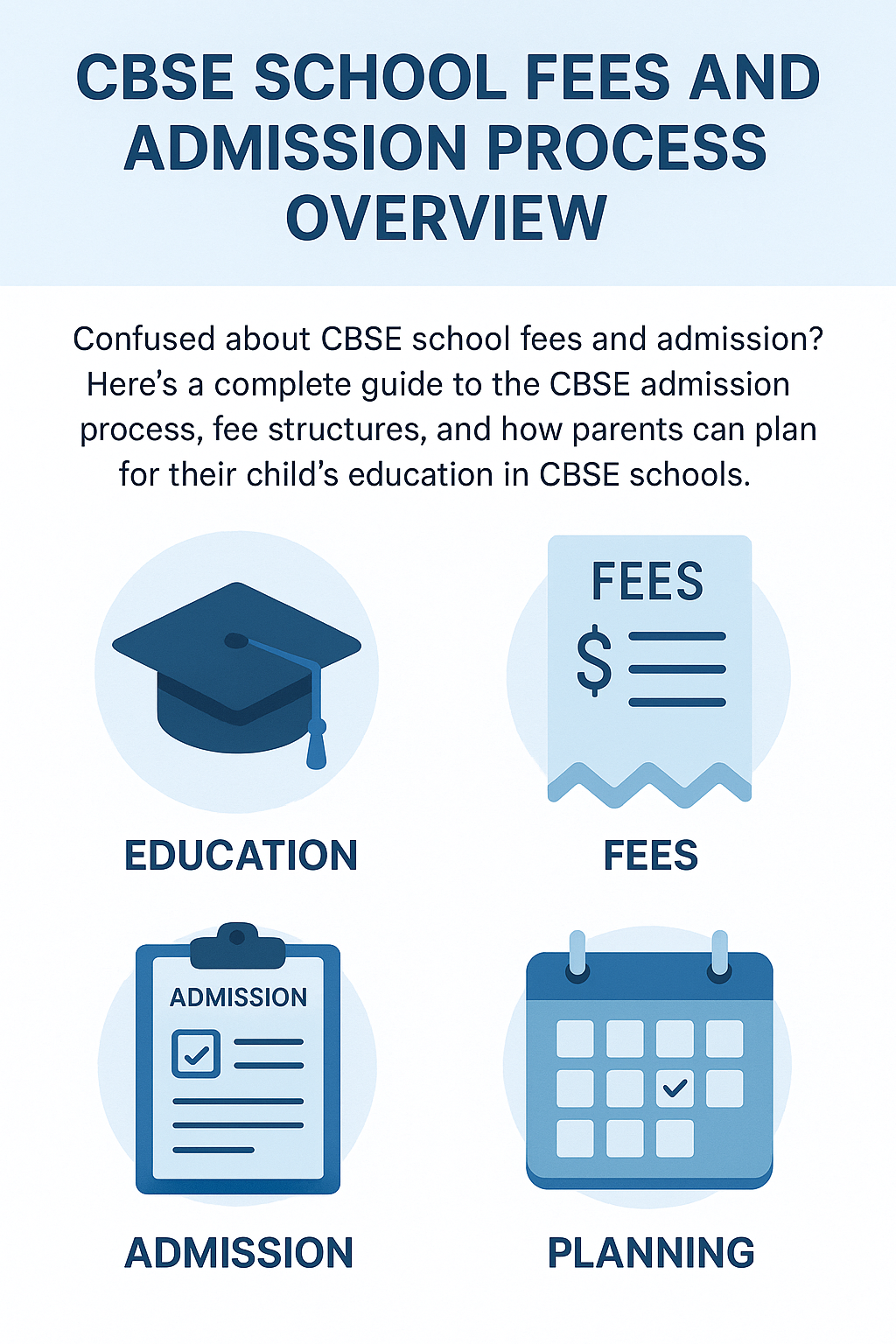
Confused about CBSE school fees and admission? Here’s a complete guide to the CBSE admission process, fee...
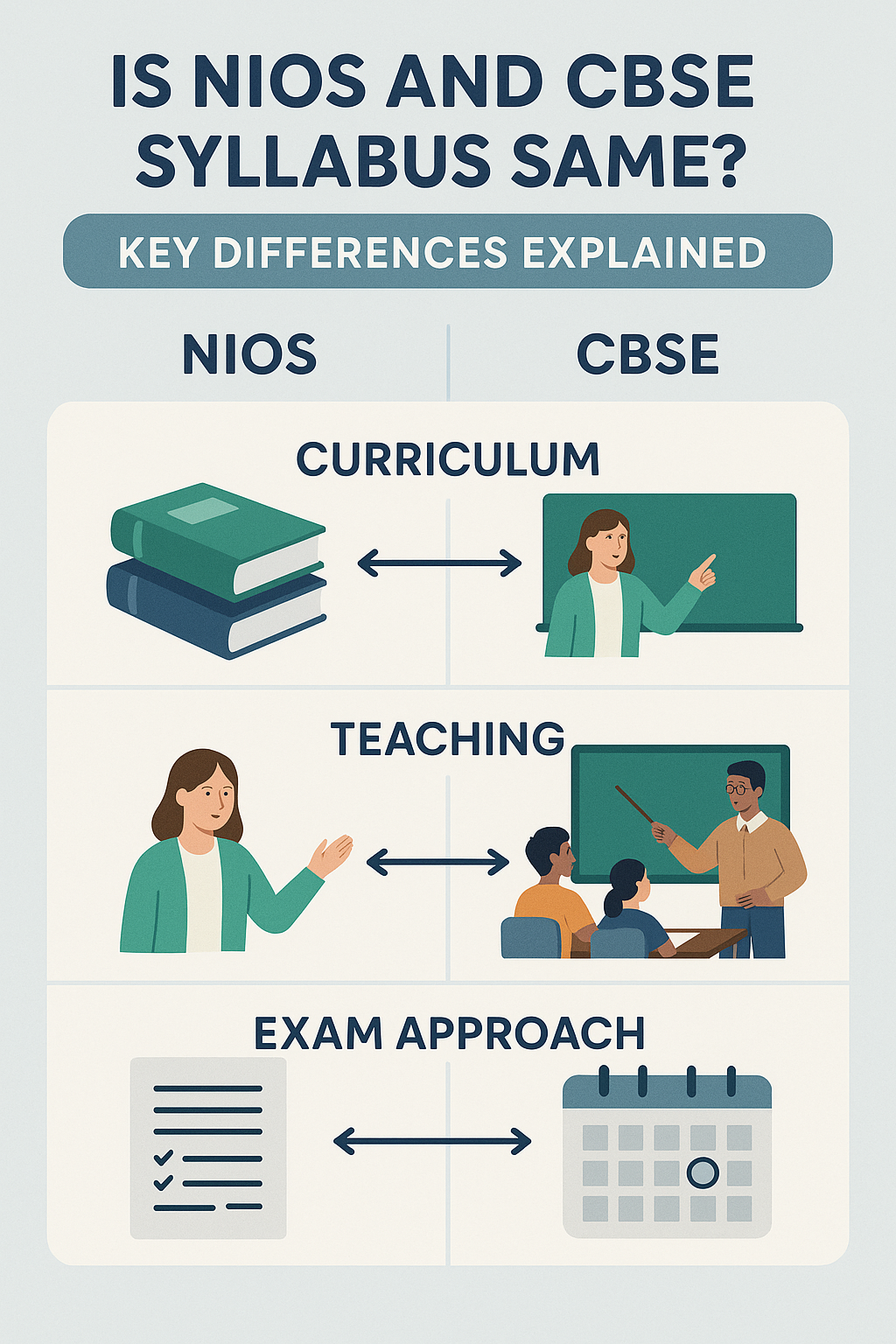
Is NIOS and CBSE syllabus same? Discover the key differences in curriculum, teaching, and exam approach. Learn how...
CBSE Holiday List 2025: Explore the official school calendar, national & regional holidays, summer & winter...
Learn how to calculate your CBSE 12th percentage from your marksheet using the official formula with a simple...
Confused about RT, COMP, and ER on your CBSE marksheet? Learn their meanings, reasons, and what steps you should...
Learn everything about the CTET exam for aspiring CBSE school teachers, including eligibility, syllabus, preparation...

Looking to apply for the CBSE Single Girl Child Scholarship Scheme? Learn eligibility, documents, application steps,...

Discover everything parents and students need to know about the CBSE Class 9 registration process, including...

Learn everything about the CBSE private candidate application process and rules. Understand eligibility,...

Confused about the CBSE answer key? This guide explains how to access it, interpret it, and use it to analyse your...

Confused about how CBSE re-evaluation or re-checking works? This guide explains eligibility, steps, fees, deadlines,...

Discover how to use the CBSE Academics website to access important resources like curriculum, sample papers, and...
Learn how to easily access your CBSE marksheets and certificates using DigiLocker. This step-by-step guide helps...
Confused about CBSE passing marks for theory and practical exams? This guide explains the minimum marks needed to...
Learn how the CBSE Open Book Exam will be implemented for Class 9 and Class 11 students. Understand the benefits,...
Confused about the CBSE compartment and improvement exam process? This complete guide explains eligibility, how to...
Learn how to obtain your CBSE Migration Certificate after Class 10 or Class 12. This detailed guide walks you...

Confused about your CBSE Admit Card? This easy step-by-step guide explains how to download it, what details to...

Discover what CBSE competency-based questions are and learn how to answer them expertly to you ace your exams.

Boost your Class 10 CBSE board prep with sample papers. Learn how to revise smartly, manage time, and score higher...

Learn how to score high in the CBSE curriculum with a subject-by-subject guide, expert tips, and AllRounder.ai tools...

Compare CBSE vs ICSE to choose the best board for your child. Understand syllabus, teaching style, exam prep, fees, and more.

Understand the latest CBSE marking scheme and question paper pattern. Learn about competency-based questions,...

Want to score above 95% in your CBSE Class 10 boards? Our strategy guide breaks down topper study plans to revision...

Compare CBSE vs ICSE to find the best board for NEET and JEE preparation. Understand syllabus match, exam formats,...

Treat your CBSE Class 12 exams using an athlete's approach to help you train, strategize, and perform your best on exam day.

Get ready for your CBSE Class 10 board exams with our survival kit. Find the official syllabus, a smart study...

Learn how to verify CBSE marksheets, certificates, and results online. Step-by-step guide for students and parents...

Master CBSE with top-rated tools, study planners, and expert online help. Perfect guide for Class 9–12 students...

Learn about CBSE – its full form, history, objectives, and structure. Get insights into CBSE’s role in Indian education.
Resources
-
Your complete JEE Advanced resource for eligibility, exam dates, syllabus, marks vs rank, and...
-
Understand the entire JEE Main process, from application and eligibility rules to the exam...
-

Explore the IB Board – a global curriculum emphasizing holistic, student-centered learning...
-

Learn about CBSE – India’s national school board offering a standardized curriculum, NCERT...
-

Explore everything about the ICSE board – its curriculum, subjects, exam format, and academic...