Professional Courses
Industry-relevant training in Business, Technology, and Design
Categories
Interactive Games
Fun games to boost memory, math, typing, and English skills
Typing
Memory
Math
English Adventures
Knowledge

How IB Encourages Critical Reading and Interpretation Skills

How IB Encourages Critical Reading and Interpretation Skills
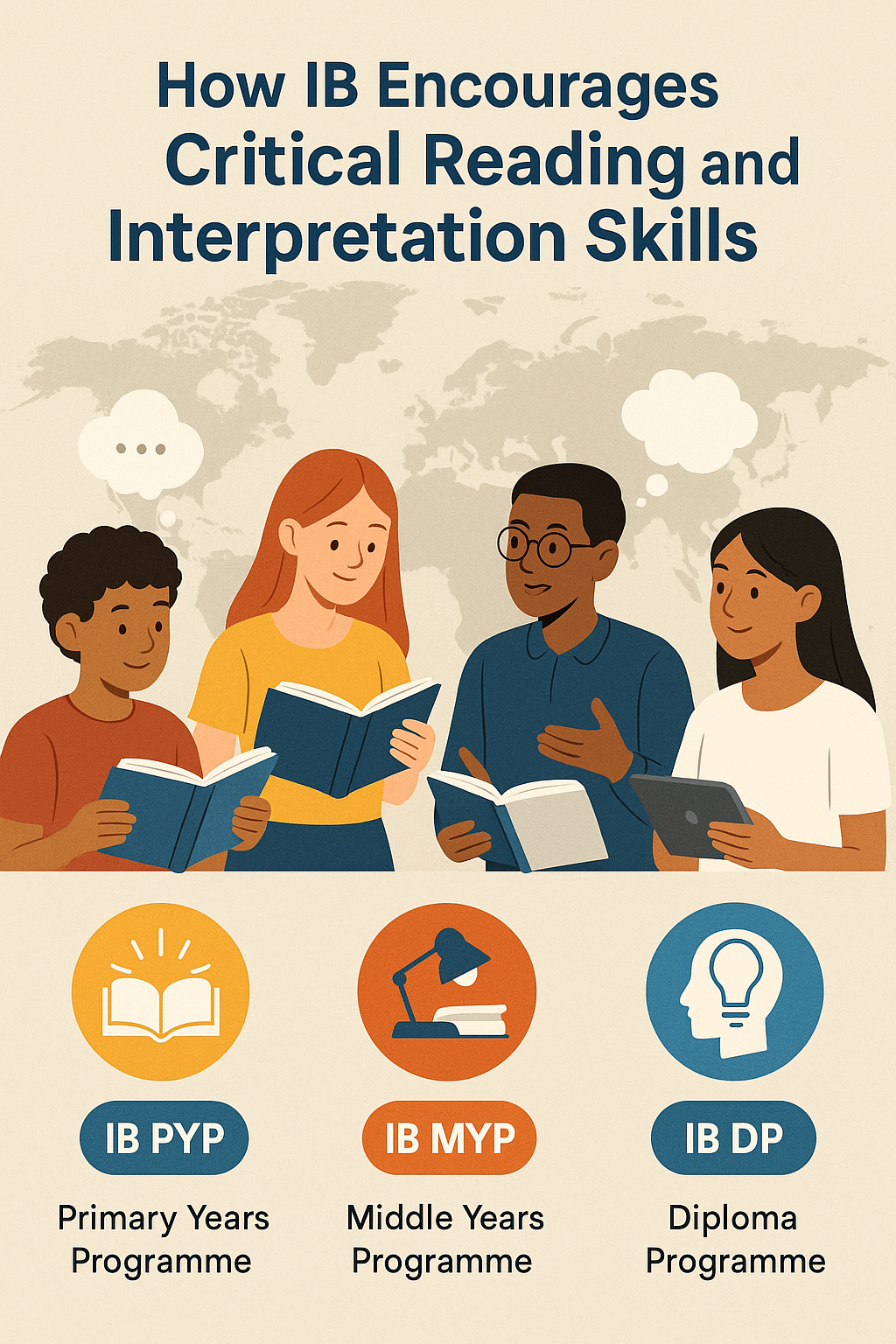
In an age where information is abundant and opinions are easily accessible, the ability to read critically and interpret ideas thoughtfully has become one of the most valuable skills students can develop. The IB syllabus is widely recognised for nurturing these abilities from an early age. Rather than focusing only on memorisation or fixed answers, the IB curriculum trains students to question, analyse, interpret, and reflect on what they read across subjects.
Critical reading and interpretation are not limited to language or literature classes in the IB. These skills are woven into every subject area, from sciences and humanities to mathematics and arts. Through the IB PYP, IB MYP, and IB DP, students learn to engage deeply with texts, data, arguments, and perspectives. This article explores how the IB systematically develops strong critical reading and interpretation skills and why these skills are essential for academic success and lifelong learning.
What Critical Reading Really Means in the IB Context
Critical reading goes beyond understanding the surface meaning of a text. It involves questioning the author’s intent, evaluating evidence, identifying assumptions, and forming independent interpretations. In the IB curriculum, students are taught not to accept information at face value but to engage with it actively.
From a young age, IB learners are encouraged to ask why a text was written, whose perspective it represents, and what might be missing. This habit helps students become thoughtful readers who can navigate complex material with confidence. An overview of how this philosophy shapes IB learning expectations can be found in the IB programme guide for students, demands and rewards.
Why Interpretation Skills Matter Beyond Exams
Interpretation skills allow students to connect ideas, evaluate arguments, and express informed opinions. These abilities are essential not only for exams but also for university studies and real-world decision-making. Students who interpret well can adapt knowledge to new situations and think independently.
The IB curriculum places strong emphasis on developing these transferable skills. Universities value IB students for their ability to read academic texts critically and articulate well-reasoned interpretations. The long-term benefits of this approach are explained in the IB curriculum university preparation guide.
How Inquiry-Based Learning Strengthens Reading Skills
Inquiry-based learning is a cornerstone of the IB syllabus. Instead of passively receiving information, students explore questions and investigate multiple sources. Reading becomes a tool for discovery rather than a task to complete.
Through inquiry, students learn to compare viewpoints, assess credibility, and synthesise information. This naturally strengthens critical reading skills. Platforms like AllRounder.ai complement this approach by offering structured resources that encourage students to explore topics deeply while maintaining clarity and focus.
Developing Interpretation Skills Through the IB PYP
The IB PYP introduces critical reading and interpretation in age-appropriate ways. Young learners explore stories, images, and informational texts through guided questions and discussions. Teachers encourage students to share interpretations, even when they differ.
This early exposure builds confidence and curiosity. Students learn that there can be multiple valid interpretations of a text. Parents can explore how these foundations are built through the IB PYP curriculum primary years programme guide, which explains how inquiry and reflection are embedded in early learning.
Strengthening Analytical Reading in the IB MYP
As students move into the IB MYP, reading tasks become more complex. Texts often include global issues, historical perspectives, and interdisciplinary themes. Students are encouraged to analyse language, structure, and context.
Interpretation in the IB MYP involves connecting texts to real-world situations and personal experiences. This deepens understanding and relevance. Students begin to justify interpretations with evidence, a skill that prepares them for advanced academic work.
Advanced Interpretation in the IB DP
The IB DP places significant emphasis on sophisticated reading and interpretation. Students engage with challenging academic texts, research papers, and philosophical arguments. Subjects like Theory of Knowledge require students to question how knowledge is constructed and communicated.
The Extended Essay further strengthens interpretation skills by requiring independent research and critical evaluation of sources. A detailed look at subject demands and benefits at this stage is available in the IBDP curriculum subjects benefits guide. These experiences prepare students for university-level reading and writing.
Reading Across Subjects in the IB Curriculum
One of the unique aspects of the IB syllabus is that critical reading is not limited to language subjects. Science students interpret data, evaluate research methods, and question conclusions. Humanities students analyse historical sources and ethical perspectives. Even mathematics involves interpreting problems and understanding underlying assumptions.
This cross-disciplinary approach ensures that students practise interpretation in varied contexts. A breakdown of how reading and thinking skills are integrated across subjects can be explored in the IB syllabus key learning areas breakdown.
Encouraging Multiple Perspectives and Open-Minded Reading
The IB curriculum emphasises global awareness and cultural understanding. Students read texts from diverse cultures and viewpoints, learning to appreciate differences and challenge biases.
This exposure helps students interpret texts more thoughtfully and empathetically. Comparing global perspectives sharpens critical thinking and encourages open-mindedness. The contrast between IB and more traditional approaches is discussed in IB schools in India vs traditional institutions.
Reflection as a Tool for Deeper Interpretation
Reflection plays a vital role in strengthening interpretation skills. IB students regularly reflect on what they read, how their understanding has evolved, and what questions remain unanswered. Reflection encourages metacognition, the ability to think about one’s own thinking.
This habit helps students refine interpretations over time and recognise personal biases. Reflective reading leads to deeper comprehension and more nuanced responses.
Supporting Critical Reading With the Right Learning Tools
While the IB promotes independence, students benefit from resources that clarify expectations and provide guided practice. Digital platforms like IB courses offer structured lessons and practice that support analytical reading without overwhelming students.
Students studying under other boards can also build critical reading skills through CBSE courses and ICSE courses. Board-aligned resources help students practise interpretation within familiar curriculum frameworks.
Grade-Wise Development of Reading Skills
Critical reading skills develop progressively with age. Younger students focus on comprehension and basic interpretation, while older students engage in analysis and evaluation. Tailored academic support helps students grow confidently at each stage.
Students can access grade-specific learning support through Grade 8 courses, Grade 9 courses, Grade 10 courses, Grade 11 courses, and Grade 12 courses. This structured progression strengthens interpretation skills steadily.
Practising Interpretation Through Assessment and Feedback
Assessment in the IB syllabus often focuses on analysis and interpretation rather than recall. Students are asked to justify viewpoints, interpret data, and evaluate arguments. Regular practice builds confidence and clarity.
Using tools like practice tests allows students to practise analytical questions and reflect on feedback. This continuous cycle of practice and reflection refines reading and interpretation skills.
Using Interactive Learning to Strengthen Engagement
Interactive learning supports critical reading by encouraging active participation. Discussions, debates, and interactive activities help students articulate interpretations and listen to others.
Educational tools such as learning games can reinforce comprehension and reasoning in engaging ways. When learning feels interactive, students are more motivated to read thoughtfully.
Helping Parents Understand the IB Reading Approach
Parents play an important role in supporting reading habits. Understanding how the IB approaches interpretation helps parents encourage discussion rather than focus solely on answers.
A helpful overview for families is provided in the IB curriculum guide for parents in Kolkata. When parents understand the emphasis on thinking and interpretation, they can support learning more effectively at home.
Preparing IB Students for Academic and Real World Reading
The ability to interpret complex texts prepares IB students for higher education and professional life. University courses require students to analyse research, evaluate arguments, and form independent conclusions.
The IB curriculum ensures students are ready for these challenges by embedding critical reading across subjects. These skills remain valuable long after exams are over.
Conclusion: Why IB Creates Thoughtful Readers and Thinkers
The IB syllabus develops critical reading and interpretation skills through inquiry, reflection, and exposure to diverse perspectives. From the IB PYP to the IB DP, students are encouraged to question, analyse, and interpret rather than memorise.
By integrating these skills across subjects and grade levels, the IB curriculum prepares students for academic success and thoughtful engagement with the world. With supportive platforms like AllRounder.ai and a strong emphasis on independent thinking, IB learners grow into confident readers who can interpret information with clarity, depth, and purpose.
Learn how IB students can balance school resources and independent study across IB PYP, MYP, and DP to build...
Learn how parents can identify quality academic support for IB learners that aligns with IB PYP, MYP, and DP values...
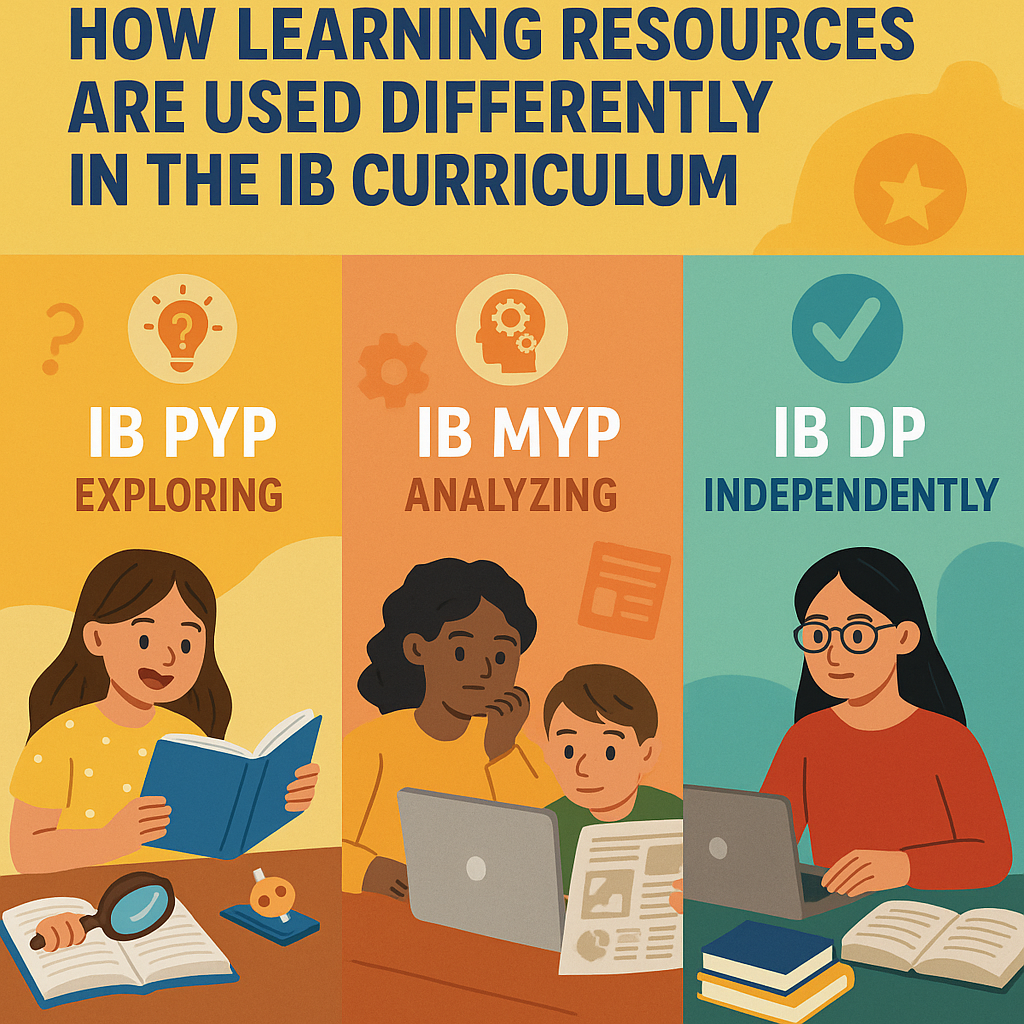
Discover how learning resources are used differently in the IB curriculum and how IB PYP, MYP, and DP students...
Learn how the IB curriculum helps students develop strong research and writing skills across IB PYP, MYP, and DP,...
Discover why reflection is a core skill in the IB education system and how it supports independent thinking,...
Learn how parents can support IB students across IB PYP, MYP, and DP without micromanaging, while building...
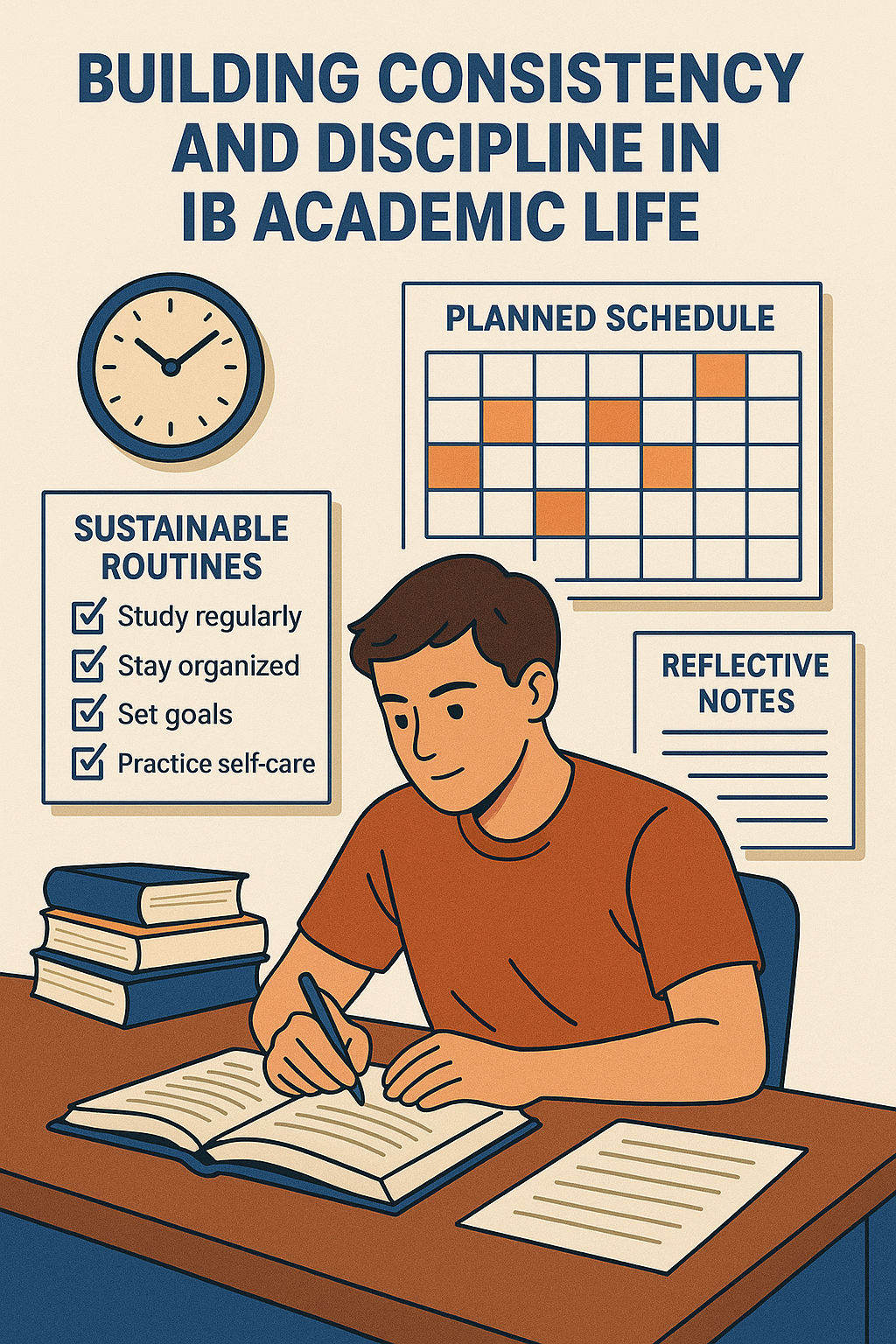
Learn how IB students can build consistency and discipline through sustainable routines, reflective habits, and...
Discover how the IB curriculum teaches students effective time management and academic planning skills that support...
Learn how IB students can avoid burnout while managing coursework by building balanced routines, aligning study...
Discover study habits that align with the IB curriculum and help students succeed through inquiry-based learning,...
Learn how the IB curriculum builds strong research and reading habits through inquiry-based learning, reflection,...
Discover how the IB syllabus builds strong critical reading and interpretation skills through inquiry-based...
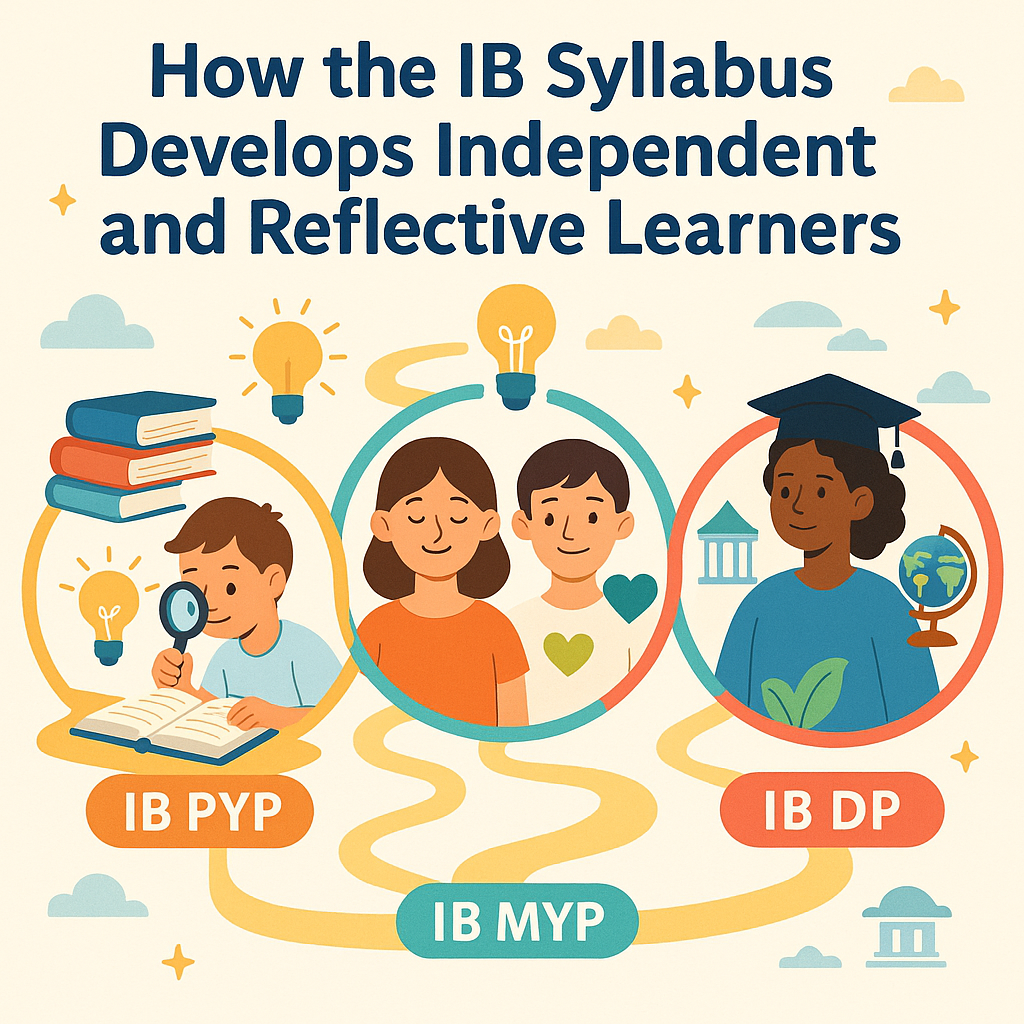
Discover how the IB syllabus builds independent and reflective learners through inquiry-based learning, emotional...
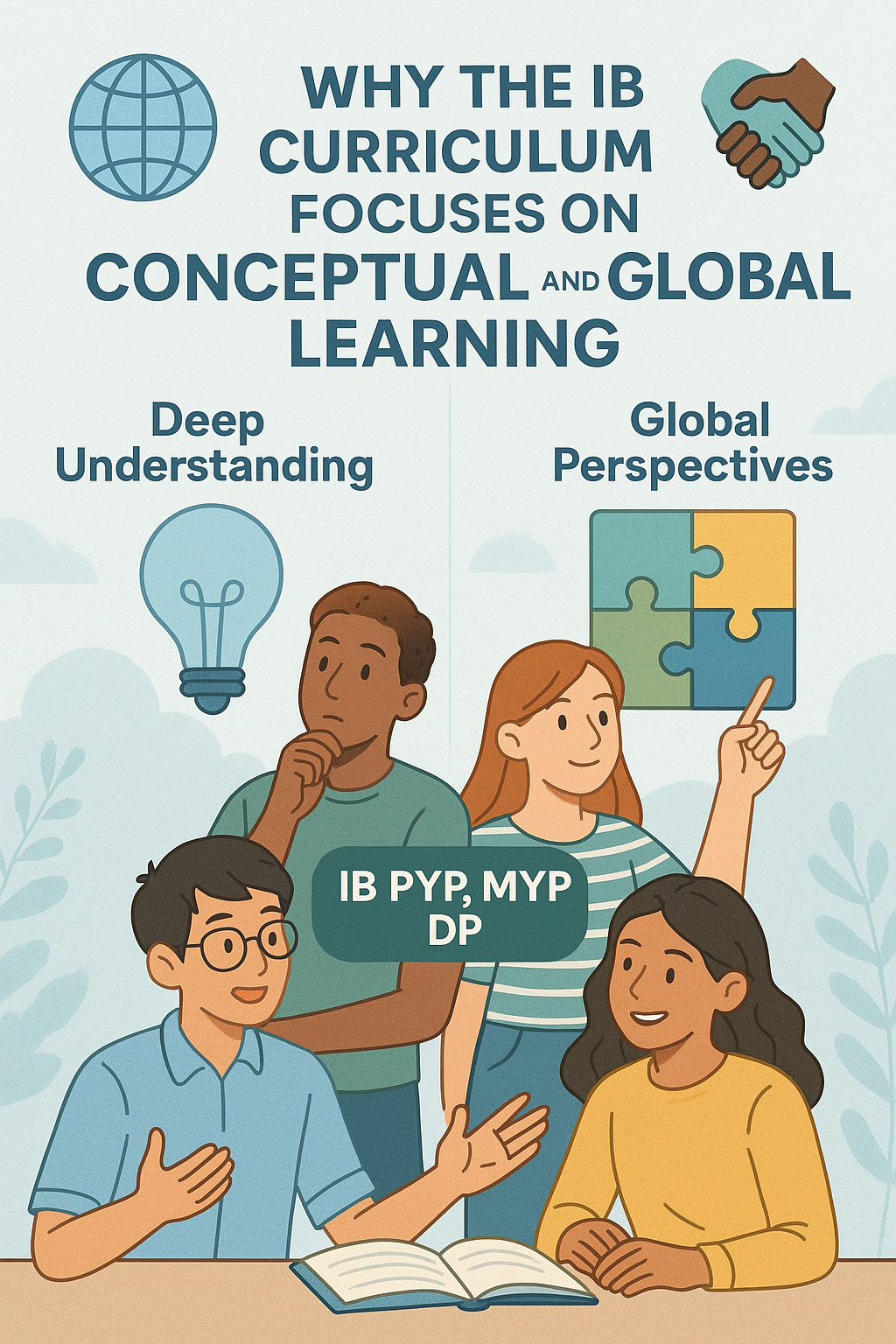
Learn why the IB curriculum focuses on conceptual and global learning, how IB PYP, MYP, and DP develop deep...
Understand the educational philosophy behind the IB board, including IB PYP, MYP, and DP, and learn how IB learning...
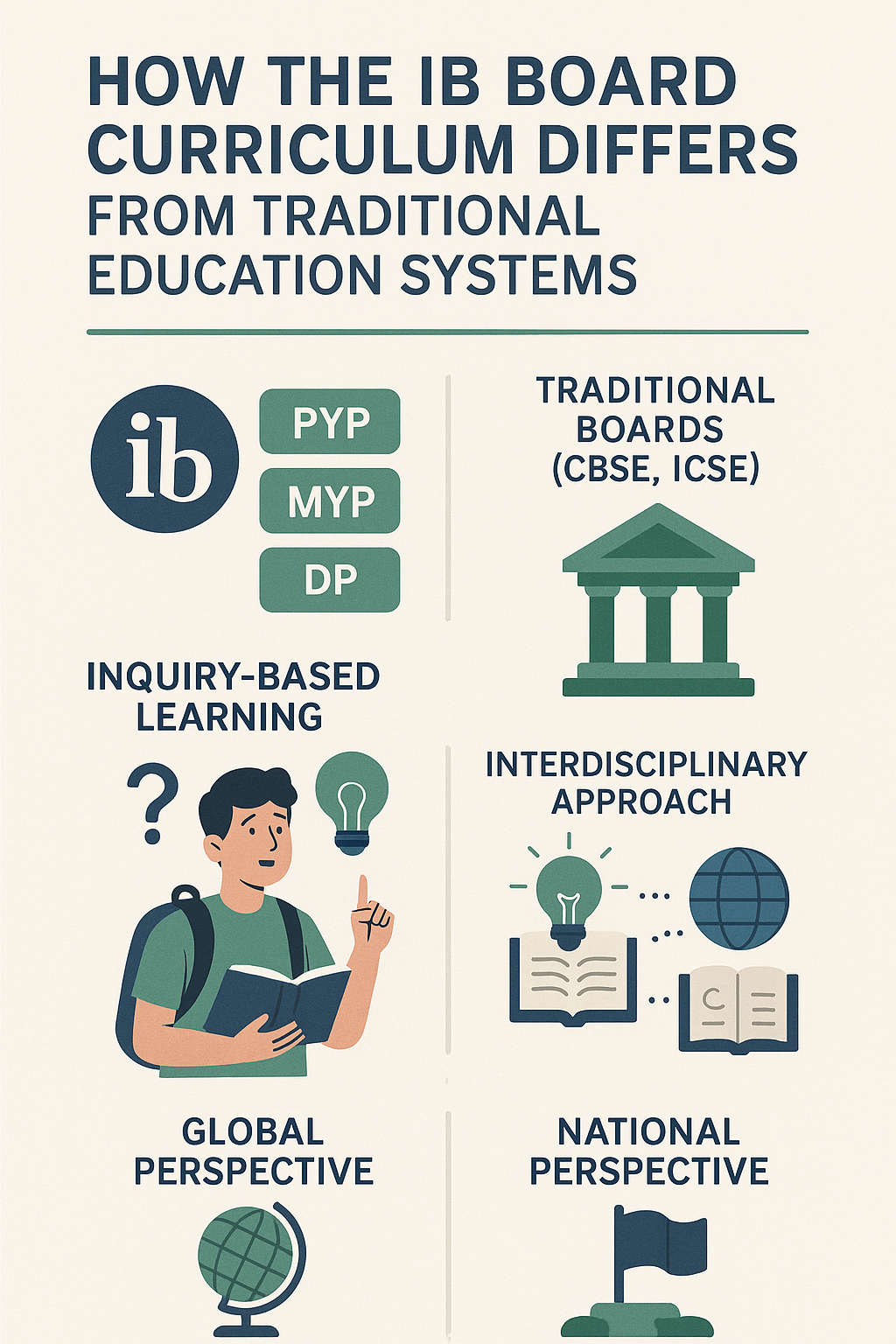
Explore how the IB board curriculum differs from traditional education systems like CBSE and ICSE, and understand IB...
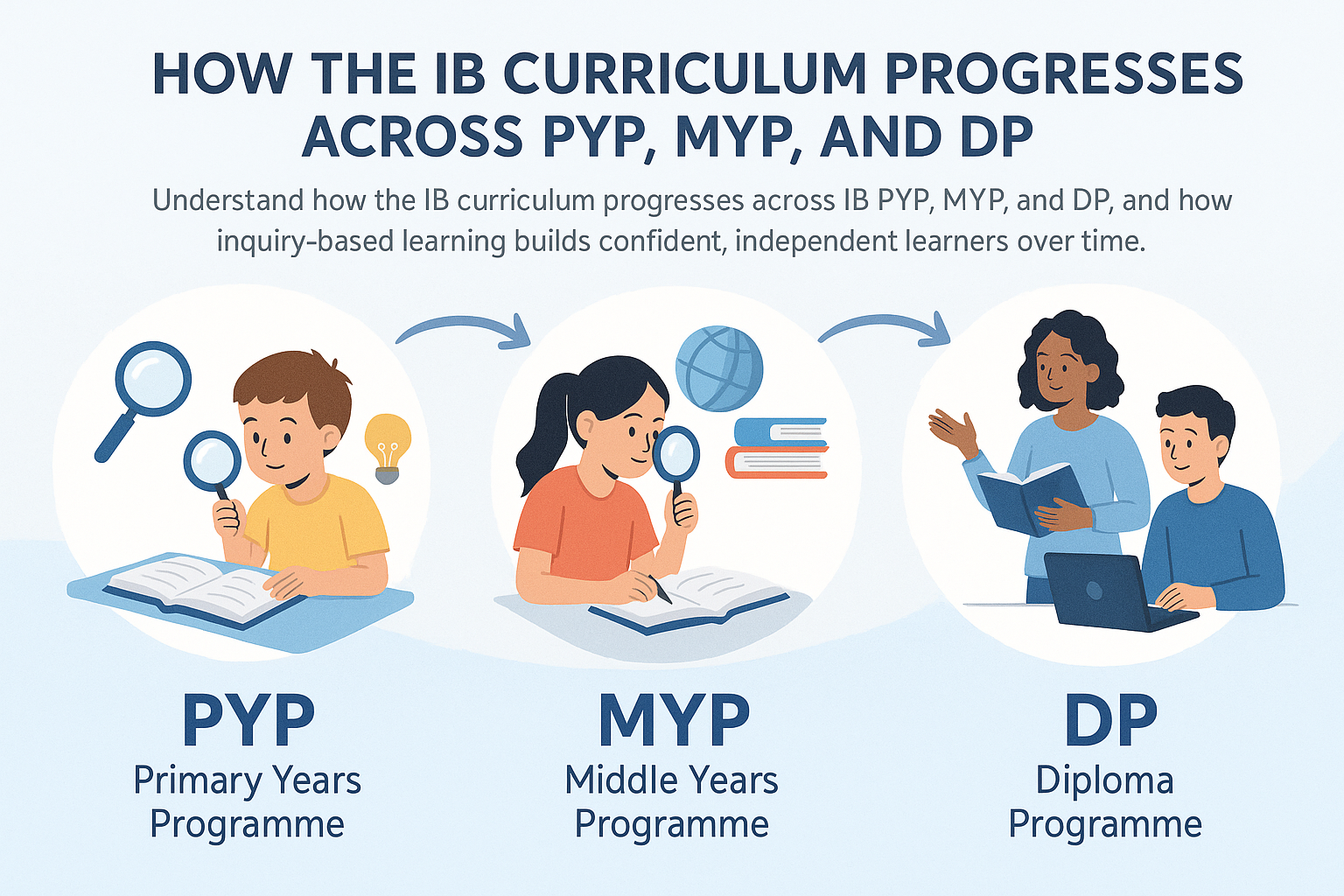
Understand how the IB curriculum progresses across IB PYP, MYP, and DP, and how inquiry-based learning builds...
A parent friendly guide to understanding the IB curriculum, IB PYP, MYP, and DP, and how inquiry based learning...
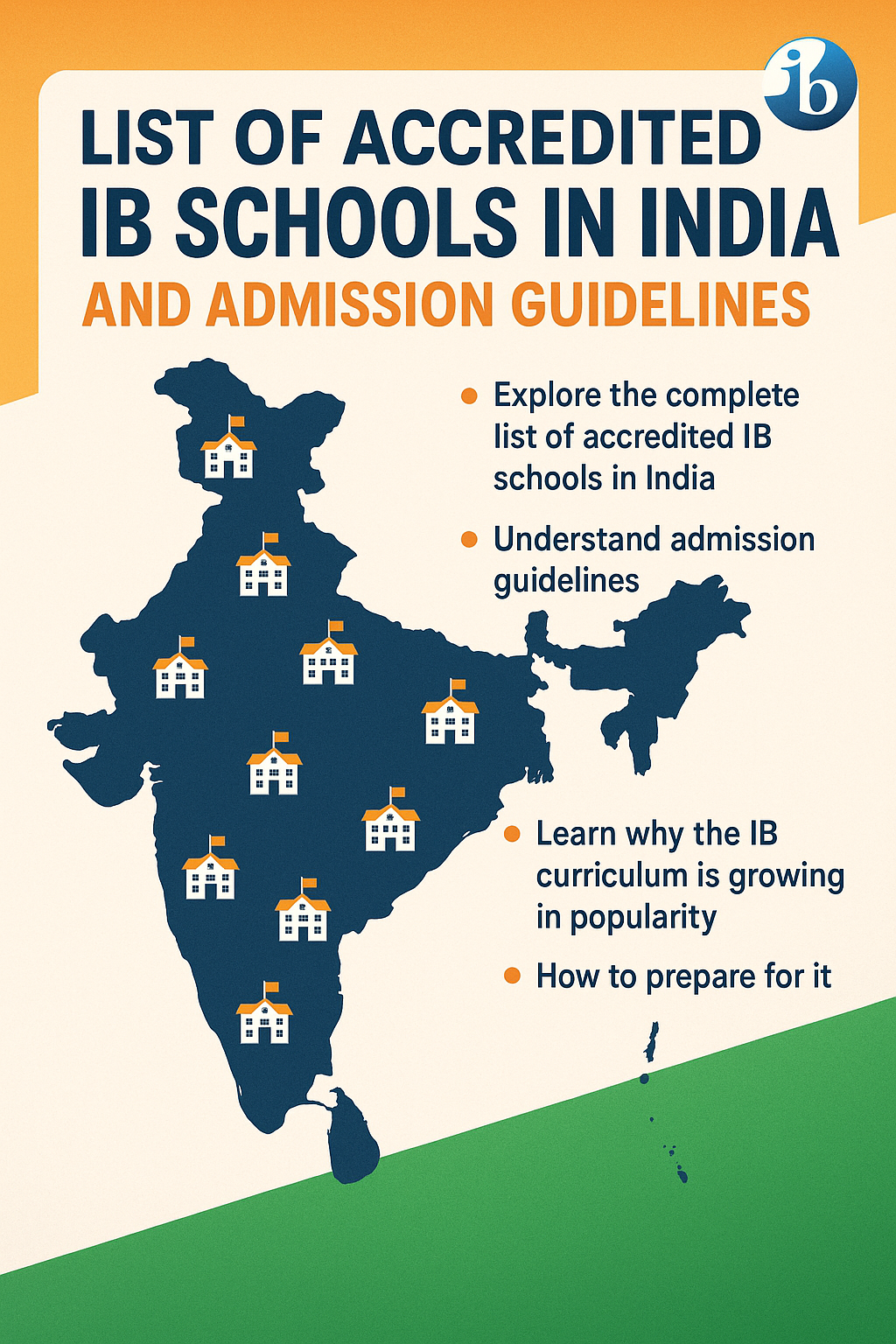
Explore the complete list of accredited IB schools in India and understand admission guidelines. Learn why the IB...

A complete guide for parents in Kolkata to understand the IB curriculum. Learn about PYP, MYP, IBDP stages,...

Discover the IB Diploma Programme curriculum, subject groups, core requirements, and benefits of IB. Learn how...

Thinking of joining the IB Programme? Learn about its rewards, challenges, and how AllRounder.ai can help you...

Discover the IB PYP curriculum framework, key learning areas, transdisciplinary themes, and how it nurtures lifelong...

Explore the IB syllabus structure, subject groups, and core components like TOK, CAS, and EE. A complete guide to IB...

Discover how the IB curriculum prepares students for Ivy League and top global universities. Explore skills,...

Explore how to choose IB subjects wisely. Learn about IB subject groups, HL vs SL, and combinations aligned with...

Understand the 10 IB Learner Profile attributes and why they matter in shaping global, future-ready students.

A detailed comparison of IB, CBSE, and ICSE boards. Learn about curriculum, teaching methods, and which board best...

Discover the IB Board – its global recognition, programs, and unique education philosophy.
Resources
-

Your complete JEE Advanced resource for eligibility, exam dates, syllabus, marks vs rank, and...
-
Understand the entire JEE Main process, from application and eligibility rules to the exam...
-

Explore the IB Board – a global curriculum emphasizing holistic, student-centered learning...
-

Learn about CBSE – India’s national school board offering a standardized curriculum, NCERT...
-

Explore everything about the ICSE board – its curriculum, subjects, exam format, and academic...