Professional Courses
Industry-relevant training in Business, Technology, and Design
Categories
Interactive Games
Fun games to boost memory, math, typing, and English skills
Typing
Memory
Math
English Adventures
Knowledge

How the IB Syllabus Develops Independent and Reflective Learners

How the IB Syllabus Develops Independent and Reflective Learners
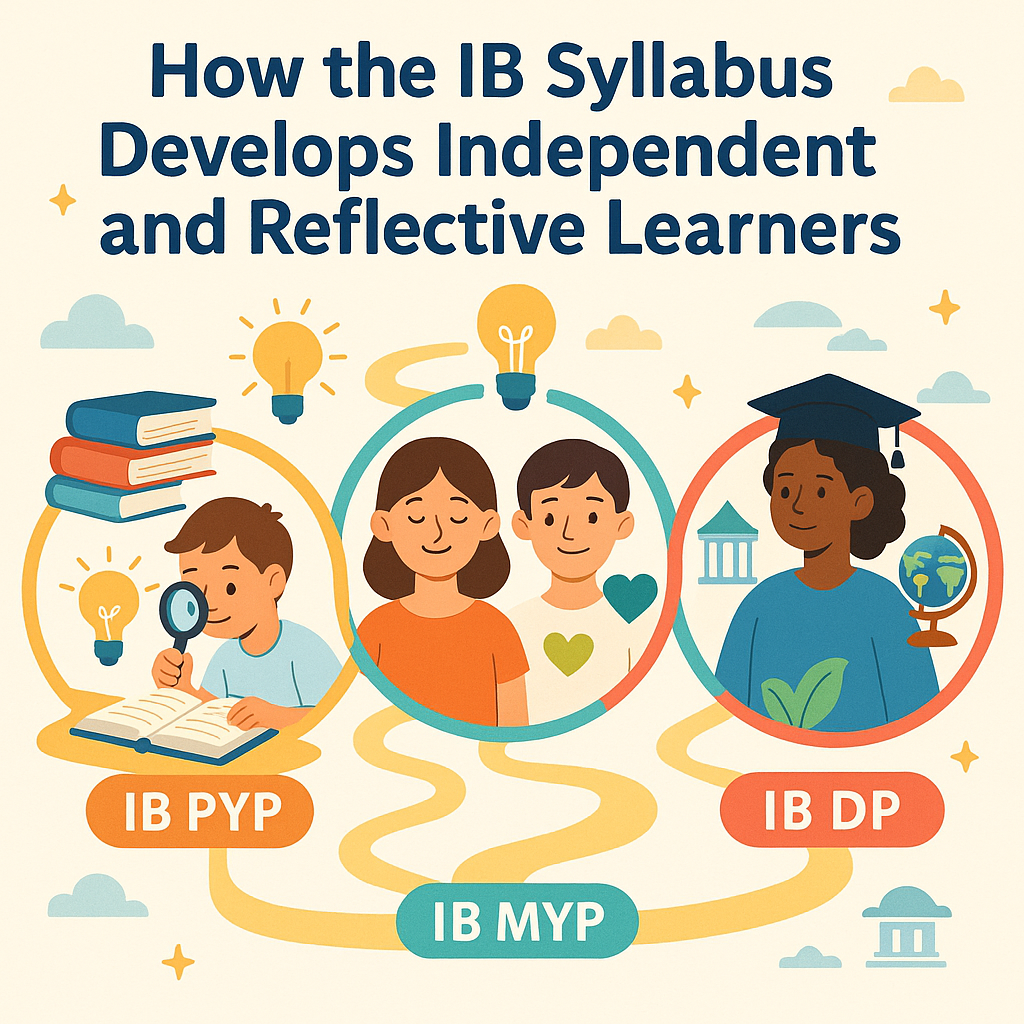
In a rapidly changing world, education is no longer just about memorising facts or scoring well in exams. Students are expected to think critically, reflect deeply, adapt to new situations, and take ownership of their learning. This is where the IB syllabus stands out. Designed with a strong focus on inquiry, reflection, and global awareness, the IB curriculum prepares students not just for exams, but for life beyond the classroom.
Parents and students often choose the IB because it nurtures curiosity, independence, and confidence from an early age. Whether through the IB PYP, IB MYP, or IB DP, learners are encouraged to ask questions, explore real-world issues, and reflect on their learning journey. This article explores how the IB syllabus systematically develops independent and reflective learners, while also showing how the right academic support can strengthen this process.
Understanding the Philosophy Behind the IB Curriculum
At its core, the IB curriculum is built around the idea that students learn best when they are actively involved in the learning process. Instead of being passive recipients of information, IB students are encouraged to investigate concepts, form opinions, and reflect on outcomes. This philosophy shifts the role of the student from follower to thinker.
The IB places equal importance on academic knowledge, personal growth, and ethical understanding. Learning is connected to real-life contexts, which helps students see purpose in what they study. An overview of this philosophy and how it shapes learning expectations is explained clearly in the IB programme guide for students, demands and rewards.
How Inquiry-Based Learning Builds Independence
Inquiry-based learning is one of the defining features of the IB syllabus. Students are encouraged to explore topics through questions rather than memorising predefined answers. Teachers guide discussions, but students take responsibility for researching, analysing, and presenting their findings.
This approach builds independence by teaching students how to learn rather than what to learn. They develop skills such as information literacy, problem-solving, and critical thinking. Over time, students become confident in navigating unfamiliar topics without constant supervision. Platforms like AllRounder.ai complement this approach by offering structured yet flexible learning resources that allow students to practise independent study at their own pace.
Reflection as a Core Learning Skill in IB
Reflection is not treated as an afterthought in the IB syllabus. It is an integral part of learning. Students are regularly asked to reflect on what they learned, how they learned it, and how they can improve. This habit of reflection strengthens self-awareness and emotional maturity.
Through reflective practices, students learn to identify strengths, acknowledge challenges, and set meaningful goals. Reflection helps learners move beyond grades and focus on personal growth. This reflective mindset becomes especially valuable during demanding academic phases and later in higher education and professional life.
The Role of IB PYP in Developing Early Independence
The IB PYP focuses on nurturing curiosity and confidence in younger learners. Instead of rigid textbooks, students explore themes that connect subjects such as science, language, and social studies. Learning becomes an interactive and meaningful experience rather than a checklist of topics.
Students are encouraged to ask questions, share ideas, and reflect on their experiences. This early exposure to independent thinking lays a strong foundation for future academic stages. Parents seeking a detailed overview can explore the IB PYP curriculum primary years programme guide, which explains how inquiry and reflection are embedded from the beginning.
How IB MYP Strengthens Critical Thinking
As students progress into the IB MYP, learning becomes more structured while retaining inquiry-driven methods. Subjects are connected through global contexts, helping students understand how academic concepts apply to real-world situations.
Students in the IB MYP are encouraged to plan projects, manage deadlines, and evaluate outcomes independently. Reflection becomes more structured, with students analysing both process and performance. These skills help learners become self-directed and resilient, especially during middle school years when emotional and academic pressures increase.
The IB DP and Advanced Reflective Learning
The IB DP represents the most academically rigorous stage of the IB curriculum. Students are required to balance multiple subjects while engaging in independent research and reflective coursework. Components such as the Extended Essay and Theory of Knowledge demand deep thinking and self-management.
Through these experiences, students learn to evaluate sources, question assumptions, and articulate well-reasoned arguments. A deeper understanding of subjects and benefits at this stage is outlined in the IBDP curriculum subjects benefits guide. The emphasis on reflection prepares students for university-style learning, where independence is essential.
How the IB Syllabus Encourages Ownership of Learning
Ownership of learning means students feel responsible for their progress rather than relying solely on teachers or parents. The IB syllabus promotes this by encouraging goal-setting, self-assessment, and continuous reflection.
Students learn to track their progress, identify gaps, and adjust strategies. This mindset reduces dependency and builds confidence. When combined with adaptive learning platforms like IB courses, students gain access to resources that support independent revision and deeper understanding.
Emotional Growth Through Reflective Practices
Reflection in the IB syllabus goes beyond academics. Students are encouraged to reflect on emotions, values, and social responsibilities. This holistic approach helps learners manage stress, develop empathy, and build emotional intelligence.
Emotionally reflective students are better equipped to handle academic setbacks and peer pressure. They learn to view challenges as opportunities for growth rather than failures. This emotional maturity is one of the key reasons the IB curriculum is valued by parents and universities worldwide.
Comparing IB With Other Educational Boards
While boards such as CBSE and ICSE focus on strong academic foundations, the IB curriculum places additional emphasis on inquiry and reflection. Students transitioning between boards often notice differences in learning style and expectations.
For families exploring different options, structured support is available through CBSE courses and ICSE courses. Understanding these differences helps parents choose the environment best suited to their child’s learning style and long-term goals.
Grade-Wise Independence in IB Learning
Independence develops gradually across grade levels. Younger students focus on exploration, while older students manage complex schedules and projects. Tailored academic support helps students stay confident during these transitions.
Students can strengthen their learning habits through grade-specific resources such as Grade 8 courses, Grade 9 courses, Grade 10 courses, Grade 11 courses, and Grade 12 courses. These pathways align academic depth with emotional readiness.
Using Practice and Feedback to Build Confidence
Regular practice and constructive feedback play a crucial role in independent learning. The IB syllabus encourages continuous assessment rather than one-time testing. This approach reduces exam anxiety and supports steady improvement.
Students benefit from tools like practice tests, which help them assess understanding, reflect on performance, and adjust study strategies. Familiarity with assessment formats builds confidence and emotional balance.
Balancing Academic Rigor With Creativity and Play
While the IB curriculum is academically demanding, it also values creativity and balance. Students are encouraged to explore arts, physical activity, and creative thinking alongside academics.
Educational play supports cognitive flexibility and emotional well-being. Interactive tools such as learning games help students relax while reinforcing concepts, maintaining motivation throughout the school year.
Preparing IB Students for University and Beyond
One of the strongest advantages of the IB syllabus is its focus on long-term readiness. Universities value IB students for their ability to think independently, manage workloads, and reflect critically.
The connection between the IB curriculum and higher education success is explored in the IB curriculum university preparation guide. Skills developed through inquiry and reflection continue to benefit students well beyond school.
Supporting IB Learners With the Right Resources
While the IB syllabus promotes independence, the right guidance ensures students do not feel overwhelmed. Access to structured explanations, revision tools, and progress tracking enhances learning efficiency.
A comprehensive understanding of how IB learning is structured can be found in the IB syllabus key learning areas breakdown. When students understand expectations clearly, they approach learning with confidence and purpose.
Helping Parents Understand the IB Journey
Parents play a vital role in supporting independent learners. Understanding the IB philosophy helps parents offer guidance without micromanaging. Clear insights into the curriculum structure and expectations are shared in the IB curriculum guide for parents in Kolkata, which applies broadly to families exploring IB education.
Conclusion: Why the IB Syllabus Shapes Thoughtful Learners
The IB syllabus goes beyond academic achievement. It nurtures curiosity, reflection, emotional intelligence, and independence. From the IB PYP to the IB DP, students are guided to think deeply, learn responsibly, and reflect meaningfully on their experiences.
By combining inquiry-based learning, reflective practices, and global perspectives, the IB curriculum prepares students for the complexities of modern life. With supportive platforms like AllRounder.ai and the right balance of guidance and independence, IB learners grow into confident individuals who are ready for both academic success and lifelong learning.
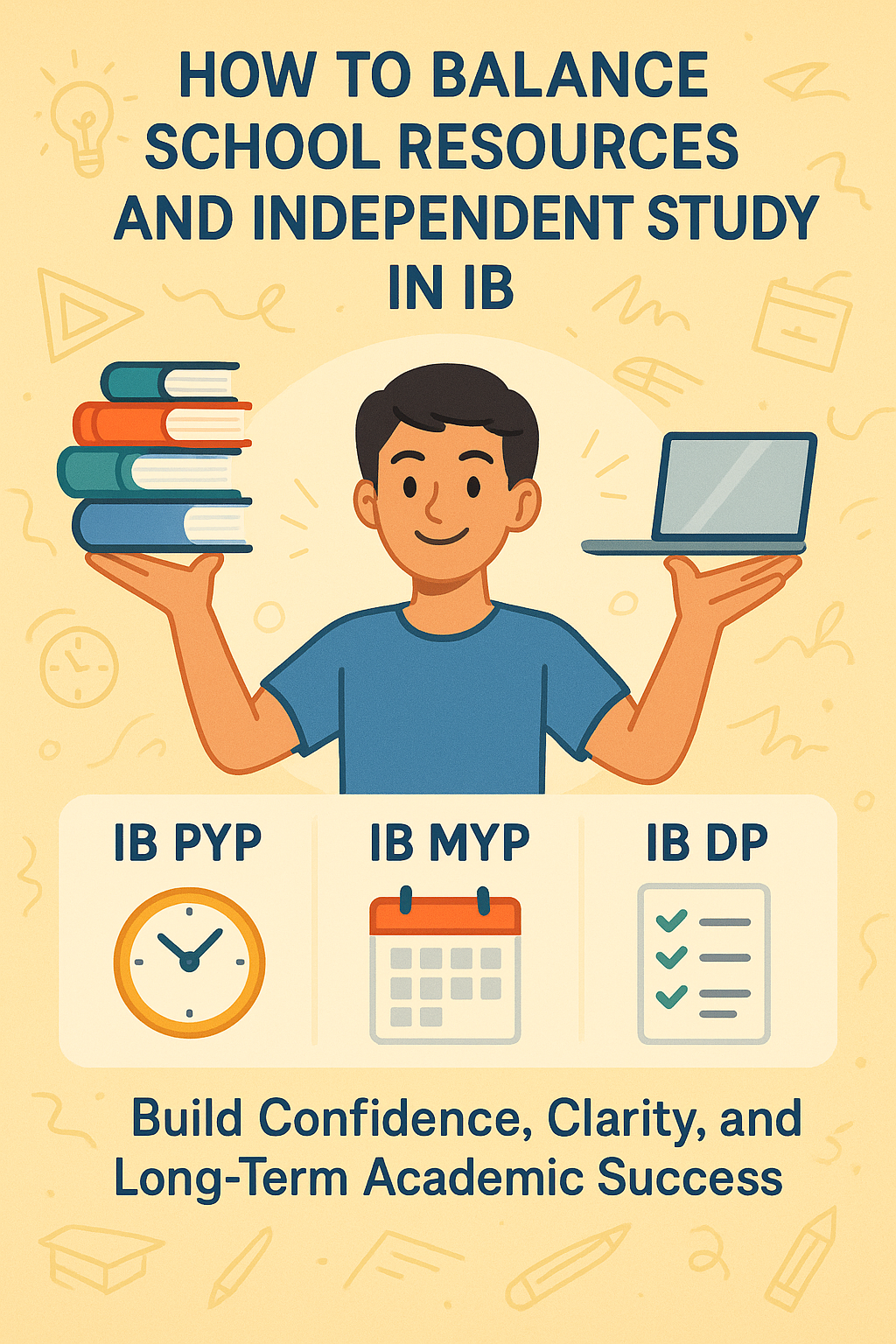
Learn how IB students can balance school resources and independent study across IB PYP, MYP, and DP to build...
Learn how parents can identify quality academic support for IB learners that aligns with IB PYP, MYP, and DP values...
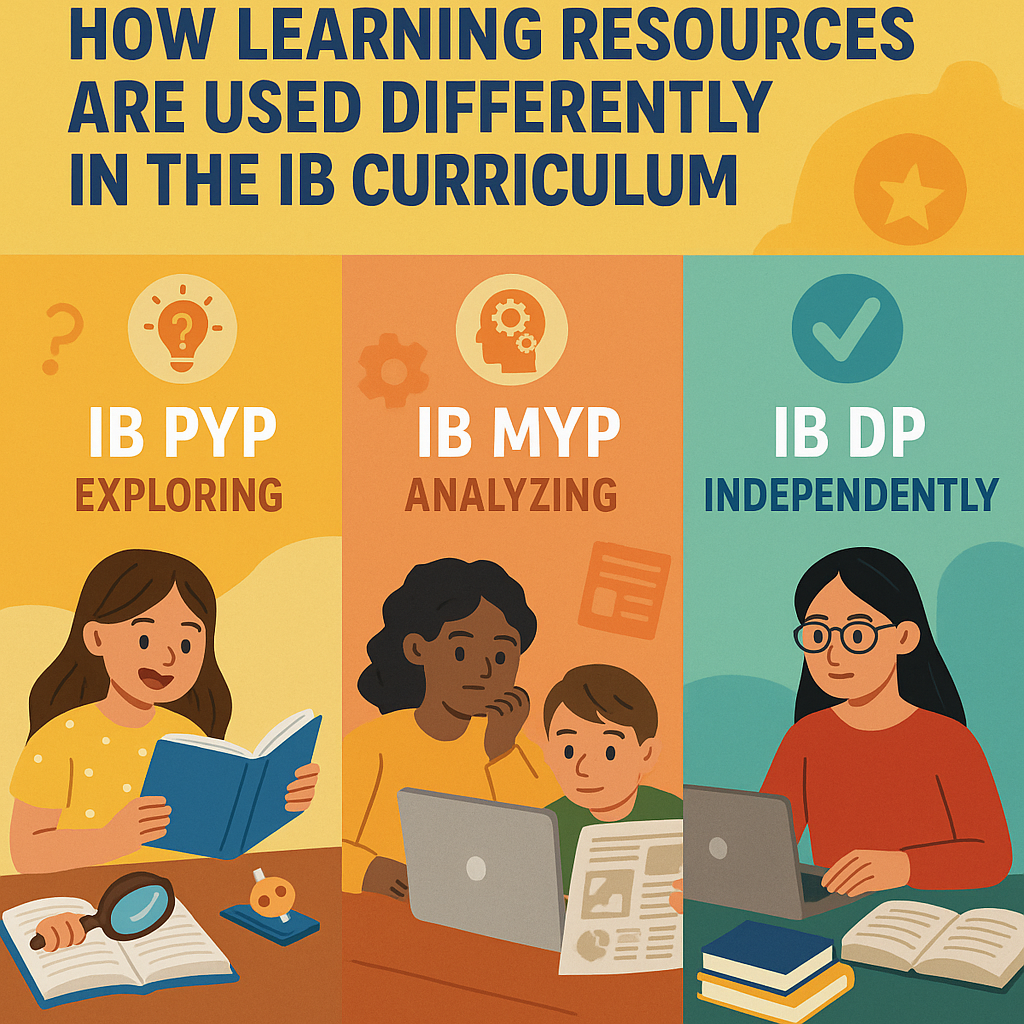
Discover how learning resources are used differently in the IB curriculum and how IB PYP, MYP, and DP students...
Learn how the IB curriculum helps students develop strong research and writing skills across IB PYP, MYP, and DP,...
Discover why reflection is a core skill in the IB education system and how it supports independent thinking,...
Learn how parents can support IB students across IB PYP, MYP, and DP without micromanaging, while building...
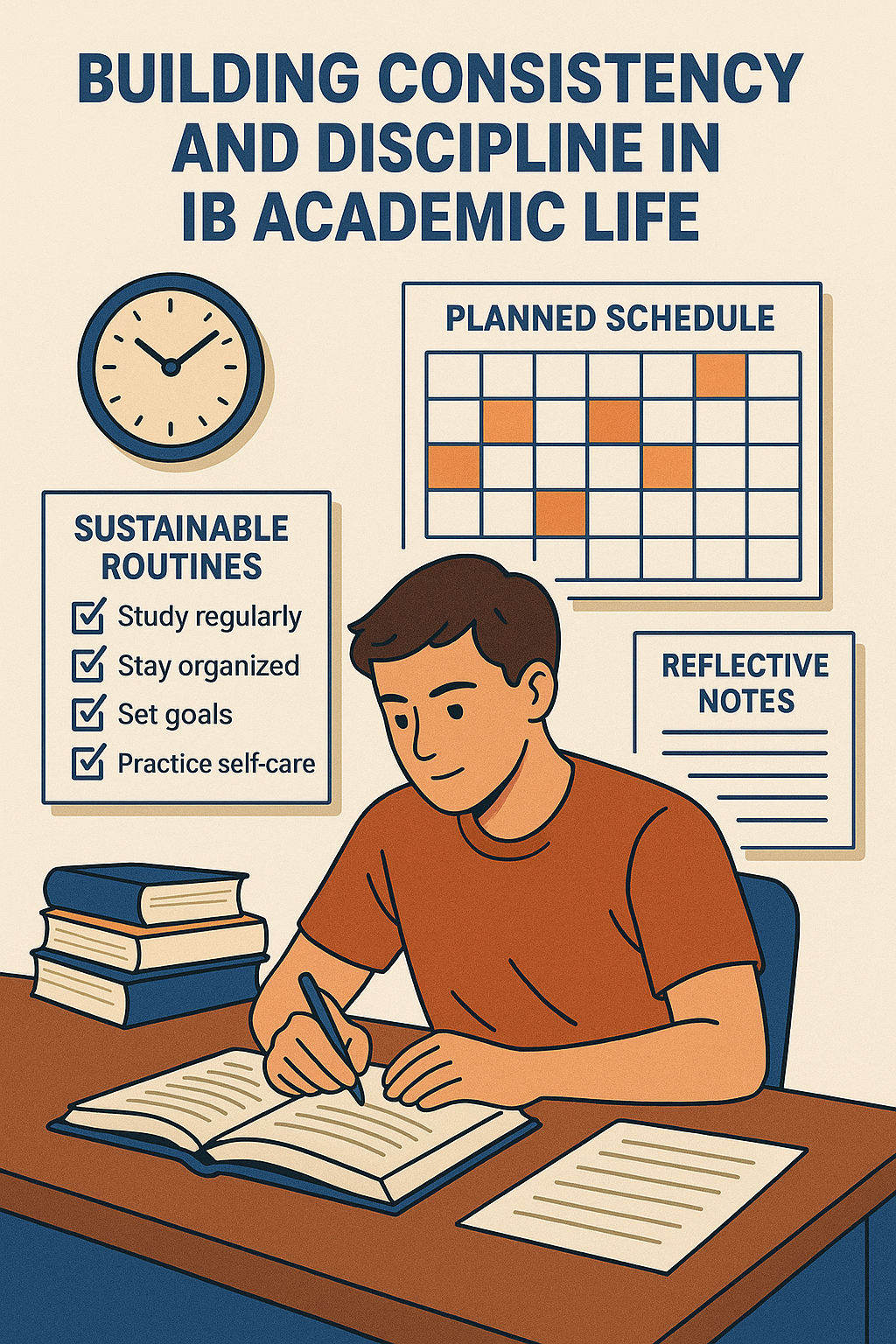
Learn how IB students can build consistency and discipline through sustainable routines, reflective habits, and...
Discover how the IB curriculum teaches students effective time management and academic planning skills that support...
Learn how IB students can avoid burnout while managing coursework by building balanced routines, aligning study...
Discover study habits that align with the IB curriculum and help students succeed through inquiry-based learning,...
Learn how the IB curriculum builds strong research and reading habits through inquiry-based learning, reflection,...
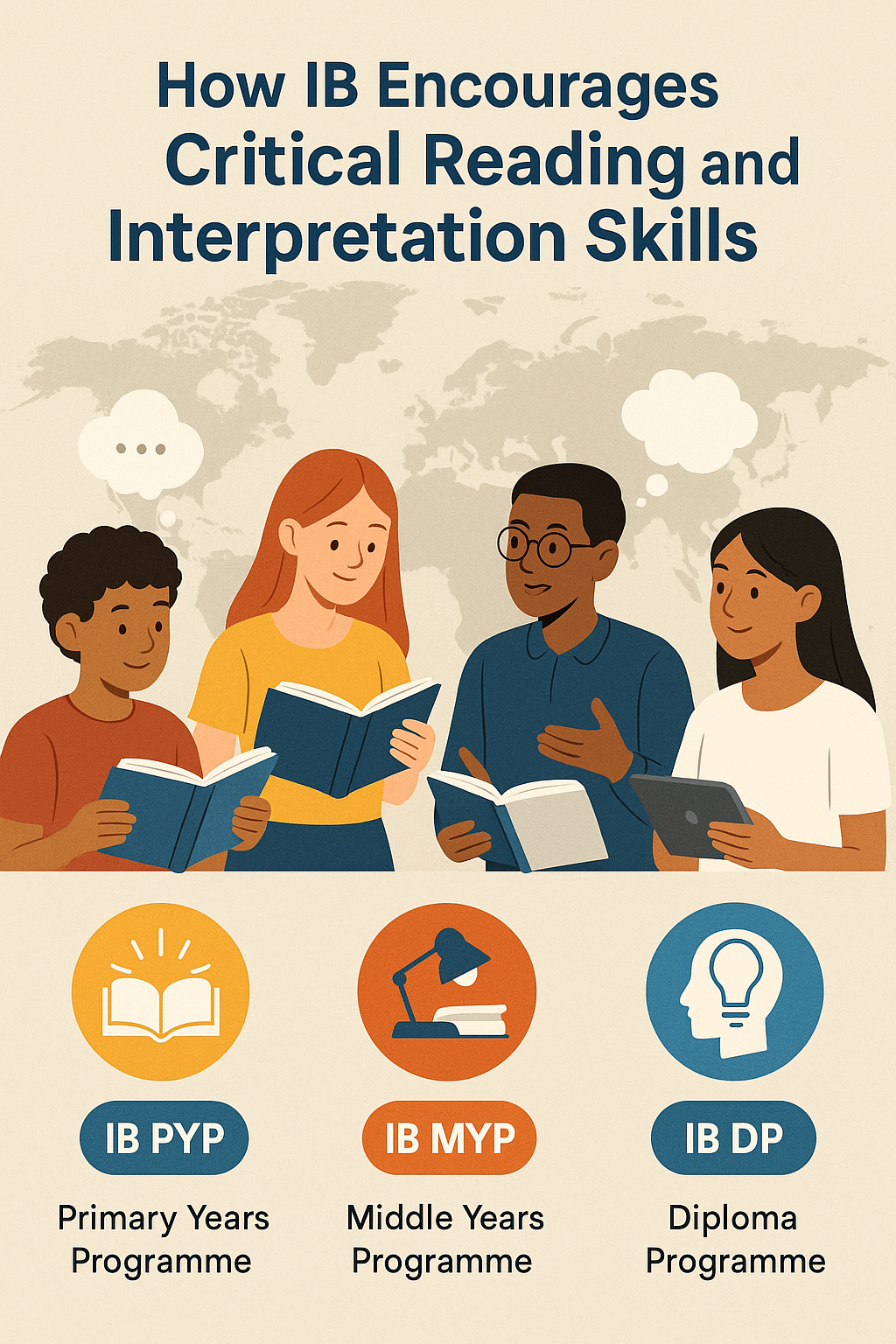
Discover how the IB syllabus builds strong critical reading and interpretation skills through inquiry-based...
Discover how the IB syllabus builds independent and reflective learners through inquiry-based learning, emotional...
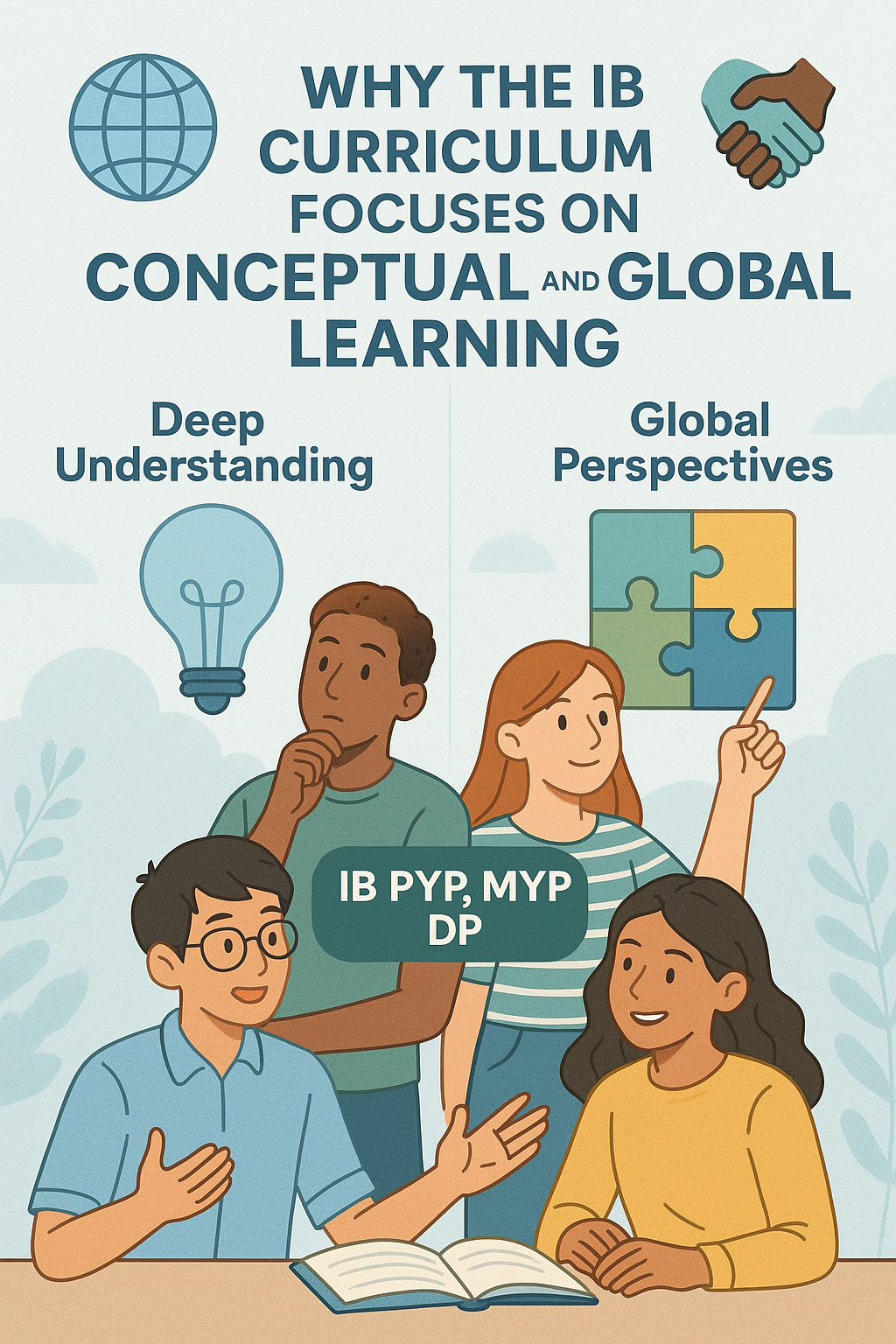
Learn why the IB curriculum focuses on conceptual and global learning, how IB PYP, MYP, and DP develop deep...
Understand the educational philosophy behind the IB board, including IB PYP, MYP, and DP, and learn how IB learning...
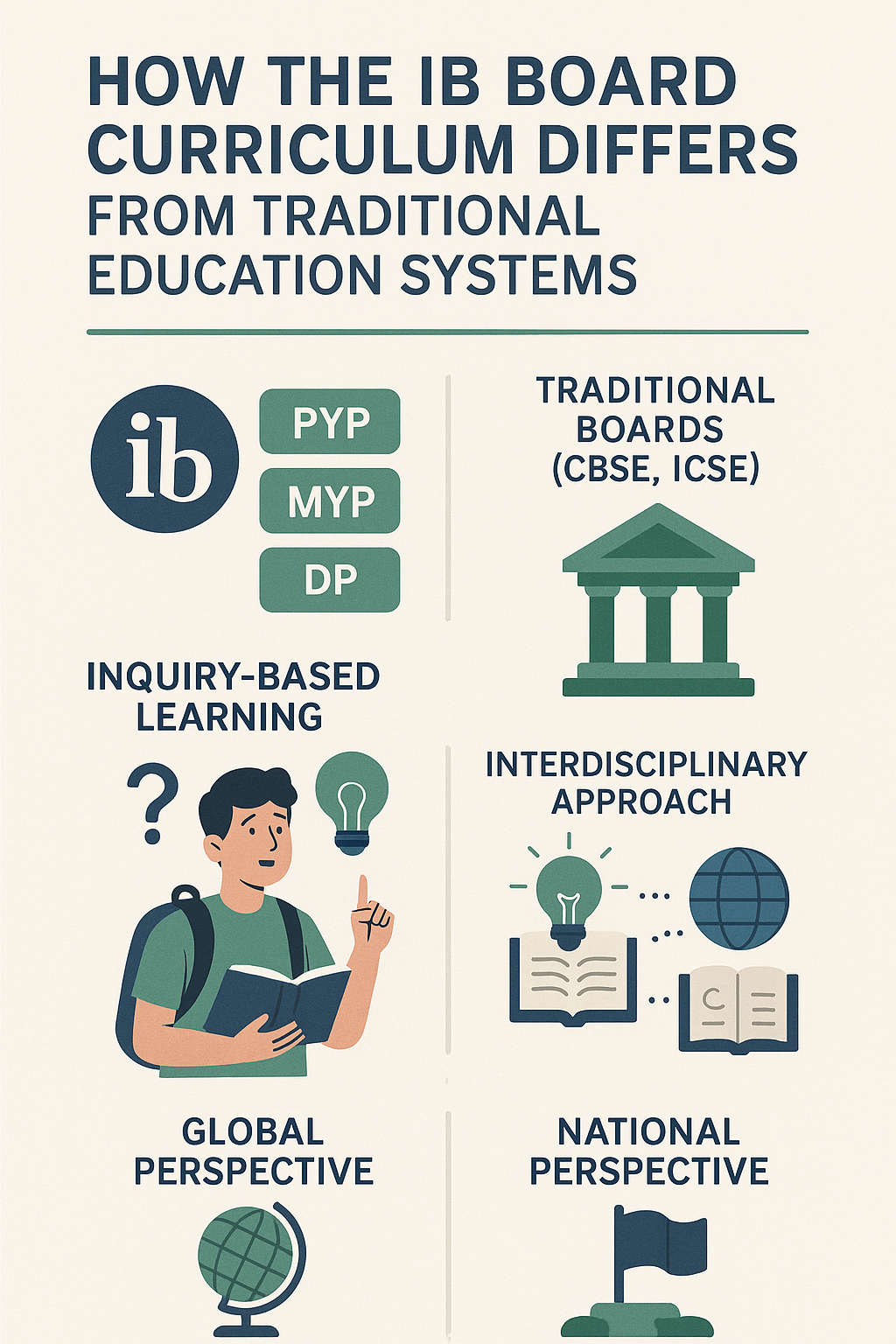
Explore how the IB board curriculum differs from traditional education systems like CBSE and ICSE, and understand IB...
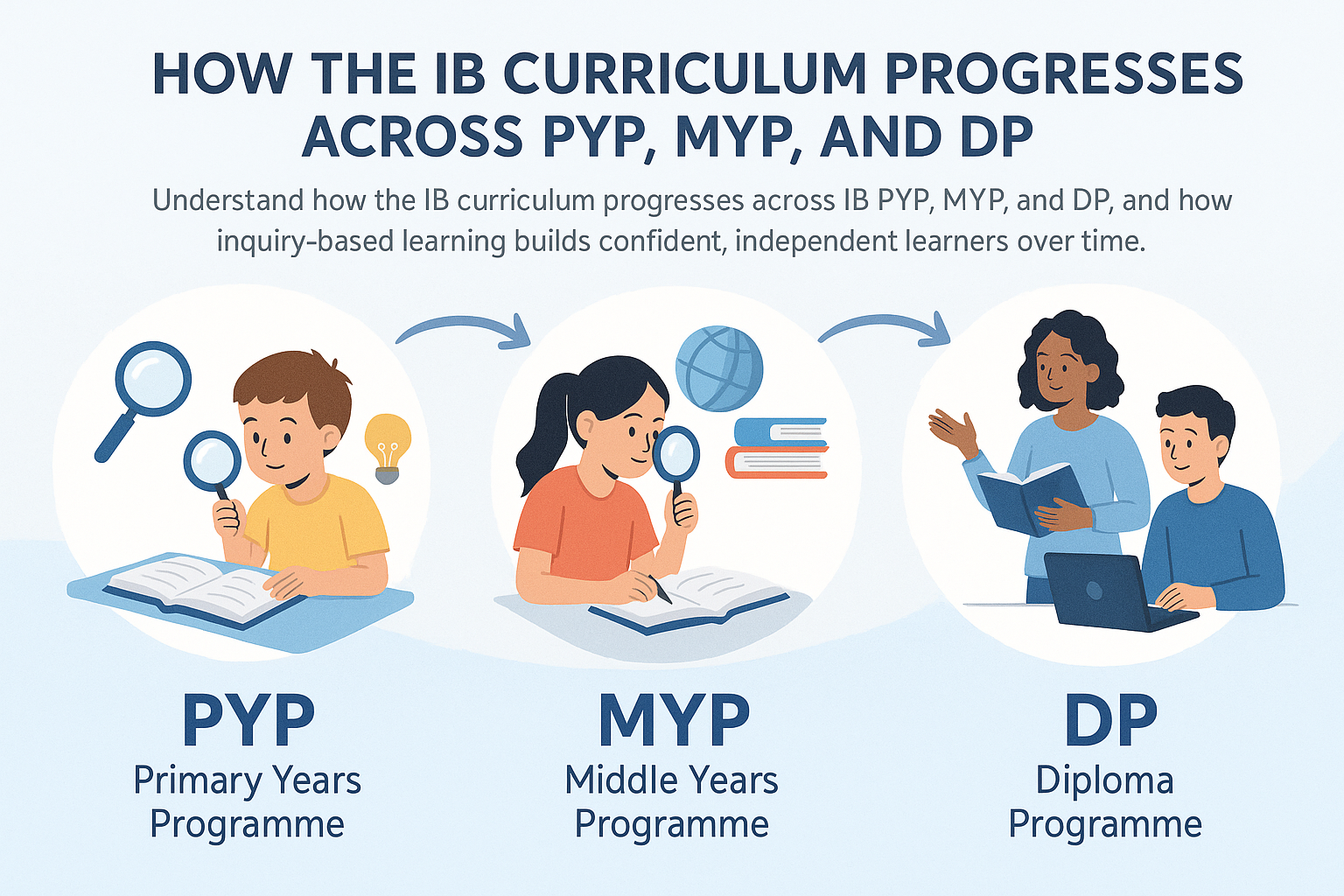
Understand how the IB curriculum progresses across IB PYP, MYP, and DP, and how inquiry-based learning builds...
A parent friendly guide to understanding the IB curriculum, IB PYP, MYP, and DP, and how inquiry based learning...
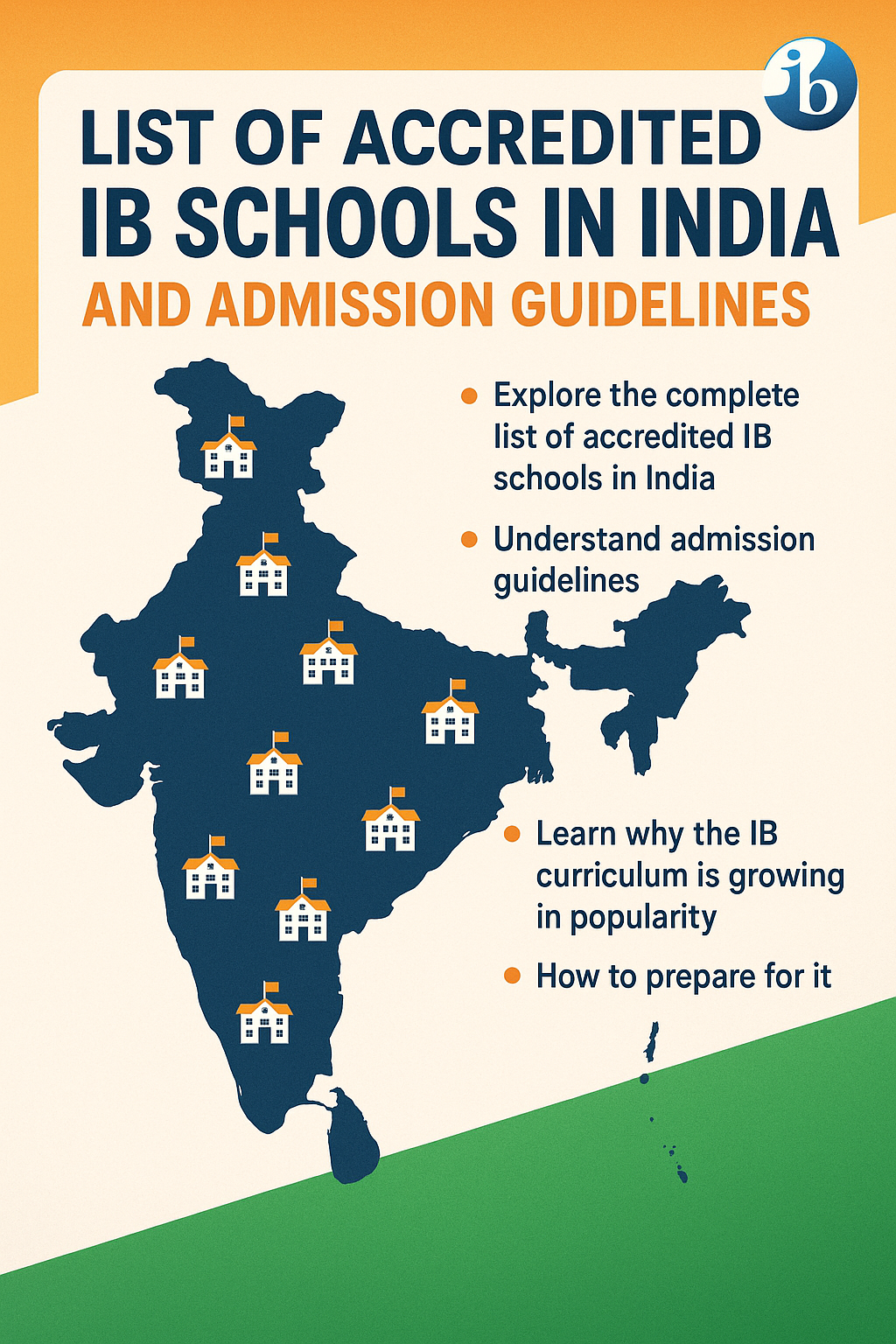
Explore the complete list of accredited IB schools in India and understand admission guidelines. Learn why the IB...

A complete guide for parents in Kolkata to understand the IB curriculum. Learn about PYP, MYP, IBDP stages,...

Discover the IB Diploma Programme curriculum, subject groups, core requirements, and benefits of IB. Learn how...

Thinking of joining the IB Programme? Learn about its rewards, challenges, and how AllRounder.ai can help you...

Discover the IB PYP curriculum framework, key learning areas, transdisciplinary themes, and how it nurtures lifelong...

Explore the IB syllabus structure, subject groups, and core components like TOK, CAS, and EE. A complete guide to IB...

Discover how the IB curriculum prepares students for Ivy League and top global universities. Explore skills,...

Explore how to choose IB subjects wisely. Learn about IB subject groups, HL vs SL, and combinations aligned with...

Understand the 10 IB Learner Profile attributes and why they matter in shaping global, future-ready students.

A detailed comparison of IB, CBSE, and ICSE boards. Learn about curriculum, teaching methods, and which board best...

Discover the IB Board – its global recognition, programs, and unique education philosophy.
Resources
-
Your complete JEE Advanced resource for eligibility, exam dates, syllabus, marks vs rank, and...
-
Understand the entire JEE Main process, from application and eligibility rules to the exam...
-

Explore the IB Board – a global curriculum emphasizing holistic, student-centered learning...
-

Learn about CBSE – India’s national school board offering a standardized curriculum, NCERT...
-

Explore everything about the ICSE board – its curriculum, subjects, exam format, and academic...